
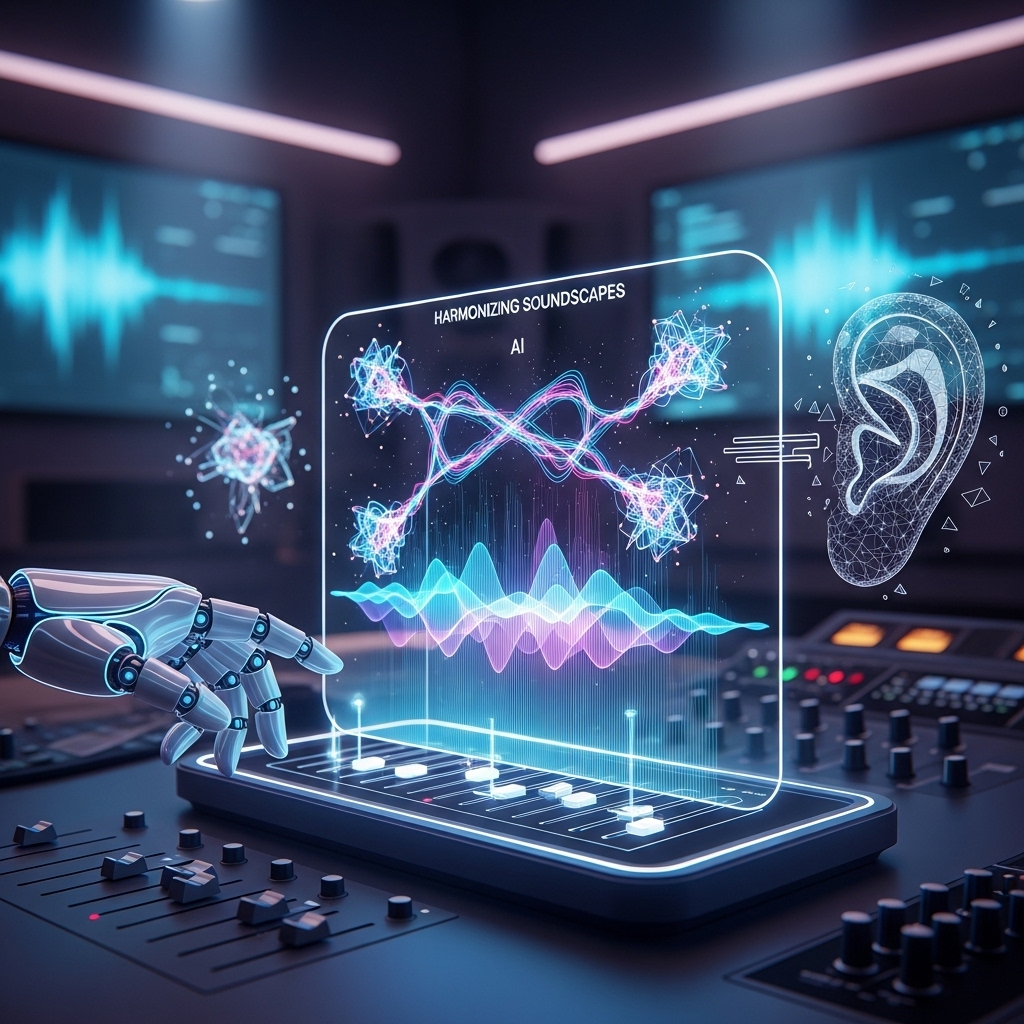
Introduction to Harmonizing Soundscapes
The world of music has undergone a significant transformation with the advent of artificial intelligence (AI) and machine learning (ML) technologies. One of the most exciting developments in this field is AI-powered music mastering, which has revolutionized the way music is produced, edited, and enhanced. In this article, we will delve into the concept of harmonizing soundscapes and explore the latest innovations in AI-powered music mastering tools. We will also examine the benefits and challenges of using these tools and discuss the future of music production.
What is AI-Powered Music Mastering?
AI-powered music mastering refers to the use of artificial intelligence and machine learning algorithms to analyze and enhance audio files. These algorithms can identify specific characteristics of the music, such as frequency balance, dynamics, and spectral content, and make adjustments to create a more polished and professional sound. AI-powered music mastering tools can also learn from large datasets of mastered audio files and apply this knowledge to new, unseen music. This allows for a high degree of consistency and quality in the mastering process, regardless of the genre or style of music.
Benefits of AI-Powered Music Mastering
The benefits of AI-powered music mastering are numerous. For one, it can save time and effort for music producers and engineers, who can focus on creative tasks rather than tedious technical details. AI-powered music mastering tools can also provide a more objective and unbiased approach to mastering, reducing the influence of personal taste and preference. Additionally, these tools can analyze and correct issues that may be difficult or impossible for human engineers to detect, such as subtle distortions or frequency imbalances. Examples of AI-powered music mastering tools include LANDR, Ozone, and iZotope RX, which offer a range of features and algorithms for analyzing and enhancing audio files.
How AI-Powered Music Mastering Works
AI-powered music mastering tools typically use a combination of machine learning algorithms and audio analysis techniques to examine and enhance audio files. These algorithms can be trained on large datasets of mastered audio files, allowing them to learn the characteristics of well-mastered music. When a new audio file is uploaded, the algorithm analyzes the file and makes adjustments to the frequency balance, dynamics, and other parameters to create a more polished and professional sound. Some AI-powered music mastering tools also offer features such as multiband compression, stereo widening, and harmonic enhancement, which can be used to create a specific sound or style.
Challenges and Limitations of AI-Powered Music Mastering
While AI-powered music mastering tools have the potential to revolutionize the music production process, there are also challenges and limitations to consider. One of the main limitations is the lack of human intuition and creativity, which can be difficult to replicate with algorithms alone. Additionally, AI-powered music mastering tools may not always be able to understand the nuances and complexities of human music production, which can result in over-processing or under-processing of the audio file. Furthermore, the quality of the input audio file can also affect the quality of the mastered output, highlighting the importance of high-quality recording and editing techniques.
Future of AI-Powered Music Mastering
The future of AI-powered music mastering is exciting and rapidly evolving. As machine learning algorithms and audio analysis techniques continue to improve, we can expect to see even more advanced and sophisticated music mastering tools. One potential development is the integration of AI-powered music mastering with other music production tasks, such as mixing and editing. This could allow for a more streamlined and efficient music production process, with AI-powered tools handling the technical details and human engineers focusing on creative decisions. Another potential development is the use of AI-powered music mastering for live sound applications, such as concerts and festivals, where the ability to analyze and enhance audio in real-time could be particularly valuable.
Conclusion
In conclusion, AI-powered music mastering is a rapidly evolving field that has the potential to revolutionize the music production process. With its ability to analyze and enhance audio files, AI-powered music mastering tools can save time and effort for music producers and engineers, while also providing a more objective and unbiased approach to mastering. While there are challenges and limitations to consider, the benefits and potential of AI-powered music mastering make it an exciting and rapidly evolving field. As machine learning algorithms and audio analysis techniques continue to improve, we can expect to see even more advanced and sophisticated music mastering tools, which will help to shape the future of music production and harmonize soundscapes around the world.