
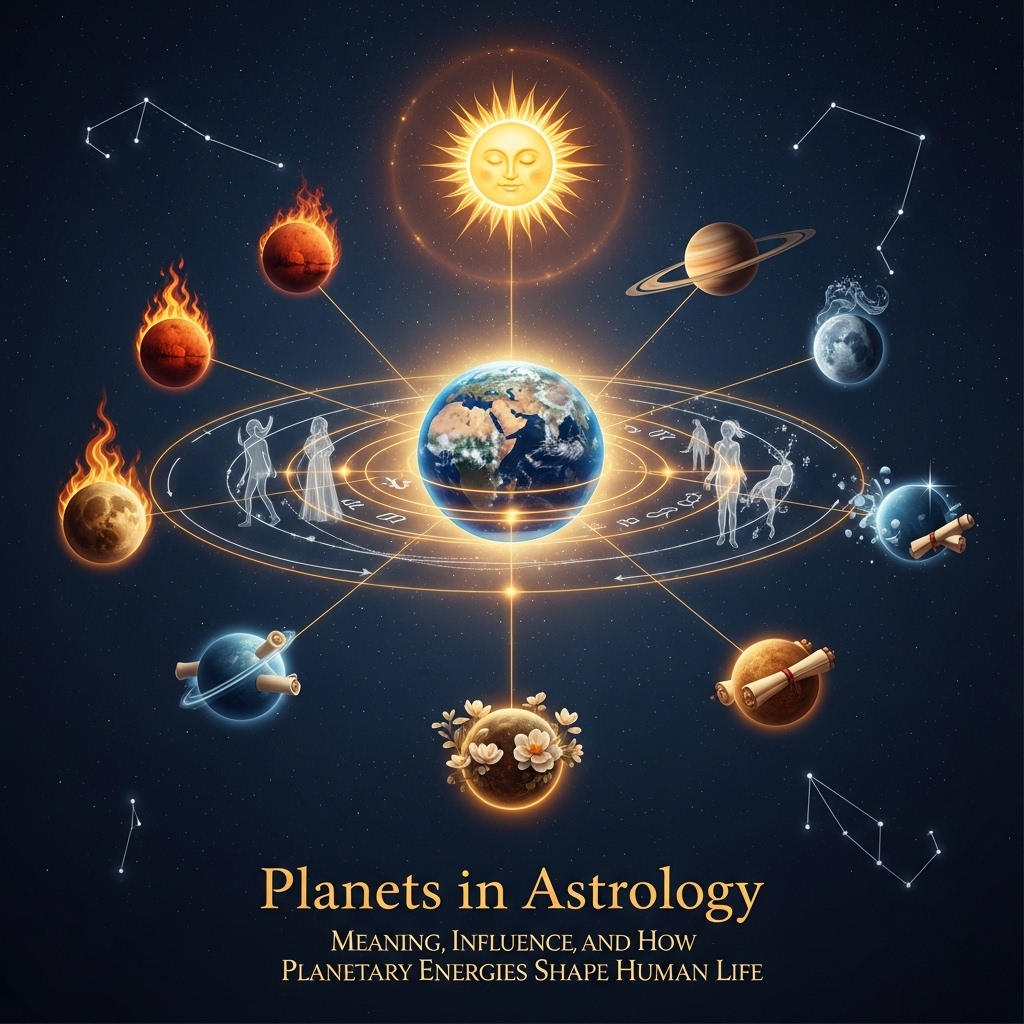
Planets in Astrology: Meaning, Influence, and How Planetary Energies Shape Human Life
In astrology, planets are the dynamic forces that activate human experience. While zodiac signs describe styles of expression and houses represent life areas, planets symbolize the core psychological functions that drive behavior, desire, emotion, growth, and transformation. Without planets, astrology would be static and abstract. It is planetary motion that brings astrology to life.
Each planet represents a specific aspect of consciousness. Together, they form a complete symbolic language describing how individuals think, feel, act, relate, grow, and evolve over time. Understanding planetary meanings is essential for interpreting birth charts accurately and using astrology as a tool for self-awareness.
The Sun: Core Identity and Life Purpose
The Sun is the most important planet in astrology, representing the essence of who we are. It symbolizes vitality, ego, self-expression, and the conscious will. The Sun shows how we seek to shine in the world and fulfill our life purpose.
The zodiac sign of the Sun describes one’s core identity, while the house placement reveals where self-expression is most prominent. A strong Sun placement often indicates confidence, leadership, and a clear sense of direction.
The Moon: Emotions and Inner World
The Moon governs emotions, instincts, habits, and subconscious patterns. It reflects how we respond emotionally to life and where we seek comfort and security.
Moon placements reveal emotional needs, attachment styles, and intuitive responses. Because the Moon moves quickly, its influence is subtle yet deeply personal, shaping inner life more than outward behavior.
Mercury: Mind and Communication
Mercury represents intellect, communication, learning, and perception. It governs how we think, speak, write, analyze, and exchange information.
Mercury’s zodiac sign influences communication style, while its house placement shows where mental energy is focused. Strong Mercury placements indicate curiosity, adaptability, and intellectual agility.
Venus: Love, Values, and Attraction
Venus governs love, relationships, beauty, pleasure, and personal values. It reflects what we find attractive, how we express affection, and what brings joy and satisfaction.
Venus placements reveal relationship patterns, artistic preferences, and attitudes toward money and pleasure. Harmonious Venus energy supports emotional connection and appreciation of beauty.
Mars: Action and Desire
Mars represents energy, drive, ambition, and physical vitality. It governs how we pursue goals, assert ourselves, and handle conflict.
Mars placements show motivation levels, sexual energy, and approaches to challenges. Balanced Mars energy leads to productive action, while imbalances may result in aggression or passivity.
Jupiter: Growth and Expansion
Jupiter symbolizes growth, wisdom, opportunity, and expansion. It represents belief systems, higher learning, and the search for meaning.
Jupiter placements indicate where we experience abundance and seek personal development. While Jupiter brings optimism and opportunity, excess can lead to overindulgence or unrealistic expectations.
Saturn: Structure and Life Lessons
Saturn governs discipline, responsibility, boundaries, and long-term achievement. Often misunderstood as restrictive, Saturn actually teaches mastery through effort and patience.
Saturn placements reveal areas of challenge, fear, and growth. By facing Saturnian lessons, individuals develop resilience, wisdom, and inner strength.
Uranus: Change and Awakening
Uranus represents innovation, rebellion, freedom, and sudden change. It challenges established norms and pushes consciousness toward evolution.
Uranus placements highlight areas of unpredictability and originality. This planet encourages breaking free from limitations and embracing authenticity.
Neptune: Dreams and Spirituality
Neptune governs imagination, spirituality, compassion, and illusion. It dissolves boundaries and connects individuals to higher ideals and universal consciousness.
Neptune placements can inspire creativity and spiritual insight, but also confusion or escapism if not grounded in reality.
Pluto: Transformation and Power
Pluto represents deep transformation, power, death, and rebirth. It governs processes of destruction and renewal that lead to profound change.
Pluto placements reveal where individuals confront fear, control, and transformation. Though intense, Pluto’s influence ultimately leads to empowerment and regeneration.
Personal vs Outer Planets
The Sun, Moon, Mercury, Venus, and Mars are considered personal planets because they move quickly and directly influence individual personality. Jupiter and Saturn act as social planets, shaping belief systems and responsibilities. Uranus, Neptune, and Pluto are generational planets, influencing collective trends and long-term societal change.
Planetary Aspects: How Energies Interact
Planetary aspects describe the angles formed between planets in a birth chart. These relationships determine how planetary energies cooperate or conflict.
Harmonious aspects support ease and talent, while challenging aspects stimulate growth through tension and effort. Both are essential for personal development.
Conclusion
Planets are the living forces of astrology, shaping human experience through symbolic expression. By understanding planetary meanings and interactions, astrology becomes a powerful framework for self-discovery and conscious growth.
Rather than predicting fixed outcomes, planetary astrology reveals potential paths and inner dynamics. Awareness of these influences empowers individuals to make informed choices and align with their highest potential.