
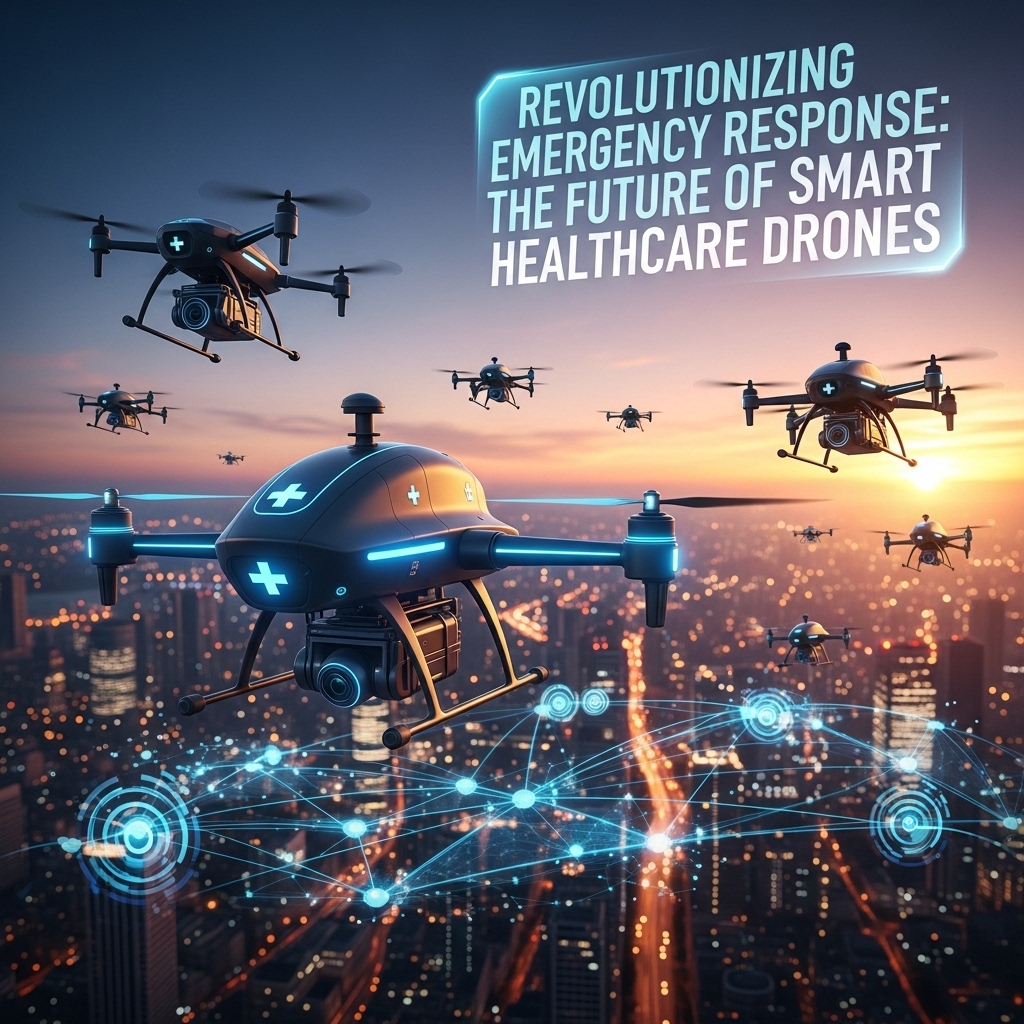
Introduction to Smart Healthcare Drones
The integration of drones into emergency response systems is revolutionizing the way healthcare professionals respond to emergencies. Smart healthcare drones, equipped with advanced technology and sensors, are being used to quickly respond to medical emergencies, transport medical supplies, and even provide critical care in remote or hard-to-reach areas. In this article, we will explore the future of smart healthcare drones and their potential to transform the emergency response landscape.
Current Applications of Smart Healthcare Drones
Smart healthcare drones are currently being used in a variety of applications, including search and rescue missions, medical supply transportation, and disaster response. For example, in Rwanda, drones are being used to transport blood and medical supplies to remote areas, reducing the time it takes to receive critical care. Similarly, in the United States, drones are being used to respond to natural disasters, such as hurricanes and wildfires, to quickly assess damage and provide medical aid to those in need.
One notable example of the effective use of smart healthcare drones is the Zipline drone delivery system, which has been used to transport blood and medical supplies to remote areas in Rwanda and Ghana. The system uses drones to fly to remote areas, dropping off critical medical supplies and picking up blood samples for testing. This has significantly reduced the time it takes to receive medical care in these areas, saving countless lives.
Advancements in Drone Technology
Recent advancements in drone technology have made it possible for smart healthcare drones to be used in a variety of applications. Improvements in battery life, navigation systems, and sensor technology have enabled drones to fly longer distances, navigate through challenging terrain, and detect and respond to emergencies more effectively. Additionally, the development of autonomous drone systems has enabled drones to fly and respond to emergencies without human intervention, reducing the risk of human error and increasing response times.
For example, the use of artificial intelligence (AI) and machine learning (ML) algorithms has enabled drones to detect and respond to emergencies more effectively. AI-powered drones can analyze data from sensors and cameras to detect emergencies, such as car accidents or natural disasters, and respond accordingly. This has the potential to revolutionize the way emergency response systems operate, enabling faster and more effective responses to emergencies.
Regulatory Frameworks and Challenges
Despite the potential of smart healthcare drones, there are several regulatory frameworks and challenges that must be addressed. In the United States, the Federal Aviation Administration (FAA) has established regulations governing the use of drones, including requirements for registration, pilot certification, and operation in controlled airspace. However, these regulations can be complex and challenging to navigate, particularly for healthcare organizations and emergency response teams.
Additionally, there are concerns about privacy and security, particularly when it comes to the use of drones in emergency response situations. Drones may be equipped with cameras and sensors that can collect sensitive information, such as medical records or personal identifiable information. As such, it is essential to establish clear guidelines and protocols for the use of drones in emergency response situations, ensuring that patient privacy and security are protected.
Future Directions and Opportunities
Despite the challenges and regulatory frameworks, the future of smart healthcare drones is promising. As technology continues to evolve, we can expect to see even more advanced applications of drones in emergency response situations. For example, the use of 5G networks and edge computing may enable drones to transmit critical information in real-time, enabling faster and more effective responses to emergencies.
Additionally, the integration of drones with other technologies, such as the Internet of Things (IoT) and artificial intelligence (AI), may enable even more advanced applications of smart healthcare drones. For example, drones may be used to monitor patients remotely, tracking vital signs and responding to changes in condition. This has the potential to revolutionize the way healthcare is delivered, particularly in remote or underserved areas.
Case Studies and Examples
There are several case studies and examples of the effective use of smart healthcare drones in emergency response situations. For example, in 2019, a drone was used to transport a kidney for transplant in the United States, reducing the time it took to receive the organ from several hours to just 10 minutes. Similarly, in 2020, drones were used to respond to the COVID-19 pandemic, transporting medical supplies and equipment to remote areas and providing critical care to those in need.
Another notable example is the use of drones in search and rescue missions. In 2018, a drone was used to locate a missing hiker in the mountains of California, reducing the time it took to locate the individual from several hours to just 20 minutes. This has significant implications for search and rescue missions, enabling emergency response teams to respond more quickly and effectively to emergencies.
Conclusion
In conclusion, the future of smart healthcare drones is promising, with the potential to revolutionize the way emergency response systems operate. As technology continues to evolve, we can expect to see even more advanced applications of drones in emergency response situations, from search and rescue missions to medical supply transportation and critical care. However, it is essential to address the regulatory frameworks and challenges associated with the use of drones, ensuring that patient privacy and security are protected.
Ultimately, the integration of smart healthcare drones into emergency response systems has the potential to save countless lives, reducing response times and improving outcomes for patients. As such, it is essential to continue to invest in the development and deployment of smart healthcare drones, enabling faster and more effective responses to emergencies and transforming the emergency response landscape.