
Introduction to Hybrid Events
Hybrid events are a new and innovative way of hosting conferences, meetings, and other gatherings that combine the benefits of in-person and virtual events. By offering both online and offline components, hybrid events provide attendees with more flexibility and accessibility, while also increasing the reach and engagement of the event. In this article, we will explore what hybrid events are, their benefits, and how they can be used to create a more inclusive and engaging experience for attendees.
What are Hybrid Events?
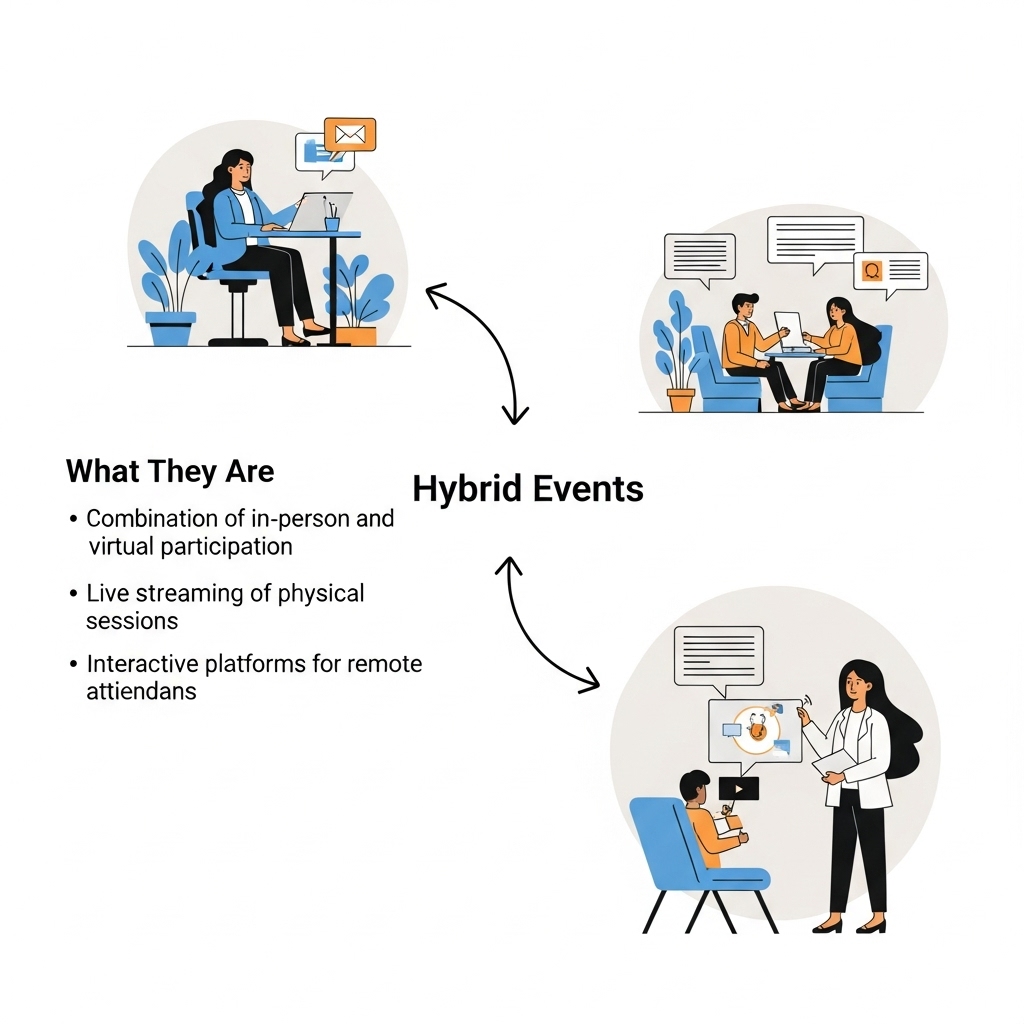
A hybrid event is an event that combines in-person and virtual components, allowing attendees to participate both online and offline. This can include a live conference or meeting with virtual attendees participating through video conferencing, live streaming, or other digital platforms. Hybrid events can also include pre-recorded content, virtual exhibitions, and online networking opportunities. The goal of a hybrid event is to create a seamless and engaging experience for all attendees, regardless of their location or ability to attend in person.
Benefits of Hybrid Events for Attendees
Hybrid events offer a number of benefits for attendees, including increased flexibility and accessibility. With the option to attend virtually, attendees who may not be able to travel to the physical location of the event can still participate and engage with the content. This is particularly beneficial for attendees with disabilities, those living in remote locations, or those with conflicting schedules. Additionally, hybrid events can provide attendees with more opportunities for networking and engagement, through online discussion forums, social media groups, and virtual meetups.
Types of Hybrid Events
There are several types of hybrid events, including conferences, meetings, trade shows, and workshops. For example, a conference may include a live keynote speaker with virtual attendees participating through a live stream, while also offering virtual breakout sessions and online networking opportunities. A trade show may include a physical exhibition with virtual booths and product demonstrations, allowing attendees to explore and interact with products remotely. Workshops and training sessions can also be delivered in a hybrid format, with in-person instruction and virtual participation.
Examples of Successful Hybrid Events
There are many examples of successful hybrid events, including conferences, festivals, and meetings. For example, the annual South by Southwest (SXSW) conference in Austin, Texas, offers a hybrid format, with live sessions and virtual participation through live streaming and online discussion forums. The TED Conference, a annual event that features short talks on a wide range of topics, also offers a hybrid format, with live talks and virtual participation through live streaming and online discussion forums. These events demonstrate the potential of hybrid events to increase engagement, reach, and accessibility, while also providing a unique and innovative experience for attendees.
Best Practices for Hosting a Hybrid Event
Hosting a successful hybrid event requires careful planning and execution. Some best practices for hosting a hybrid event include providing clear instructions and technical support for virtual attendees, ensuring that the virtual component is engaging and interactive, and providing opportunities for virtual attendees to network and engage with other attendees. It's also important to have a clear understanding of the technical requirements for the virtual component, including internet bandwidth, audio-visual equipment, and software. By following these best practices, event organizers can create a seamless and engaging experience for all attendees, regardless of their location or mode of participation.
Conclusion
In conclusion, hybrid events offer a new and innovative way of hosting conferences, meetings, and other gatherings that combine the benefits of in-person and virtual events. By providing attendees with more flexibility and accessibility, hybrid events can increase engagement, reach, and accessibility, while also providing a unique and innovative experience for attendees. As technology continues to evolve and improve, we can expect to see more hybrid events in the future, and event organizers who are able to adapt and innovate will be well-positioned to take advantage of this trend. Whether you're an event organizer, attendee, or simply interested in learning more about hybrid events, we hope this article has provided you with a comprehensive overview of the benefits and possibilities of hybrid events.