
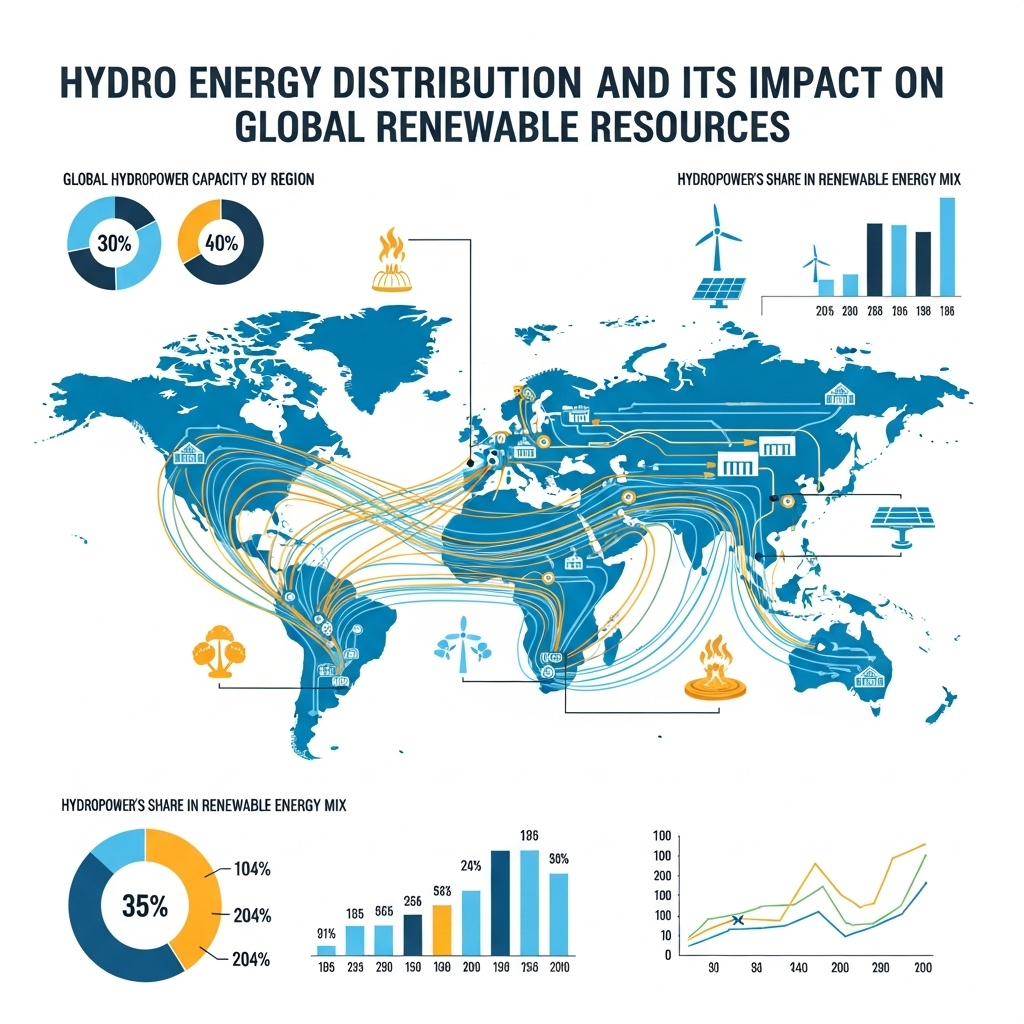
Introduction to Hydro Energy Distribution
Hydro energy distribution is a vital component of the global renewable energy landscape. As the world shifts towards cleaner and more sustainable energy sources, hydro energy has emerged as a leading player in the renewable energy sector. Hydro energy, also known as hydropower, is generated from the movement of water in rivers, oceans, and tidal currents. The distribution of hydro energy has a significant impact on global renewable resources, and it is essential to understand the various aspects of hydro energy distribution to appreciate its effects on the environment and the economy.
What is Hydro Energy Distribution?
Hydro energy distribution refers to the process of transmitting and delivering hydro energy from the point of generation to the point of consumption. This process involves the use of transmission lines, substations, and distribution networks to transport the energy generated from hydroelectric power plants to homes, businesses, and industries. Hydro energy distribution is a complex process that requires careful planning, management, and maintenance to ensure efficient and reliable delivery of energy.
Impact of Hydro Energy Distribution on Global Renewable Resources
The distribution of hydro energy has a significant impact on global renewable resources. Hydro energy is a clean and renewable source of energy that produces no greenhouse gas emissions or pollution, making it an attractive alternative to fossil fuels. The widespread adoption of hydro energy distribution can help reduce our reliance on fossil fuels, decrease carbon emissions, and mitigate climate change. Additionally, hydro energy distribution can help to promote energy security, reduce energy poverty, and support economic development in rural and remote areas.
Benefits of Hydro Energy Distribution
There are several benefits associated with hydro energy distribution. Some of the key benefits include: 1. Renewable and Sustainable: Hydro energy is a renewable and sustainable source of energy that can be replenished naturally. 2. Low Operating Costs: The operating costs of hydro energy distribution are relatively low compared to other forms of energy generation. 3. Reliability and Efficiency: Hydro energy distribution is a reliable and efficient way to generate and transmit energy. 4. Job Creation and Economic Growth: Hydro energy distribution can create jobs and stimulate economic growth in local communities. For example, the Itaipu Dam on the border of Brazil and Paraguay is one of the largest hydroelectric power plants in the world, providing electricity to over 80 million people and supporting the local economy.
Challenges Facing Hydro Energy Distribution
Despite the benefits of hydro energy distribution, there are several challenges that need to be addressed. Some of the key challenges include: 1. High Upfront Costs: The construction of hydroelectric power plants and distribution infrastructure requires significant upfront investment. 2. Geographical Limitations: Hydro energy distribution is limited to areas with suitable geography, such as rivers and coastal regions. 3. Environmental Concerns: The construction of hydroelectric power plants can have environmental impacts, such as altering ecosystems and disrupting wildlife habitats. 4. Regulatory Frameworks: The regulatory frameworks governing hydro energy distribution can be complex and vary by country and region. For instance, the construction of the Three Gorges Dam in China was controversial due to its environmental and social impacts, highlighting the need for careful planning and management of hydro energy distribution projects.
Case Studies of Hydro Energy Distribution
There are several case studies of hydro energy distribution that demonstrate its potential and challenges. For example, the Norwegian hydropower industry is a leading example of hydro energy distribution, with over 95% of the country's electricity generated from hydropower. Another example is the hydro energy distribution system in Costa Rica, which has enabled the country to become a global leader in renewable energy and reduce its dependence on fossil fuels. These case studies highlight the importance of careful planning, management, and regulation of hydro energy distribution to ensure its success and sustainability.
Conclusion
In conclusion, hydro energy distribution has a significant impact on global renewable resources, offering a clean, renewable, and sustainable source of energy. While there are benefits and challenges associated with hydro energy distribution, its potential to promote energy security, reduce carbon emissions, and support economic development makes it an essential component of the global renewable energy landscape. As the world continues to transition towards a low-carbon economy, the importance of hydro energy distribution will only continue to grow, and it is essential to address the challenges and limitations associated with it to ensure its success and sustainability.