
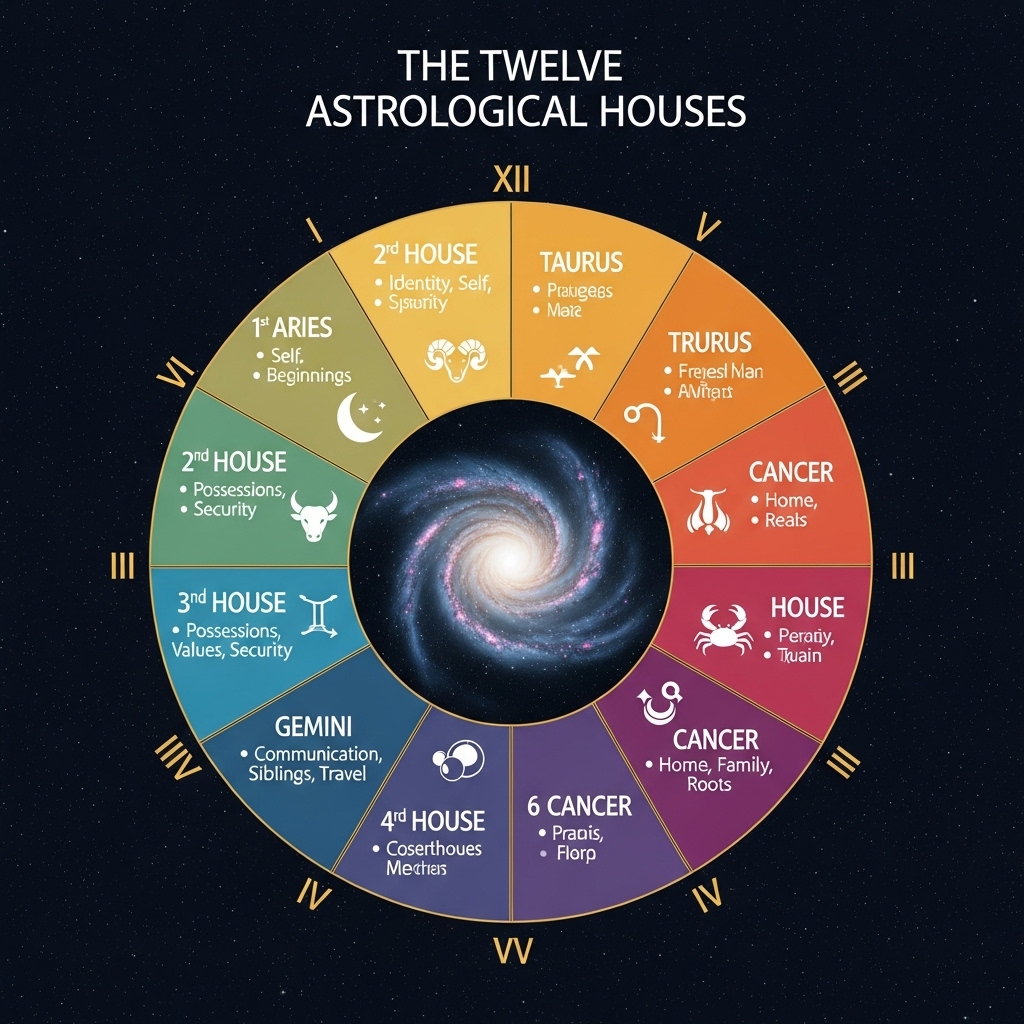
Introduction to Planetary Houses in Astrology
Astrology is a complex system that has been used for centuries to understand human behavior, personality, and destiny. One of the key components of astrology is the concept of planetary houses, which are divisions of the birth chart that represent different areas of life. Each planetary house is associated with a specific set of themes, energies, and planetary rulers, which influence the way we experience and interact with the world around us. In this article, we will explore the key features of each planetary house in astrology, providing a comprehensive overview of their meanings and significance.
Understanding the First House: Self and Personality
The first house, also known as the Ascendant or Rising Sign, is the most personal and individualized sector of the birth chart. It represents how we present ourselves to the world, our outer self, and our overall approach to life. The first house is associated with the planet Mercury and is influenced by the sign that was rising on the horizon at the exact time and location of our birth. For example, if someone has a Leo Ascendant, they may come across as confident, charismatic, and generous, with a natural flair for drama and creativity. The first house sets the tone for the rest of the chart, shaping our self-image, personality traits, and overall approach to life.
The Second House: Material Security and Values
The second house is associated with our material possessions, financial security, and personal values. It represents our relationship with money, our earning potential, and our sense of self-worth. The second house is ruled by the planet Venus and is influenced by the sign that occupies this sector. For instance, if someone has a Taurus in the second house, they may have a practical and reliable approach to finances, valuing stability and security above all else. The second house also reveals our attitudes towards possessions, our spending habits, and our ability to attract abundance and prosperity into our lives.
The Third House: Communication and Siblings
The third house is the realm of communication, siblings, and short-distance travel. It represents our ability to express ourselves, our mental agility, and our capacity for learning and adaptation. The third house is ruled by the planet Mercury and is influenced by the sign that occupies this sector. For example, if someone has a Gemini in the third house, they may be naturally curious, versatile, and communicative, with a talent for writing, speaking, or teaching. The third house also reveals our relationships with our siblings, our childhood environment, and our ability to navigate our immediate surroundings.
The Fourth House: Home and Family
The fourth house is the sector of home, family, and emotional foundations. It represents our sense of belonging, our roots, and our emotional security. The fourth house is ruled by the planet Moon and is influenced by the sign that occupies this sector. For instance, if someone has a Cancer in the fourth house, they may have a strong emotional connection to their family and home, with a deep need for nurturing and protection. The fourth house also reveals our relationship with our parents, our childhood experiences, and our ability to create a sense of comfort and stability in our personal lives.
The Fifth House: Creativity and Self-Expression
The fifth house is the realm of creativity, self-expression, and personal fulfillment. It represents our passions, our hobbies, and our ability to take risks and pursue our desires. The fifth house is ruled by the planet Sun and is influenced by the sign that occupies this sector. For example, if someone has a Leo in the fifth house, they may have a natural flair for drama, creativity, and self-expression, with a strong desire for attention and recognition. The fifth house also reveals our relationship with children, our romantic partnerships, and our ability to experience joy and happiness in our lives.
The Sixth House: Health and Daily Routine
The sixth house is the sector of health, daily routine, and service to others. It represents our physical well-being, our work habits, and our ability to take care of ourselves and others. The sixth house is ruled by the planet Mercury and is influenced by the sign that occupies this sector. For instance, if someone has a Virgo in the sixth house, they may have a practical and diligent approach to health and wellness, with a strong attention to detail and a desire to serve others. The sixth house also reveals our relationships with our colleagues, our daily responsibilities, and our ability to create a sense of order and routine in our lives.
Conclusion: Integrating the Planetary Houses
In conclusion, each planetary house in astrology offers a unique perspective on our lives, revealing different aspects of our personality, behavior, and experiences. By understanding the key features of each house, we can gain a deeper insight into our strengths, weaknesses, and potential, and develop a more nuanced and compassionate approach to ourselves and others. Whether we are exploring our self-image, our relationships, or our life's purpose, the planetary houses provide a rich and complex framework for self-discovery and personal growth. By integrating the wisdom of the planetary houses, we can cultivate a greater sense of awareness, acceptance, and fulfillment, and navigate the complexities of life with greater ease and confidence.