
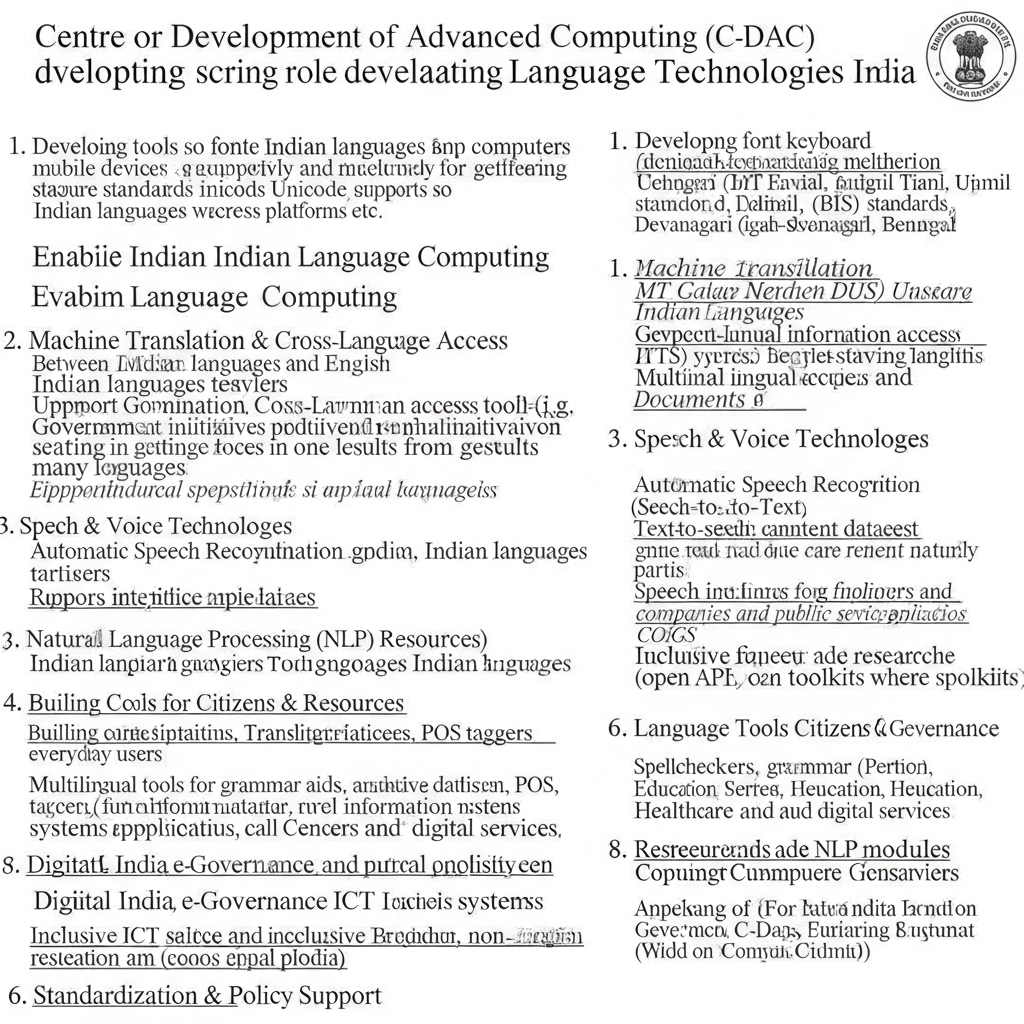
Introduction to CDAC and Language Technology
The Centre for Development of Advanced Computing (CDAC) plays a significant role in the development of language technology in various countries, particularly in India. CDAC is a premier research and development institution under the Ministry of Electronics and Information Technology, Government of India. The organization is involved in the design, development, and deployment of advanced computing solutions in various areas, including language technology. Language technology refers to the use of computers to process, analyze, and generate human language, and it has numerous applications in areas such as natural language processing, machine translation, speech recognition, and language teaching.
Role of CDAC in Language Technology Development
CDAC has been actively involved in the development of language technology for several decades. The organization has developed various language technologies, including language translators, language teaching tools, and language analysis software. CDAC's language technology initiatives aim to promote the use of Indian languages in computing and to develop tools and technologies that can help bridge the language divide in the country. For example, CDAC has developed a machine translation system that can translate text from one Indian language to another, which has the potential to facilitate communication across language barriers.
Language Computing Initiatives
CDAC has launched several language computing initiatives to promote the use of Indian languages in computing. One such initiative is the development of Indian language fonts, keyboards, and input methods. CDAC has developed fonts and keyboards for several Indian languages, including Hindi, Tamil, Telugu, and Marathi. The organization has also developed input methods such as the Inscript keyboard layout, which allows users to type in Indian languages using a standard keyboard. These initiatives have facilitated the use of Indian languages in computing and have enabled the development of language-based applications and services.
Machine Translation and Localization
CDAC has also been involved in machine translation and localization initiatives. The organization has developed machine translation systems that can translate text from one language to another. For example, CDAC has developed a machine translation system that can translate text from English to Hindi and other Indian languages. The organization has also developed localization tools and technologies that can help adapt software and websites to local languages and cultures. These initiatives have the potential to facilitate communication across language barriers and to promote the use of local languages in computing.
Speech Recognition and Synthesis
CDAC has also been involved in speech recognition and synthesis initiatives. The organization has developed speech recognition systems that can recognize spoken words and phrases in Indian languages. For example, CDAC has developed a speech recognition system that can recognize spoken Hindi and other Indian languages. The organization has also developed speech synthesis systems that can generate spoken words and phrases in Indian languages. These initiatives have the potential to facilitate communication and to promote the use of Indian languages in areas such as customer service and language teaching.
Applications and Impact
The language technologies developed by CDAC have numerous applications and can have a significant impact on society. For example, the machine translation systems developed by CDAC can facilitate communication across language barriers and can help promote the use of local languages in computing. The speech recognition and synthesis systems developed by CDAC can facilitate communication and can help promote the use of Indian languages in areas such as customer service and language teaching. The language computing initiatives launched by CDAC can also promote the use of Indian languages in computing and can help bridge the language divide in the country.
Conclusion
In conclusion, CDAC plays a significant role in language technology development, particularly in India. The organization's language technology initiatives aim to promote the use of Indian languages in computing and to develop tools and technologies that can help bridge the language divide in the country. The language technologies developed by CDAC have numerous applications and can have a significant impact on society. As language technology continues to evolve, it is likely that CDAC will play an increasingly important role in shaping the future of language technology in India and beyond.