
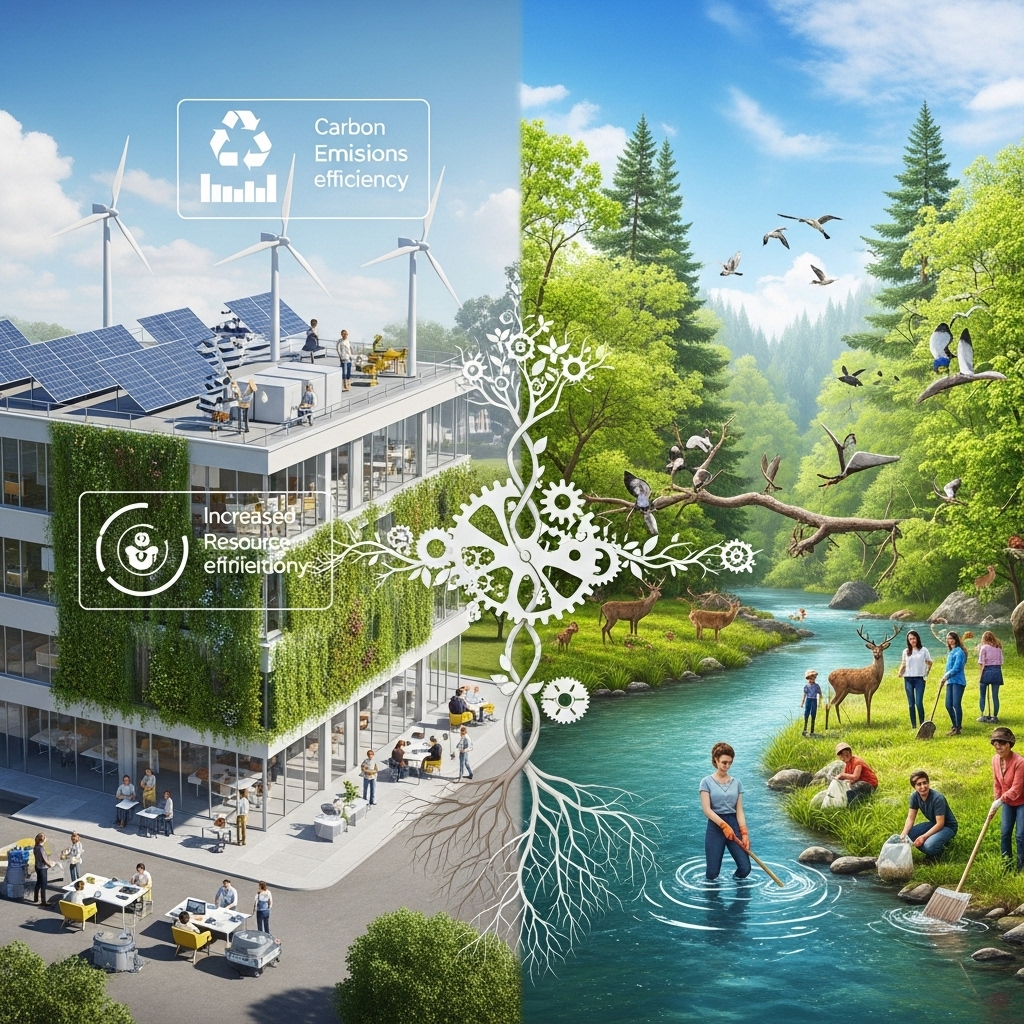
Introduction to Sustainable Business Models
The world is at a critical juncture, with environmental concerns and climate change taking center stage. As consumers become more environmentally conscious, businesses are under increasing pressure to adopt eco-friendly practices and sustainable business models. The shift towards sustainability is no longer a choice, but a necessity for companies looking to thrive in the long term. In this article, we will explore the importance of embracing eco-friendly practices, the benefits of sustainable business models, and the role of environmental stewardship in shaping the future of business.
Understanding the Benefits of Sustainable Business Models
Sustainable business models offer numerous benefits, including reduced environmental impact, cost savings, and enhanced brand reputation. Companies that adopt eco-friendly practices can reduce their carbon footprint, minimize waste, and conserve natural resources. For example, companies like Patagonia and REI have implemented sustainable supply chain practices, such as using recycled materials and reducing packaging waste. These efforts not only reduce environmental impact but also result in cost savings and improved brand loyalty. Moreover, sustainable business models can drive innovation, as companies are forced to think creatively and develop new products and services that meet the needs of a changing market.
The Role of Environmental Stewardship in Business
Environmental stewardship is a critical component of sustainable business models. It involves taking responsibility for the environmental impact of business operations and making conscious decisions to minimize harm. Companies can demonstrate environmental stewardship by implementing sustainable practices, such as reducing energy consumption, using renewable energy sources, and promoting sustainable transportation. For instance, companies like Google and Microsoft have invested heavily in renewable energy, with Google aiming to power 100% of its operations with renewable energy. Environmental stewardship not only benefits the environment but also enhances a company's reputation and contributes to long-term sustainability.
Examples of Successful Sustainable Business Models
There are numerous examples of companies that have successfully adopted sustainable business models. One such example is IKEA, which has made a commitment to become carbon neutral by 2030. The company has implemented a range of sustainable practices, including using renewable energy, reducing waste, and promoting sustainable transportation. Another example is Unilever, which has launched a range of sustainable products, including eco-friendly cleaning products and sustainable food options. These companies demonstrate that sustainability and profitability are not mutually exclusive and that eco-friendly practices can drive business success.
Challenges and Opportunities in Implementing Sustainable Business Models
While sustainable business models offer numerous benefits, there are also challenges to implementation. One of the main challenges is the upfront cost of adopting eco-friendly practices, which can be prohibitively expensive for small and medium-sized enterprises. Additionally, there may be a lack of awareness and education about sustainable business models, making it difficult for companies to get started. However, there are also opportunities for innovation and growth, as companies that adopt sustainable business models can differentiate themselves from competitors and attract environmentally conscious consumers. Governments and organizations can also play a critical role in supporting sustainable business models, by providing incentives and resources for companies that adopt eco-friendly practices.
The Future of Sustainable Business Models
The future of sustainable business models is exciting and rapidly evolving. As technology advances and consumer awareness grows, companies will be under increasing pressure to adopt eco-friendly practices and reduce their environmental impact. One of the key trends in sustainable business models is the growth of the circular economy, which involves designing products and services that are restorative and regenerative by design. Companies like H&M and Nike are already embracing the circular economy, by launching clothing rental services and promoting sustainable fashion. Another trend is the growth of sustainable finance, which involves investing in companies and projects that have a positive environmental impact. As the world continues to grapple with environmental challenges, sustainable business models will play an increasingly critical role in shaping the future of business.
Conclusion: Embracing Eco-Friendly Practices for a Sustainable Future
In conclusion, embracing eco-friendly practices and sustainable business models is critical for the long-term success of companies. As consumers become more environmentally conscious, companies that adopt sustainable business models will be better positioned to thrive in a rapidly changing market. While there are challenges to implementation, the benefits of sustainable business models, including reduced environmental impact, cost savings, and enhanced brand reputation, make them an essential component of any business strategy. As we look to the future, it is clear that sustainable business models will play a critical role in shaping the future of business and promoting environmental stewardship. Companies that prioritize sustainability and eco-friendly practices will not only contribute to a more sustainable future but also drive innovation, growth, and profitability.