
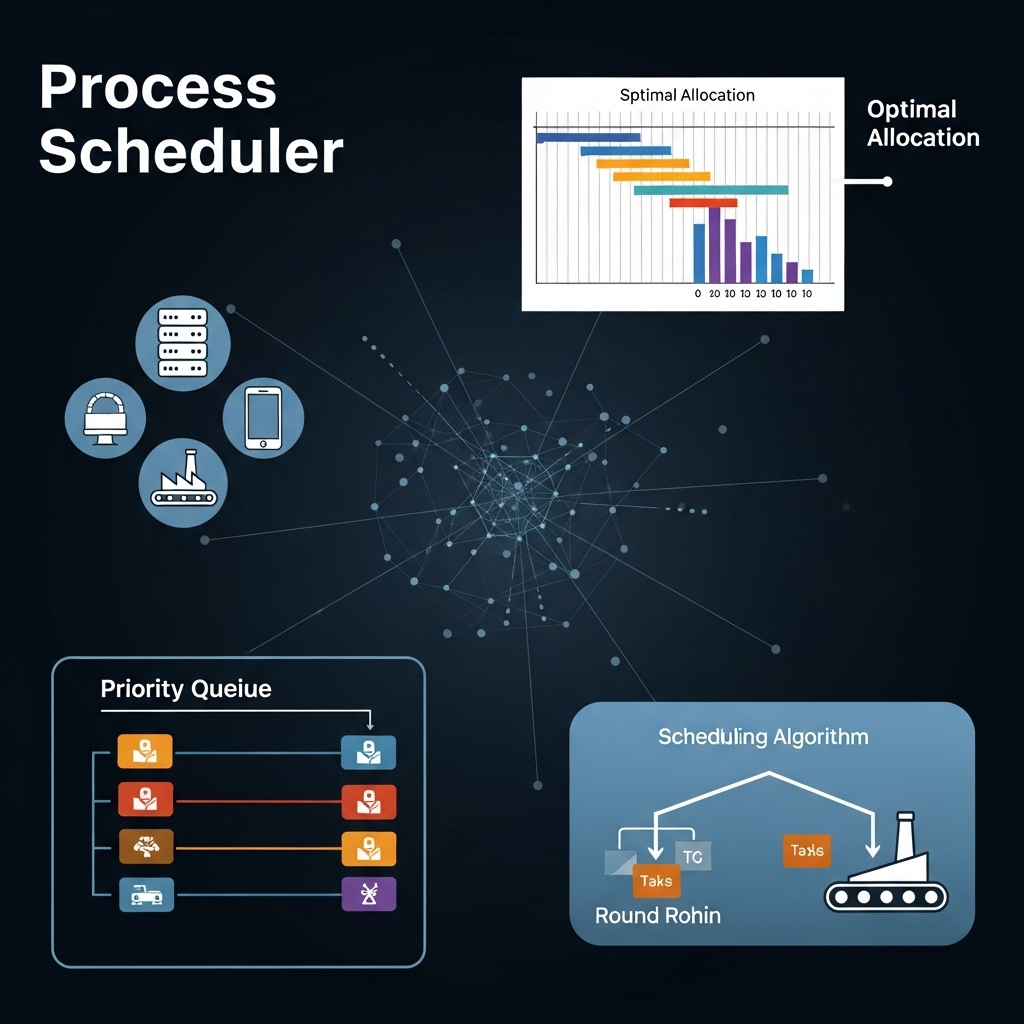
Introduction to Process Scheduler Projects
Process scheduler projects are designed to optimize task allocation in various systems, ensuring efficient use of resources and maximizing productivity. These projects involve the development of algorithms and techniques to schedule tasks, jobs, or processes in a way that minimizes delays, reduces overhead, and improves overall system performance. In this article, we will delve into the world of process scheduler projects, exploring their applications, benefits, and challenges, as well as providing examples of successful implementations.
Understanding Process Scheduling
Process scheduling is the process of allocating system resources, such as CPU time, memory, and I/O devices, to various tasks or processes. The primary goal of process scheduling is to ensure that the system operates efficiently, minimizing idle time and maximizing throughput. There are several types of process scheduling algorithms, including First-Come-First-Served (FCFS), Shortest Job First (SJF), Priority Scheduling, and Round Robin (RR), each with its strengths and weaknesses. The choice of algorithm depends on the specific system requirements and constraints.
For instance, in a real-time system, where tasks have strict deadlines, a priority scheduling algorithm may be used to ensure that critical tasks are executed on time. On the other hand, in a batch processing system, where tasks are executed in batches, a FCFS algorithm may be more suitable. Understanding the different process scheduling algorithms and their applications is crucial for developing effective process scheduler projects.
Applications of Process Scheduler Projects
Process scheduler projects have a wide range of applications in various fields, including operating systems, embedded systems, real-time systems, and cloud computing. In operating systems, process schedulers are used to manage the execution of processes, allocating system resources and ensuring efficient use of CPU time and memory. In embedded systems, process schedulers are used to manage the execution of tasks, ensuring that the system meets its real-time constraints.
In cloud computing, process schedulers are used to manage the allocation of resources, such as virtual machines and containers, to various applications and services. For example, a cloud provider may use a process scheduler to allocate virtual machines to different customers, ensuring that each customer's application receives the required resources. Process scheduler projects can also be applied in other fields, such as manufacturing, finance, and healthcare, where efficient task allocation and resource management are critical.
Benefits of Process Scheduler Projects
Process scheduler projects offer several benefits, including improved system performance, increased productivity, and reduced costs. By optimizing task allocation and resource management, process schedulers can minimize idle time, reduce overhead, and improve system throughput. This, in turn, can lead to increased productivity, as tasks are completed faster and more efficiently.
Additionally, process scheduler projects can help reduce costs by minimizing the need for additional resources, such as hardware and personnel. For example, a process scheduler can be used to allocate resources more efficiently, reducing the need for additional servers or personnel to manage the system. Furthermore, process scheduler projects can improve system reliability and stability, as tasks are executed in a predictable and efficient manner.
Challenges in Process Scheduler Projects
Despite the benefits of process scheduler projects, there are several challenges that must be addressed. One of the main challenges is the complexity of process scheduling algorithms, which can be difficult to design and implement. Additionally, process schedulers must be able to handle a wide range of tasks and systems, each with its own unique requirements and constraints.
Another challenge is the need for real-time scheduling, where tasks have strict deadlines and must be executed on time. This requires the development of sophisticated algorithms and techniques that can handle the complexities of real-time systems. Furthermore, process scheduler projects must also consider issues such as scalability, reliability, and security, as these are critical to the overall success of the system.
Real-World Examples of Process Scheduler Projects
There are several real-world examples of process scheduler projects that demonstrate the effectiveness of these systems. For instance, the Linux operating system uses a process scheduler to manage the execution of processes, allocating system resources and ensuring efficient use of CPU time and memory. Another example is the Google Borg system, which uses a process scheduler to manage the allocation of resources to various applications and services.
In the field of embedded systems, the VxWorks operating system uses a process scheduler to manage the execution of tasks, ensuring that the system meets its real-time constraints. These examples demonstrate the importance of process scheduler projects in various fields and the benefits they can bring to system performance, productivity, and reliability.
Conclusion
In conclusion, process scheduler projects are critical to optimizing task allocation and resource management in various systems. By understanding the different process scheduling algorithms and their applications, developers can create effective process scheduler projects that improve system performance, increase productivity, and reduce costs. While there are challenges to be addressed, the benefits of process scheduler projects make them an essential part of system design and development.
As technology continues to evolve, the importance of process scheduler projects will only continue to grow. With the increasing demand for efficient and reliable systems, the development of sophisticated process scheduling algorithms and techniques will be critical to meeting the needs of various industries and applications. By exploring the world of process scheduler projects, we can gain a deeper understanding of the complex systems that underlie our modern world and develop innovative solutions to the challenges of task allocation and resource management.