
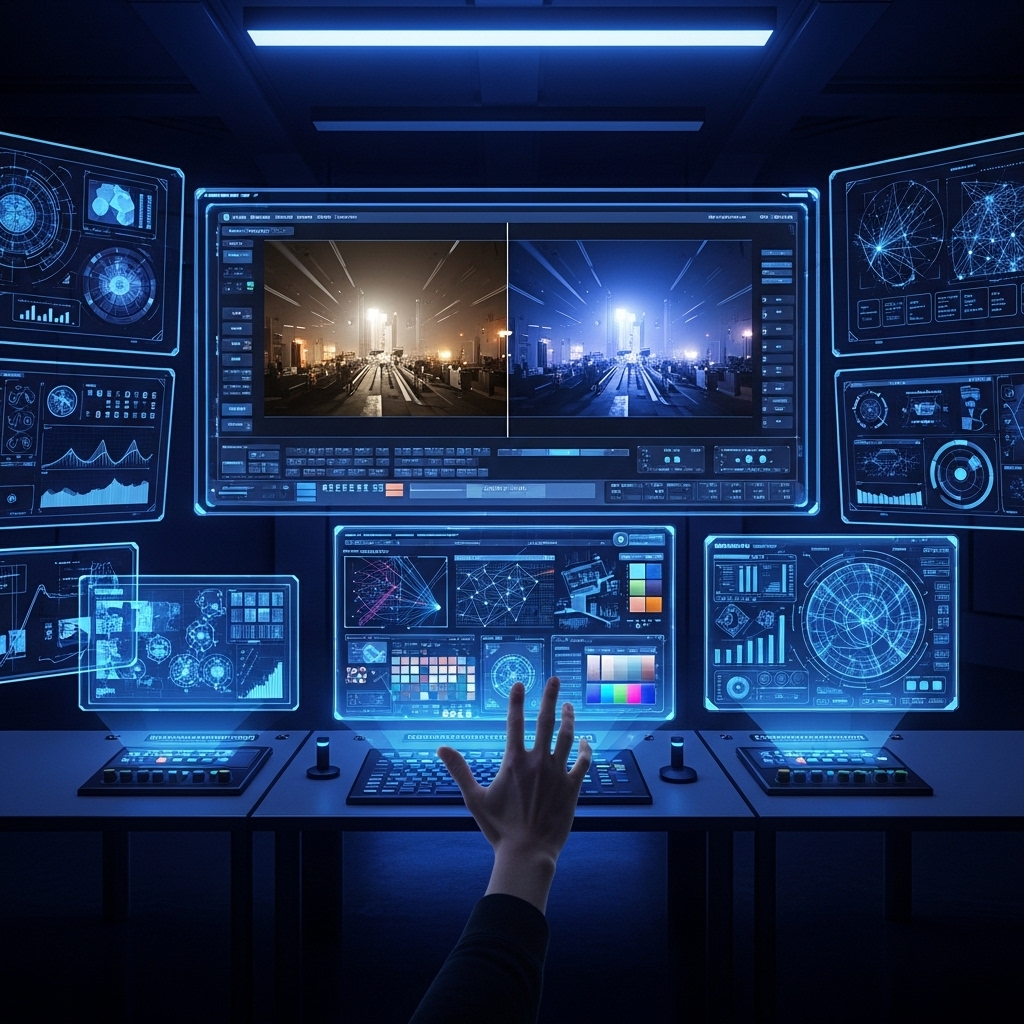
Introduction to AI-Powered Video Relighting
The world of video production has witnessed significant advancements in recent years, thanks to the integration of Artificial Intelligence (AI) in various aspects of the process. One such area that has seen tremendous growth and potential is AI-powered video relighting. This technology enables the manipulation of lighting in videos, allowing for greater control over the mood, atmosphere, and overall aesthetic of the footage. In this article, we will delve into the future of AI-powered video relighting tools and techniques, exploring their capabilities, applications, and the impact they are likely to have on the video production industry.
Understanding AI-Powered Video Relighting
AI-powered video relighting involves using machine learning algorithms to analyze and modify the lighting in video footage. This can be achieved through various techniques, including depth estimation, scene understanding, and light transport modeling. By leveraging these technologies, video editors and producers can adjust the lighting in a scene to enhance the visual appeal, correct errors, or create specific effects. For instance, a scene shot during the day can be transformed to appear as if it were filmed at night, or vice versa, without the need for reshooting or extensive post-production work.
Applications of AI-Powered Video Relighting
The applications of AI-powered video relighting are vast and diverse, spanning across various industries such as film, television, advertising, and social media. In the film industry, for example, AI-powered video relighting can be used to create complex lighting effects, enhance the mood of a scene, or even to recreate historical periods with accuracy. In advertising, this technology can help brands create consistent lighting across different promotional materials, ensuring a cohesive visual identity. Furthermore, social media platforms can leverage AI-powered video relighting to offer users advanced video editing tools, enhancing their overall user experience.
Techniques and Tools in AI-Powered Video Relighting
Several techniques and tools are being developed and refined in the realm of AI-powered video relighting. One of the key techniques involves the use of Deep Learning models that can predict and manipulate light transport in scenes. This allows for the realistic relighting of objects and environments. Another significant tool is the development of user-friendly interfaces that enable video editors to intuitively adjust lighting parameters, such as intensity, color, and direction, without needing extensive technical knowledge. Companies are also working on integrating AI-powered video relighting capabilities into existing video editing software, making these advanced tools accessible to a broader range of users.
Challenges and Limitations of AI-Powered Video Relighting
Despite the promising potential of AI-powered video relighting, there are challenges and limitations that need to be addressed. One of the primary concerns is the requirement for high-quality input data. The effectiveness of AI-powered relighting tools depends heavily on the resolution, frame rate, and overall quality of the video footage. Additionally, complex scenes with multiple light sources, reflections, and dynamic objects can pose significant challenges for current AI algorithms. Moreover, the computational resources needed to process and relight video footage in real-time can be substantial, making it essential to develop more efficient algorithms and utilize advancements in hardware technology.
Future Developments and Expectations
Looking ahead, the future of AI-powered video relighting is poised for significant advancements. As AI technology continues to evolve, we can expect to see more sophisticated and user-friendly tools that can handle complex relighting tasks with greater ease and precision. The integration of AI with other technologies, such as virtual and augmented reality, will also open up new avenues for immersive and interactive storytelling. Furthermore, the development of more efficient and accessible AI-powered video relighting tools will democratize video production, enabling a wider range of creators to produce high-quality, visually stunning content.
Conclusion: Embracing the Revolution in Visuals
In conclusion, AI-powered video relighting represents a revolutionary step forward in the world of video production. With its ability to manipulate and enhance lighting in videos, this technology has the potential to transform the way stories are told and visuals are created. As the industry continues to evolve and improve, we can anticipate seeing more innovative applications of AI-powered video relighting across various sectors. Whether you are a professional video editor, a social media influencer, or simply an enthusiast of visual storytelling, the future of AI-powered video relighting tools and techniques promises to be exciting and transformative, offering unprecedented creative possibilities and pushing the boundaries of what is visually possible.