
Introduction to Virtual Realms
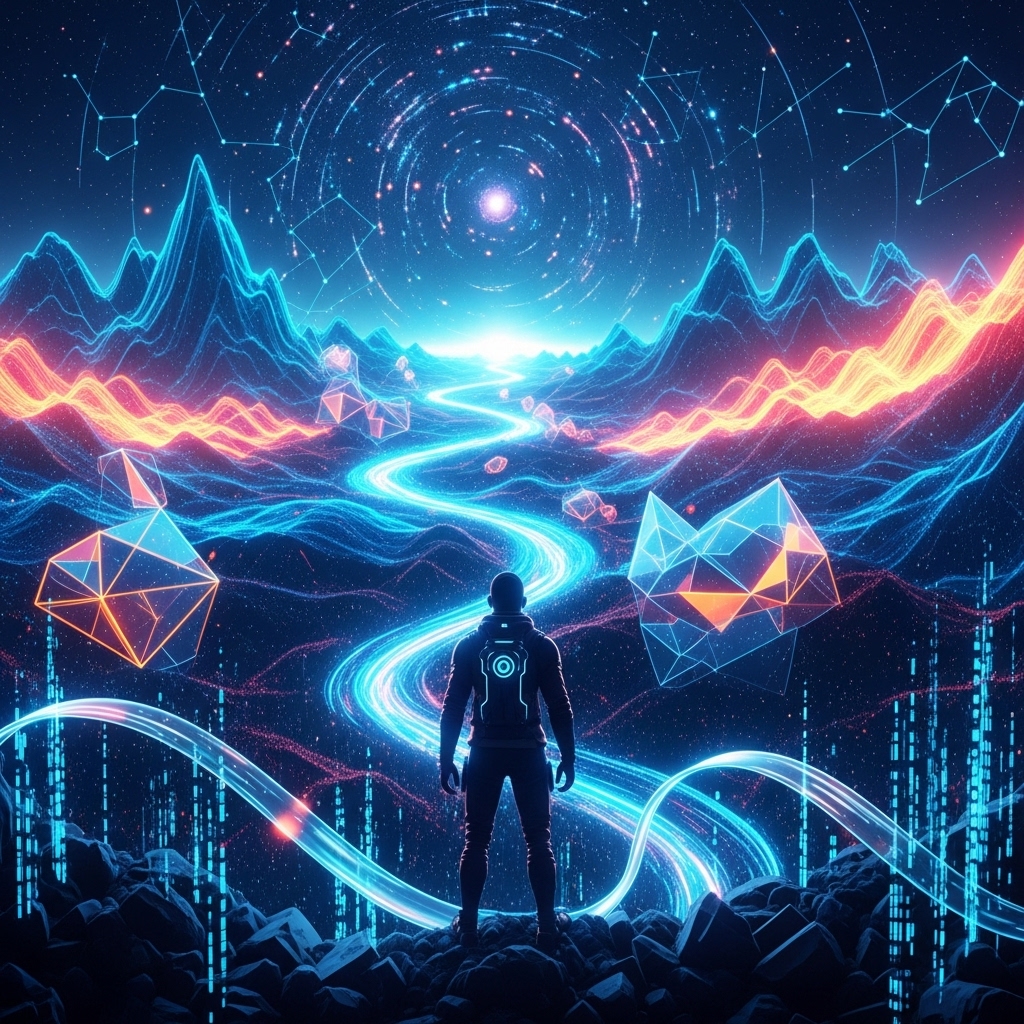
Immersive digital art landscapes have revolutionized the way we experience and interact with art. Virtual realms, in particular, have become a fascinating domain where artists can push the boundaries of creativity, experimenting with new forms of expression and engagement. This journey through immersive digital art landscapes will delve into the concept of virtual realms, their evolution, and the innovative projects that are redefining the digital art world. From the early days of virtual reality (VR) to the current advancements in augmented reality (AR) and mixed reality (MR), the possibilities for artistic exploration and innovation have never been more exciting.
Evolution of Virtual Realms
The concept of virtual realms has its roots in the 1960s, when the first virtual reality head-mounted displays were developed. However, it wasn't until the 1990s that VR technology started to gain traction, with the introduction of consumer-grade headsets and the development of immersive gaming experiences. The evolution of virtual realms has been marked by significant advancements in hardware and software, enabling artists to create more sophisticated and engaging digital environments. For instance, the introduction of motion controllers and haptic feedback has allowed for a more tactile and immersive experience, while advancements in graphics processing have enabled the creation of stunning, high-resolution landscapes.
Immersive Digital Art Landscapes
Immersive digital art landscapes are designed to transport viewers into new and unexplored worlds, often blurring the lines between reality and fantasy. These virtual environments can range from fantastical, dreamlike scenarios to realistic, interactive simulations. Artists such as Jon Rafman and Jeremy Bailey have been at the forefront of this movement, creating immersive installations that challenge our perceptions and push the boundaries of digital art. For example, Rafman's "View of Harbor" series uses Google Street View to create surreal, virtual landscapes that invite viewers to explore and interact with the environment.
Virtual Reality in Art
Virtual reality has become an essential tool for artists looking to create immersive and interactive experiences. VR technology allows viewers to step into the artist's world, becoming an active participant in the creative process. Artists such as Random International and Carsten Höller have used VR to create large-scale, immersive installations that explore the relationship between the physical and virtual worlds. For instance, Random International's "Rain Room" uses VR to create a immersive environment where viewers can walk through a field of falling rain without getting wet, challenging our perceptions of space and reality.
Augmented Reality and Mixed Reality
Augmented reality (AR) and mixed reality (MR) have also become important mediums for digital artists, enabling them to create interactive and immersive experiences that blend the physical and virtual worlds. AR technology overlays digital information onto the real world, while MR combines elements of both AR and VR to create a hybrid experience. Artists such as Refik Anadol and Anthony McCall have used AR and MR to create large-scale, site-specific installations that transform public spaces and challenge our perceptions of reality. For example, Anadol's "Melting Memories" uses AR to create a immersive environment that visualizes human brain activity, inviting viewers to explore the neural networks of the human mind.
Interactive and Participatory Art
Interactive and participatory art has become a key aspect of immersive digital art landscapes, enabling viewers to become active participants in the creative process. Artists such as Rafael Lozano-Hemmer and Camille Utterback have used sensors, cameras, and other technologies to create interactive installations that respond to the viewer's presence and movements. For instance, Lozano-Hemmer's "Pulse Room" uses biometric sensors to create a immersive environment that visualizes the viewer's heart rate and other vital signs, creating a unique and dynamic experience for each participant.
Conclusion and Future Directions
In conclusion, immersive digital art landscapes have revolutionized the way we experience and interact with art, offering new possibilities for creative expression and innovation. From the early days of virtual reality to the current advancements in augmented reality and mixed reality, the evolution of virtual realms has been marked by significant advancements in hardware and software. As technology continues to advance, we can expect to see even more sophisticated and immersive digital environments, pushing the boundaries of what is possible in the world of digital art. Whether through interactive installations, virtual reality experiences, or augmented reality interventions, immersive digital art landscapes will continue to challenge our perceptions, inspire our imagination, and redefine the way we experience and interact with art.