
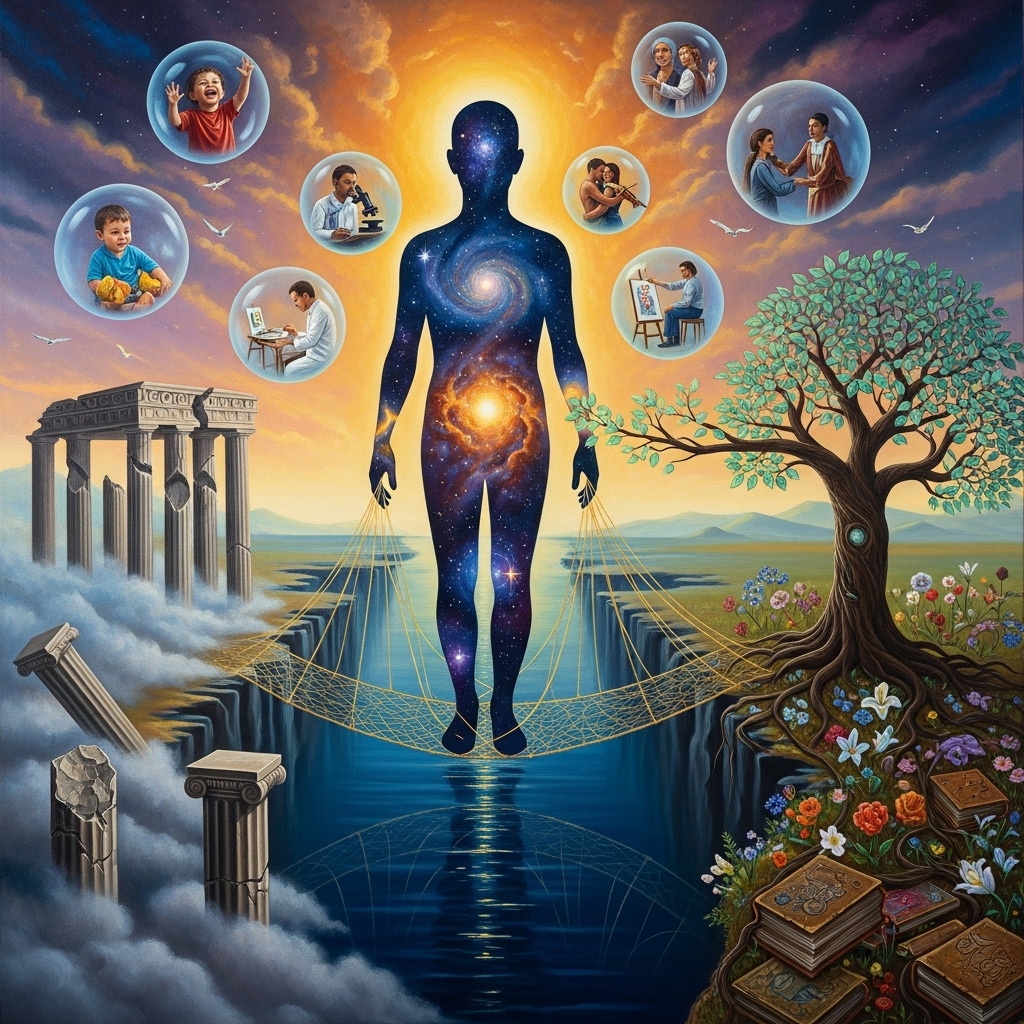
Introduction to the Quintessence of Human Existence
The quintessence of human existence is a concept that has puzzled philosophers, theologians, and scientists for centuries. It refers to the most essential and inherent aspect of being human, the core that defines our nature and purpose. Understanding the quintessence of human existence is crucial for grasping the complexities of human behavior, emotions, and experiences. In this article, we will delve into the concept of quintessence, exploring its various facets and implications for human life.
Defining Quintessence
Quintessence, derived from the Latin word "quintus," meaning five, originally referred to the fifth element in ancient Greek philosophy, in addition to earth, air, fire, and water. This fifth element was believed to be the divine substance that made up the stars and heavenly bodies. Over time, the concept of quintessence evolved to encompass the idea of the most perfect or pure form of a substance. In the context of human existence, quintessence represents the distilled essence of humanity, the fundamental characteristics that make us who we are.
The Philosophical Perspective
Philosophers have long grappled with the question of what constitutes the quintessence of human existence. Some, like Aristotle, argued that the quintessence of humanity lies in our rational capacity, our ability to reason and think. Others, such as Jean-Paul Sartre, posited that human existence is characterized by freedom and choice, and that our quintessence lies in our ability to create our own meaning and purpose. The existentialist perspective emphasizes individual freedom and responsibility, suggesting that our quintessence is rooted in our capacity for self-awareness and self-creation.
The Psychological Perspective
From a psychological perspective, the quintessence of human existence is often linked to emotions, motivations, and relationships. Psychologists like Abraham Maslow and Carl Rogers have argued that human beings have inherent needs and desires, such as the need for love, belonging, and self-actualization. Our quintessence, in this view, is tied to our emotional experiences, our connections with others, and our pursuit of personal growth and fulfillment. For example, the concept of "flow" introduced by Mihaly Csikszentmihalyi, which describes the optimal state of engagement and happiness, can be seen as an expression of the quintessence of human existence.
The Spiritual Perspective
Many spiritual traditions believe that the quintessence of human existence is rooted in a higher power or divine reality. In this view, our quintessence is connected to our spiritual nature, our soul or essence, which is often seen as eternal and unchanging. The spiritual perspective emphasizes the importance of cultivating a deeper sense of awareness, compassion, and connection to the world around us. For instance, the concept of "ubuntu" in African spirituality, which translates to "humanity towards others," highlights the interconnectedness of all human beings and the importance of community and empathy in defining our quintessence.
Implications and Applications
Understanding the quintessence of human existence has significant implications for various aspects of human life, from personal growth and relationships to education and social policy. By recognizing and embracing our fundamental nature, we can cultivate a deeper sense of purpose, meaning, and fulfillment. For example, in education, acknowledging the quintessence of human existence can inform teaching methods that prioritize emotional intelligence, creativity, and critical thinking. In social policy, recognizing the importance of community and empathy can guide initiatives that promote social cohesion and inclusivity.
Conclusion
In conclusion, the quintessence of human existence is a complex and multifaceted concept that encompasses various aspects of human nature, from rationality and emotions to spirituality and relationships. By exploring the different perspectives on quintessence, we can gain a deeper understanding of what it means to be human and how we can cultivate a more authentic, meaningful, and fulfilling existence. Ultimately, embracing our quintessence can help us navigate the complexities of life, foster a sense of connection and purpose, and unlock our full potential as human beings.