
Introduction to High-Quality Materials in AI-Driven Manufacturing
As the manufacturing industry continues to evolve with the integration of artificial intelligence (AI), the demand for high-quality materials has never been more critical. AI-driven manufacturing processes rely heavily on the precision and consistency of the materials used to produce goods. High-quality materials not only ensure the durability and performance of the final product but also optimize the manufacturing process itself, reducing errors and waste. In this article, we will delve into what makes a material high-quality in the context of AI-driven manufacturing processes, exploring the key characteristics, testing methods, and examples of high-quality materials in various industries.
Characteristics of High-Quality Materials
High-quality materials in AI-driven manufacturing exhibit several key characteristics that distinguish them from their lower-grade counterparts. These include high purity, consistent composition, precise dimensional tolerances, and optimal physical properties such as strength, conductivity, or elasticity, depending on the application. For instance, in the production of semiconductor chips, silicon wafers must have extremely high purity and precise crystal structure to ensure the proper functioning of the electronic components. Similarly, in aerospace manufacturing, materials like titanium alloys must possess high strength-to-weight ratios and resistance to corrosion and fatigue to withstand the harsh conditions of flight.
Role of Material Testing in Ensuring Quality
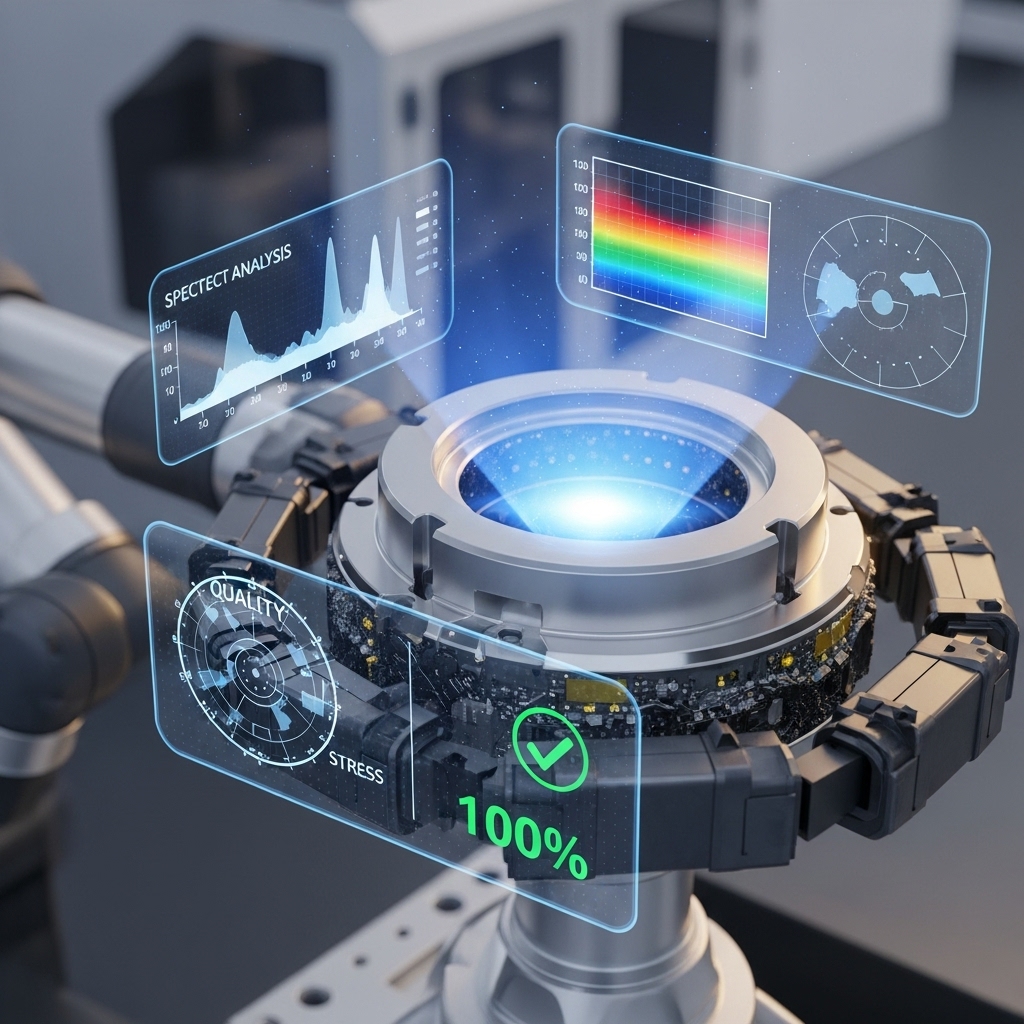
Material testing plays a crucial role in ensuring the quality of materials used in AI-driven manufacturing. Advanced testing techniques, including spectroscopy, microscopy, and mechanical testing, are employed to verify the material's properties and detect any defects or impurities. For example, in the automotive industry, advanced high-strength steels (AHSS) are subjected to rigorous testing to ensure they meet the required standards for crashworthiness and durability. AI algorithms can analyze the test data to predict material behavior under various conditions, further optimizing material selection and manufacturing processes.
AI-Driven Material Selection and Optimization
AI algorithms can significantly enhance material selection and optimization in manufacturing. By analyzing vast amounts of data on material properties, manufacturing processes, and product performance, AI can identify the most suitable materials for specific applications and predict potential issues before they arise. For instance, in the development of new aircraft, AI can simulate the performance of different materials under various flight conditions, helping engineers select the optimal materials for each component. This not only improves product quality but also reduces development time and costs.
Examples of High-Quality Materials in Various Industries
Several industries rely on high-quality materials to produce their goods, and the specific requirements can vary widely. In the medical device industry, for example, materials like implantable-grade titanium and biocompatible polymers are used due to their high purity, corrosion resistance, and compatibility with the human body. In the renewable energy sector, high-efficiency solar panels require materials with optimal optical and electrical properties, such as high-purity silicon and specialized coatings. The automotive industry, as mentioned, relies on advanced steels and lightweight materials like aluminum and carbon fiber to achieve a balance between safety, fuel efficiency, and performance.
Challenges and Future Directions
Despite the advancements in material science and AI-driven manufacturing, several challenges persist. The development of new materials with tailored properties is a time-consuming and costly process. Additionally, ensuring the consistency and quality of materials from different suppliers can be problematic. Future research directions include the development of more sophisticated AI models that can predict material behavior under complex conditions and the integration of machine learning with materials science to accelerate the discovery of new materials. Furthermore, the use of recycled materials and the development of sustainable manufacturing processes are becoming increasingly important for reducing environmental impact.
Conclusion
In conclusion, high-quality materials are the backbone of AI-driven manufacturing processes, enabling the production of goods with precision, consistency, and performance. The characteristics of high-quality materials, including purity, consistency, and optimal physical properties, are critical for ensuring the reliability and efficiency of manufacturing processes. Through advanced material testing and AI-driven material selection and optimization, manufacturers can enhance product quality, reduce waste, and improve sustainability. As technology continues to evolve, the role of high-quality materials in AI-driven manufacturing will only become more pronounced, driving innovation and excellence across various industries.