
Introduction to Early Data Culture
Data culture, in its most basic form, refers to the way people collect, analyze, and interpret data to make informed decisions. While the term might evoke images of modern computers and statistical software, the concept of data culture stretches back thousands of years to ancient civilizations. These early societies recognized the importance of data in governing their populations, managing resources, and understanding their environments. This article explores what defined early data culture in ancient civilizations, highlighting key practices, tools, and the impact of data-driven decision-making on their development and legacy.
Record Keeping and Early Forms of Data Collection
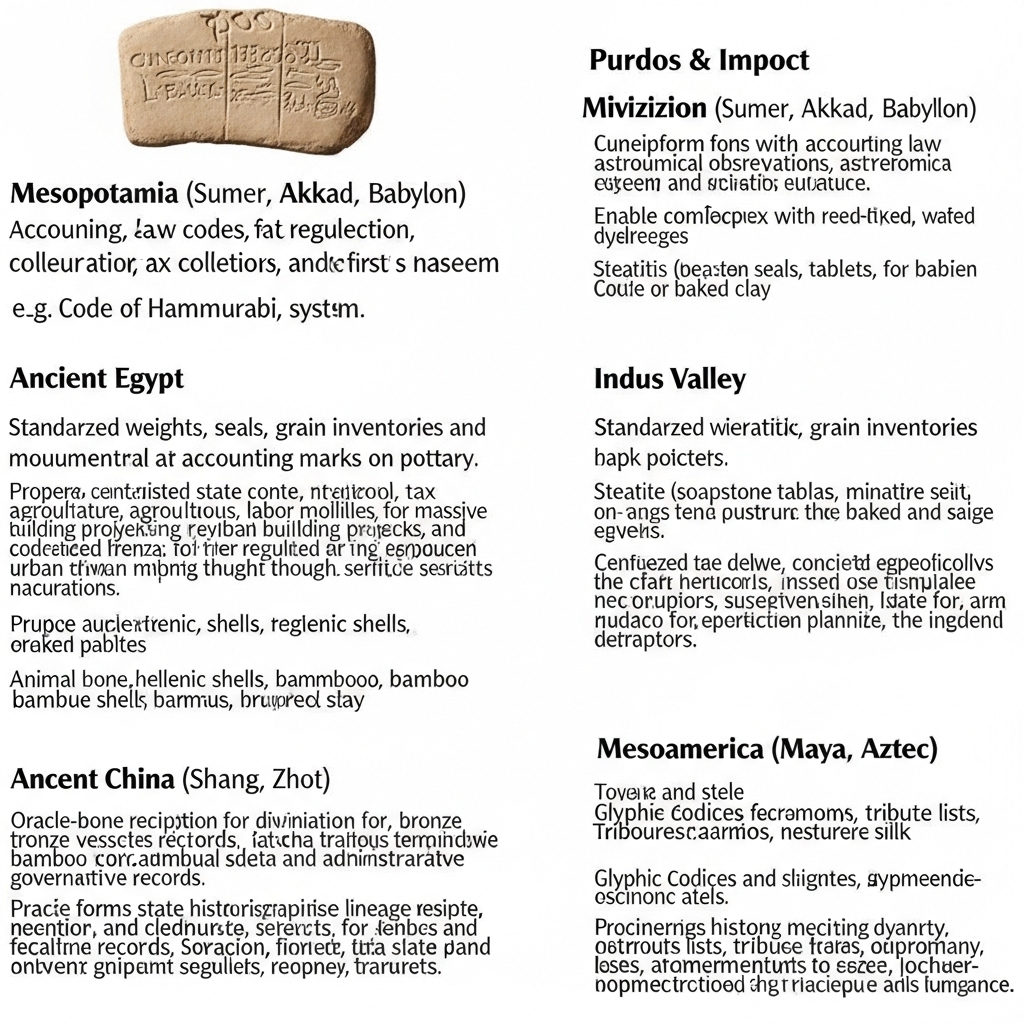
One of the foundational elements of early data culture was the practice of record keeping. Ancient civilizations developed various methods to record and store information, from clay tablets in Mesopotamia to papyrus in Egypt. These records included demographic data, such as population sizes and birth rates, economic data like trade volumes and tax collections, and environmental observations, including weather patterns and agricultural yields. For example, the Babylonians used clay tablets to record business transactions, legal codes, and even astronomical observations, demonstrating an early understanding of the value of data for both practical and scientific purposes.
Tools and Technologies of Early Data Analysis
Ancient civilizations developed ingenious tools and technologies to analyze and make sense of their data. The abacus, for instance, was a counting frame used for basic arithmetic operations and is considered one of the earliest known calculators. In ancient Greece, the Antikythera mechanism, discovered in a shipwreck off the Greek island of Antikythera, is believed to be one of the earliest analog computers, used to calculate astronomical positions and predict eclipses. These tools not only facilitated data analysis but also represented significant advancements in technology and engineering, underscoring the interplay between data culture and innovation.
Government and Administrative Uses of Data
Data played a crucial role in the governance of ancient civilizations. Rulers used demographic and economic data to make informed decisions about taxation, public works, and military campaigns. The Domesday Book, compiled in England in 1086, is a seminal example of early data collection for administrative purposes, providing a detailed survey of the landholdings and resources across the country. Similarly, in ancient China, the census was a powerful tool for governance, allowing emperors to assess taxes, determine military service, and plan public projects. These examples illustrate how data was central to the functioning of early states, enabling more effective governance and resource allocation.
Cultural and Scientific Contributions of Early Data Culture
Beyond its practical applications, early data culture contributed significantly to cultural and scientific advancements. The collection of astronomical data, for instance, led to important discoveries about the solar system and the development of calendars. In ancient Maya civilization, sophisticated astronomical observations were used to create accurate calendars and track celestial events, demonstrating a deep understanding of mathematical and astronomical principles. Furthermore, the recording of historical events and cultural practices helped in preserving the heritage and identity of these civilizations, showing how data culture was intertwined with the broader cultural and intellectual pursuits of ancient societies.
Challenges and Limitations of Early Data Culture
Despite its significance, early data culture faced numerous challenges and limitations. The process of collecting, storing, and analyzing data was labor-intensive and prone to errors. The durability of data storage mediums was also a concern, with many records susceptible to damage or loss over time. Additionally, the interpretation of data was often subjective and could be influenced by political or religious biases. These challenges highlight the complexities and nuances of developing a data culture, where the accuracy, accessibility, and interpretation of data were constant concerns.
Conclusion: The Legacy of Early Data Culture
The study of early data culture in ancient civilizations offers valuable insights into the origins and evolution of data-driven decision-making. From the development of record-keeping systems to the use of early analytical tools, these societies recognized the power of data to inform governance, commerce, and scientific inquiry. The legacy of early data culture can be seen in the modern era's emphasis on data analysis and interpretation, where technologies like artificial intelligence and big data analytics continue to transform how we understand and interact with the world. Understanding the historical context of data culture not only appreciates the ingenuity of our ancestors but also provides a foundation for navigating the complexities of data in the contemporary world.