
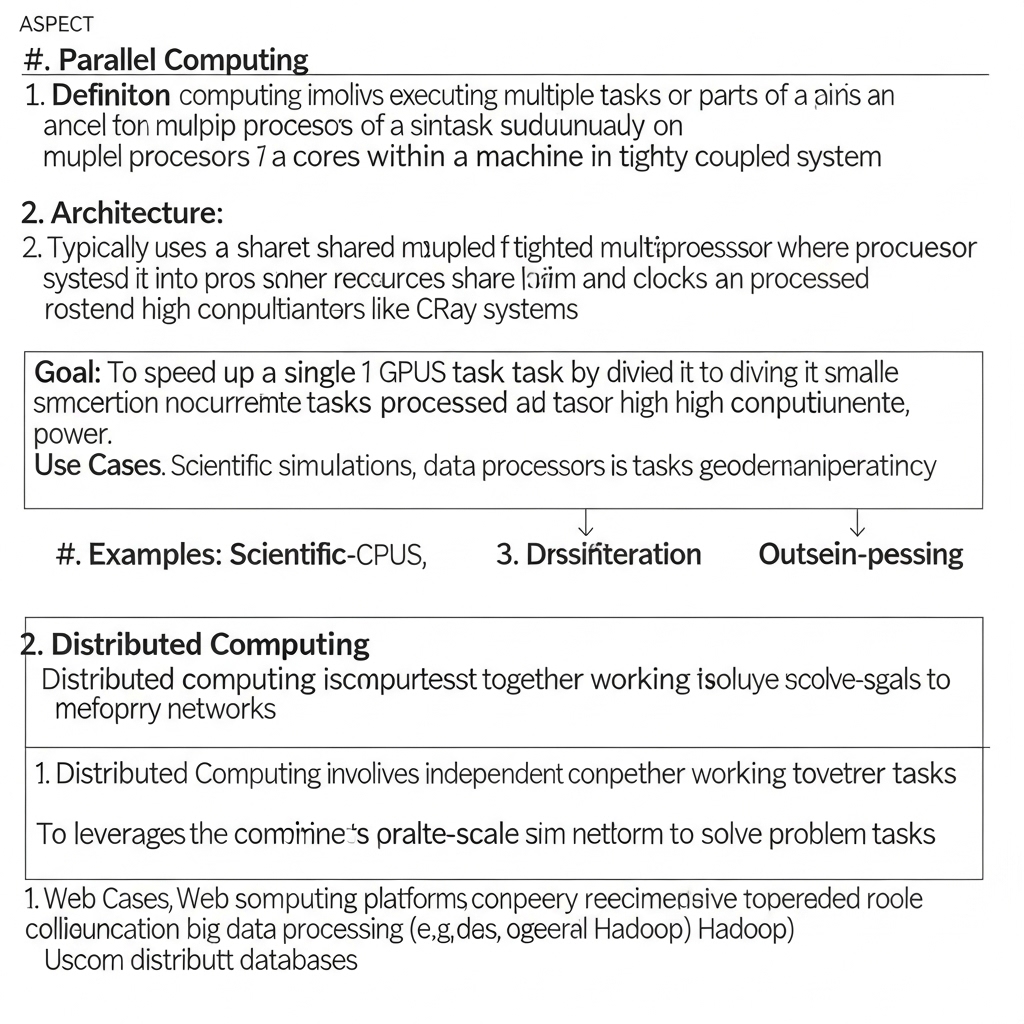
Introduction to Parallel and Distributed Computing Systems
Parallel and distributed computing systems are two related but distinct concepts in the field of computer science. Both types of systems are designed to improve the performance and efficiency of computational tasks, but they differ in their approach and architecture. In this article, we will explore the differences between parallel and distributed computing systems, their characteristics, and examples of each. We will also discuss the advantages and disadvantages of each approach and provide examples of real-world applications.
Parallel Computing Systems
Parallel computing systems are designed to perform multiple tasks simultaneously, using multiple processing units or cores. These systems are typically used for tasks that require intense computational power, such as scientific simulations, data analysis, and machine learning. Parallel computing systems can be further divided into two subcategories: symmetric multiprocessing (SMP) and massively parallel processing (MPP). SMP systems use multiple processors or cores to perform tasks, while MPP systems use a large number of processors or cores to perform tasks in parallel.
For example, a parallel computing system can be used to perform complex scientific simulations, such as weather forecasting or fluid dynamics. In this scenario, multiple processors or cores can be used to perform different parts of the simulation, resulting in faster and more accurate results. Another example is the use of parallel computing in machine learning, where multiple processors or cores can be used to train complex models and perform predictions.
Distributed Computing Systems
Distributed computing systems, on the other hand, are designed to distribute tasks across multiple computers or nodes, which can be geographically dispersed. These systems are typically used for tasks that require large amounts of data processing, such as big data analytics, cloud computing, and grid computing. Distributed computing systems can be further divided into two subcategories: client-server architecture and peer-to-peer architecture. Client-server architecture uses a central server to manage tasks and distribute them to client nodes, while peer-to-peer architecture allows nodes to communicate directly with each other.
For example, a distributed computing system can be used to perform big data analytics, where large amounts of data are processed across multiple nodes. In this scenario, each node can process a portion of the data, and the results can be combined to produce the final output. Another example is the use of distributed computing in cloud computing, where tasks are distributed across multiple virtual machines or containers.
Key Differences Between Parallel and Distributed Computing Systems
The key differences between parallel and distributed computing systems are the way tasks are divided and executed. In parallel computing systems, tasks are divided into smaller sub-tasks that are executed simultaneously on multiple processing units or cores. In distributed computing systems, tasks are divided into smaller sub-tasks that are executed on multiple computers or nodes. Another key difference is the communication mechanism used between processing units or nodes. In parallel computing systems, communication is typically done through shared memory or message passing, while in distributed computing systems, communication is typically done through networking protocols such as TCP/IP.
Additionally, parallel computing systems are typically more tightly coupled, meaning that the processing units or cores are closely linked and communicate frequently. Distributed computing systems, on the other hand, are typically more loosely coupled, meaning that the nodes are more independent and communicate less frequently.
Advantages and Disadvantages of Parallel Computing Systems
Parallel computing systems have several advantages, including improved performance, scalability, and reliability. By performing tasks in parallel, parallel computing systems can achieve significant speedups and improve overall system performance. Additionally, parallel computing systems can be easily scaled up or down by adding or removing processing units or cores. However, parallel computing systems also have some disadvantages, including increased complexity, higher cost, and limited scalability.
For example, parallel computing systems can be more complex to program and manage, requiring specialized skills and expertise. Additionally, parallel computing systems can be more expensive to purchase and maintain, especially for large-scale systems. However, the benefits of parallel computing systems can outweigh the costs for many applications, such as scientific simulations, data analysis, and machine learning.
Advantages and Disadvantages of Distributed Computing Systems
Distributed computing systems also have several advantages, including improved scalability, flexibility, and fault tolerance. By distributing tasks across multiple nodes, distributed computing systems can achieve significant speedups and improve overall system performance. Additionally, distributed computing systems can be easily scaled up or down by adding or removing nodes. However, distributed computing systems also have some disadvantages, including increased complexity, higher communication overhead, and security concerns.
For example, distributed computing systems can be more complex to program and manage, requiring specialized skills and expertise. Additionally, distributed computing systems can have higher communication overhead, resulting in slower performance and increased latency. However, the benefits of distributed computing systems can outweigh the costs for many applications, such as big data analytics, cloud computing, and grid computing.
Conclusion
In conclusion, parallel and distributed computing systems are two related but distinct concepts in the field of computer science. While both types of systems are designed to improve the performance and efficiency of computational tasks, they differ in their approach and architecture. Parallel computing systems are designed to perform multiple tasks simultaneously, using multiple processing units or cores, while distributed computing systems are designed to distribute tasks across multiple computers or nodes. By understanding the differences between parallel and distributed computing systems, developers and researchers can choose the best approach for their specific application and achieve significant improvements in performance, scalability, and reliability.