
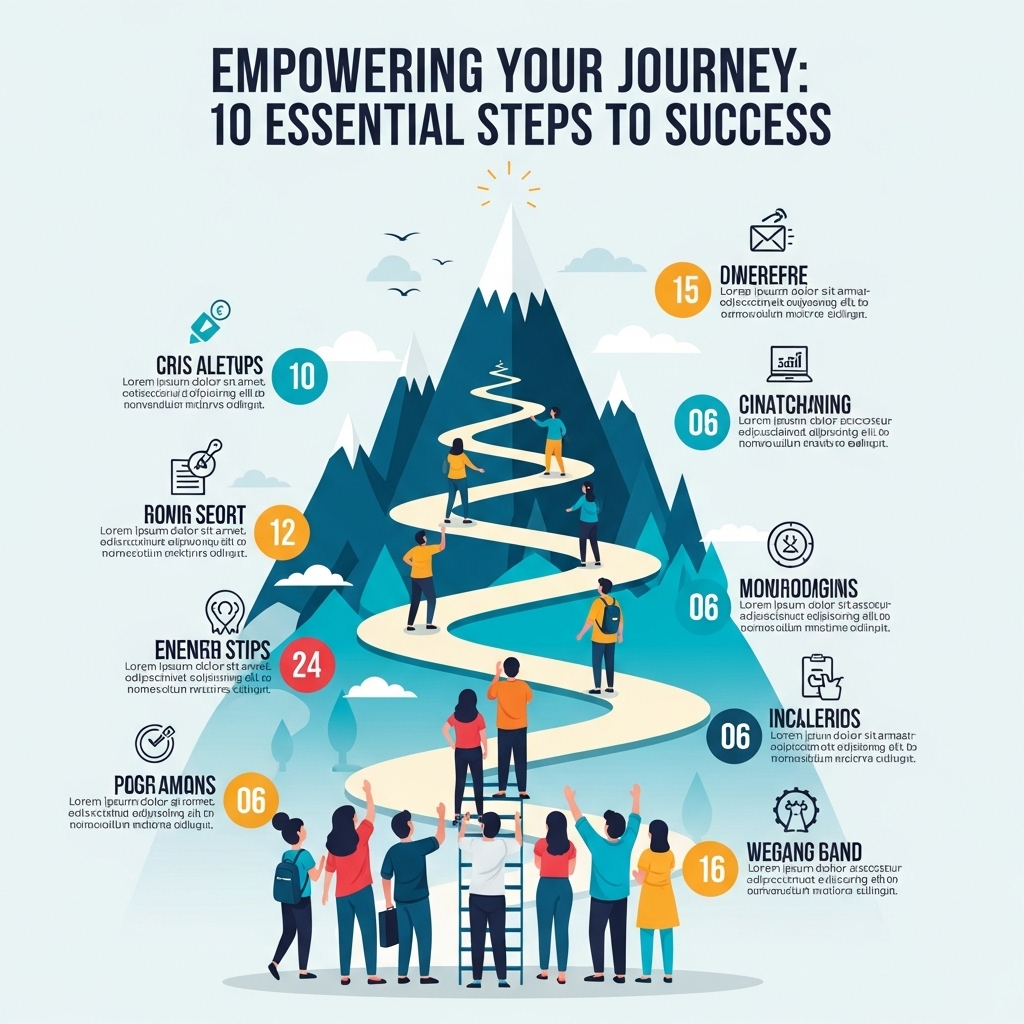
Introduction to Empowering Your Journey
Embarking on a journey to success can be a daunting task, filled with uncertainty and self-doubt. However, with the right mindset and strategies, anyone can achieve their goals and realize their dreams. Empowering your journey requires a combination of self-awareness, planning, and perseverance. In this article, we will explore the 10 essential steps to success, providing you with a roadmap to help you navigate your path and reach your full potential. Whether you're looking to advance in your career, start a new business, or simply improve your overall well-being, these steps will serve as a foundation for achieving success and living a fulfilling life.
Step 1-3: Setting the Foundation for Success
The first three steps to success are setting clear goals, identifying your strengths and weaknesses, and developing a growth mindset. Setting clear goals helps you focus on what you want to achieve and gives you direction. Identifying your strengths and weaknesses allows you to leverage your abilities and work on areas that need improvement. Developing a growth mindset enables you to embrace challenges and view failures as opportunities for growth. For example, Thomas Edison, the inventor of the light bulb, is famously quoted as saying, "I have not failed. I've just found 10,000 ways that won't work." This mindset is essential for overcoming obstacles and staying motivated on your journey to success.
A great example of setting clear goals is writing down your objectives and making them specific, measurable, achievable, relevant, and time-bound (SMART). This helps to create a sense of clarity and purpose, allowing you to stay focused on what you want to achieve. Additionally, identifying your strengths and weaknesses can be done through self-reflection, seeking feedback from others, or using personality assessments such as the Myers-Briggs Type Indicator (MBTI). By understanding your strengths and weaknesses, you can develop strategies to capitalize on your strengths and improve your weaknesses.
Step 4-5: Building Resilience and Networking
Steps four and five involve building resilience and networking. Building resilience helps you to cope with setbacks and failures, while networking allows you to connect with people who can support and guide you on your journey. Resilience can be developed by practicing self-care, learning from failures, and maintaining a positive attitude. Networking can be done by attending events, joining professional organizations, or connecting with people on social media. For instance, joining a professional organization in your industry can provide you with access to valuable resources, mentorship, and job opportunities.
A great example of building resilience is the story of J.K. Rowling, the author of the Harry Potter series. Despite facing numerous rejections and struggling with poverty, Rowling persevered and went on to become one of the most successful authors in the world. Her story demonstrates the importance of resilience and the need to maintain a positive attitude in the face of adversity. Similarly, networking can be as simple as attending a conference or joining a online community related to your field. By connecting with others, you can gain valuable insights, learn from their experiences, and stay updated on the latest trends and developments in your industry.
Step 6-7: Taking Action and Embracing Lifelong Learning
Steps six and seven involve taking action and embracing lifelong learning. Taking action requires you to put your plans into motion and start working towards your goals. Embracing lifelong learning involves continuously updating your skills and knowledge to stay relevant in your field. Taking action can be done by breaking down your goals into smaller tasks, creating a schedule, and tracking your progress. Embracing lifelong learning can be done by reading books, attending workshops, or taking online courses. For example, many successful entrepreneurs, such as Steve Jobs and Bill Gates, have attributed their success to their commitment to lifelong learning and their willingness to adapt to changing circumstances.
A great example of taking action is creating a to-do list and prioritizing your tasks based on their importance and urgency. By focusing on the most critical tasks first, you can make significant progress towards your goals and build momentum. Additionally, embracing lifelong learning can be as simple as dedicating 30 minutes each day to reading or learning something new. By doing so, you can stay ahead of the curve and maintain a competitive edge in your industry. Furthermore, many online platforms, such as Coursera and Udemy, offer a wide range of courses and tutorials on various subjects, making it easier than ever to learn new skills and expand your knowledge.
Step 8-10: Maintaining Momentum and Overcoming Obstacles
The final three steps to success involve maintaining momentum, overcoming obstacles, and celebrating your achievements. Maintaining momentum requires you to stay focused and motivated, while overcoming obstacles involves developing strategies to deal with challenges and setbacks. Celebrating your achievements helps you to stay positive and motivated, and to recognize your progress. Maintaining momentum can be done by setting milestones, tracking your progress, and rewarding yourself for your achievements. Overcoming obstacles can be done by identifying the root cause of the problem, seeking help when needed, and staying positive. Celebrating your achievements can be done by sharing your successes with others, reflecting on your progress, and planning for the future.
A great example of maintaining momentum is the story of the marathon runner, Eliud Kipchoge, who won the Berlin Marathon in 2018. Despite facing challenging weather conditions, Kipchoge maintained his focus and pace, and went on to set a new world record. His story demonstrates the importance of maintaining momentum and staying focused on your goals, even in the face of adversity. Additionally, overcoming obstacles can be as simple as breaking down complex problems into smaller, manageable tasks, or seeking help from others when needed. By doing so, you can develop the resilience and perseverance needed to overcome any obstacle and achieve your goals.
Conclusion: Empowering Your Journey to Success
In conclusion, empowering your journey to success requires a combination of self-awareness, planning, and perseverance. By following the 10 essential steps outlined in this article, you can set yourself up for success and achieve your goals. Remember to stay focused, motivated, and committed to your vision, and don't be afraid to seek help when needed. Celebrate your achievements, learn from your failures, and continuously update your skills and knowledge to stay relevant in your field. With the right mindset and strategies, you can overcome any obstacle and achieve greatness. So, embark on your journey to success with confidence, and remember that the only way to do great work is to love what you do.
By applying the principles outlined in this article, you can empower your journey to success and achieve your dreams. Whether you're looking to advance in your career, start a new business, or simply improve your overall well-being, the 10 essential steps to success provide a roadmap for achieving your goals and living a fulfilling life. So, take the first step today, and start empowering your journey to success. With persistence, dedication, and the right mindset, you can achieve anything you set your mind to, and live a life that is true to your values and aspirations.