
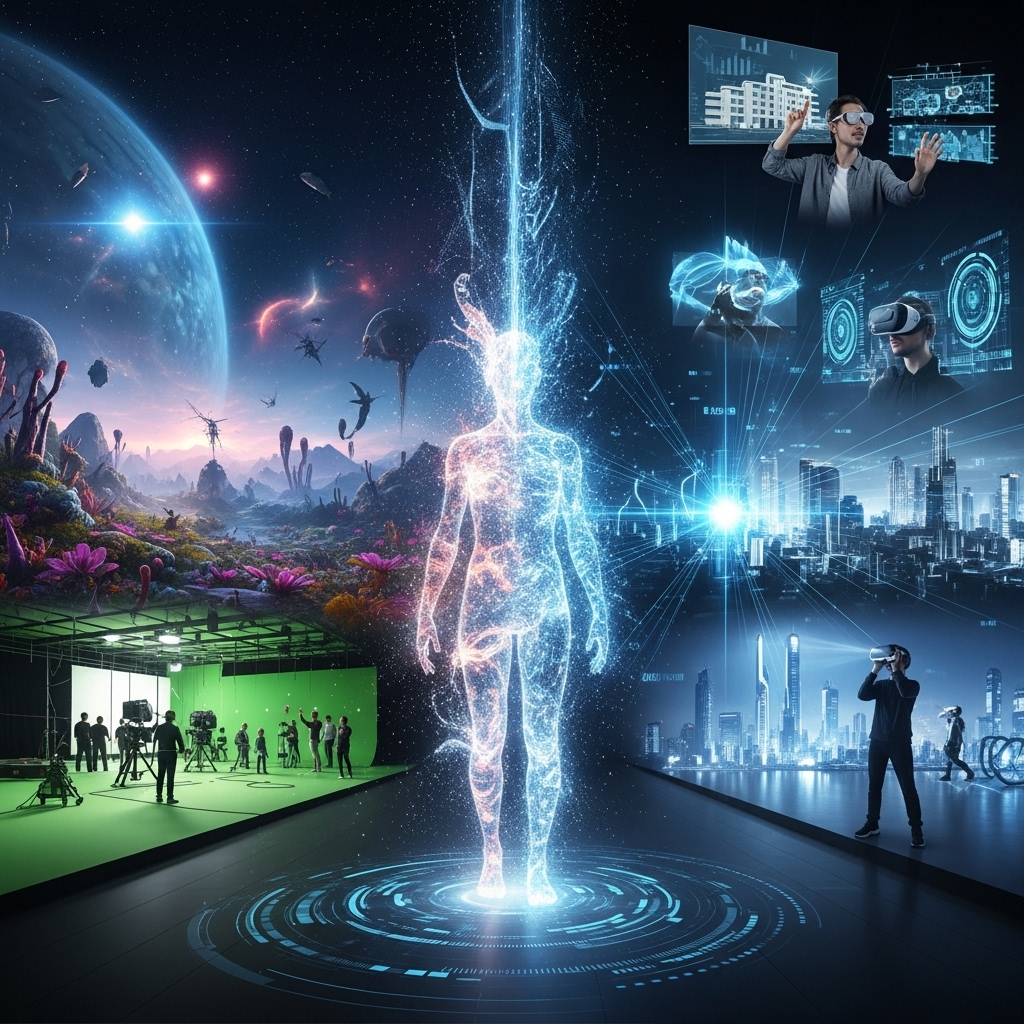
Introduction to Revolutionizing Realities
The world of visual effects (VFX) has undergone a significant transformation over the years, evolving from basic techniques to sophisticated, mind-blowing experiences that transport audiences to new dimensions. The future of VFX is promising, with advancements in technology and innovative applications that extend beyond the film industry. In this article, we will delve into the current state of VFX, its applications, and the exciting developments that are revolutionizing realities in film and beyond.
The Evolution of VFX in Film
VFX has been an integral part of filmmaking for decades, with early examples including the use of miniatures, matte paintings, and basic compositing techniques. However, with the advent of computer-generated imagery (CGI), the possibilities for VFX expanded exponentially. Movies like Star Wars, Jurassic Park, and The Matrix showcased the potential of CGI, pushing the boundaries of what was thought possible on screen. Today, VFX is used in nearly every aspect of filmmaking, from creating elaborate environments and characters to enhancing performances and augmenting practical effects.
For instance, the Avengers franchise has consistently raised the bar for VFX, with each installment featuring more complex and detailed effects. The use of motion capture technology, advanced animation techniques, and sophisticated compositing software has enabled the creation of believable, immersive worlds and characters that have captivated audiences worldwide.
Advancements in VFX Technology
The rapid advancement of technology has been a driving force behind the evolution of VFX. Improved computing power, advanced software, and innovative hardware have enabled artists and technicians to push the boundaries of what is possible. Some of the key advancements include the development of real-time rendering engines, advanced particle simulations, and AI-powered tools for animation and compositing.
Real-time rendering engines, such as Unreal Engine and Unity, have revolutionized the VFX pipeline, allowing for faster iteration and more accurate previews. This has enabled artists to work more efficiently and make changes on the fly, reducing the time and cost associated with traditional rendering methods. Additionally, advanced particle simulations have enabled the creation of more realistic and detailed effects, such as explosions, fire, and water.
VFX Beyond Film: Applications in Other Industries
While film and television remain the primary drivers of the VFX industry, the technology and techniques developed for these fields have numerous applications in other industries. For example, VFX is used in video games to create immersive environments and characters, in architecture to visualize buildings and spaces, and in product design to showcase products and prototypes.
In the field of medicine, VFX is used to create detailed visualizations of the human body, allowing doctors and researchers to better understand complex anatomical structures and develop new treatments. Similarly, in the field of education, VFX is used to create interactive and engaging learning experiences, making complex concepts more accessible and fun for students.
The Rise of Virtual and Augmented Reality
Virtual reality (VR) and augmented reality (AR) have been gaining traction in recent years, with VFX playing a crucial role in the development of these technologies. VR and AR enable users to experience immersive, interactive environments that simulate real-world experiences or create entirely new ones. VFX is used to create the visual elements of these experiences, from environments and characters to special effects and animations.
For instance, VR experiences like Carne y Arena and Spider-Man: Far From Home have showcased the potential of VFX in VR, with realistic environments and characters that transport users to new and exciting worlds. Similarly, AR experiences like Pokemon Go have demonstrated the potential of VFX in AR, with virtual characters and objects that interact with the real world in innovative and engaging ways.
The Future of VFX: Trends and Predictions
As technology continues to evolve, we can expect to see even more exciting developments in the world of VFX. Some of the trends and predictions for the future of VFX include the increased use of AI and machine learning, the development of more sophisticated rendering engines, and the integration of VFX with other technologies like VR and AR.
AI and machine learning are expected to play a major role in the future of VFX, with the potential to automate many tasks and enable artists to focus on higher-level creative decisions. Additionally, the development of more sophisticated rendering engines will enable faster and more accurate rendering, reducing the time and cost associated with traditional rendering methods.
Conclusion: Revolutionizing Realities
In conclusion, the future of VFX is exciting and promising, with advancements in technology and innovative applications that extend beyond the film industry. From the evolution of VFX in film to the rise of virtual and augmented reality, VFX is revolutionizing realities and transforming the way we experience and interact with the world around us. As technology continues to evolve, we can expect to see even more exciting developments in the world of VFX, enabling artists and technicians to push the boundaries of what is possible and create new, immersive experiences that transport us to new dimensions.
As we look to the future, it is clear that VFX will play an increasingly important role in shaping the way we experience and interact with the world around us. Whether in film, video games, architecture, or other industries, VFX has the potential to revolutionize realities and create new, innovative experiences that inspire, educate, and entertain. With its continued evolution and advancement, VFX is sure to remain a vital and exciting field, full of possibilities and promise.