
Introduction to Artificial Intelligence in Medical Diagnosis
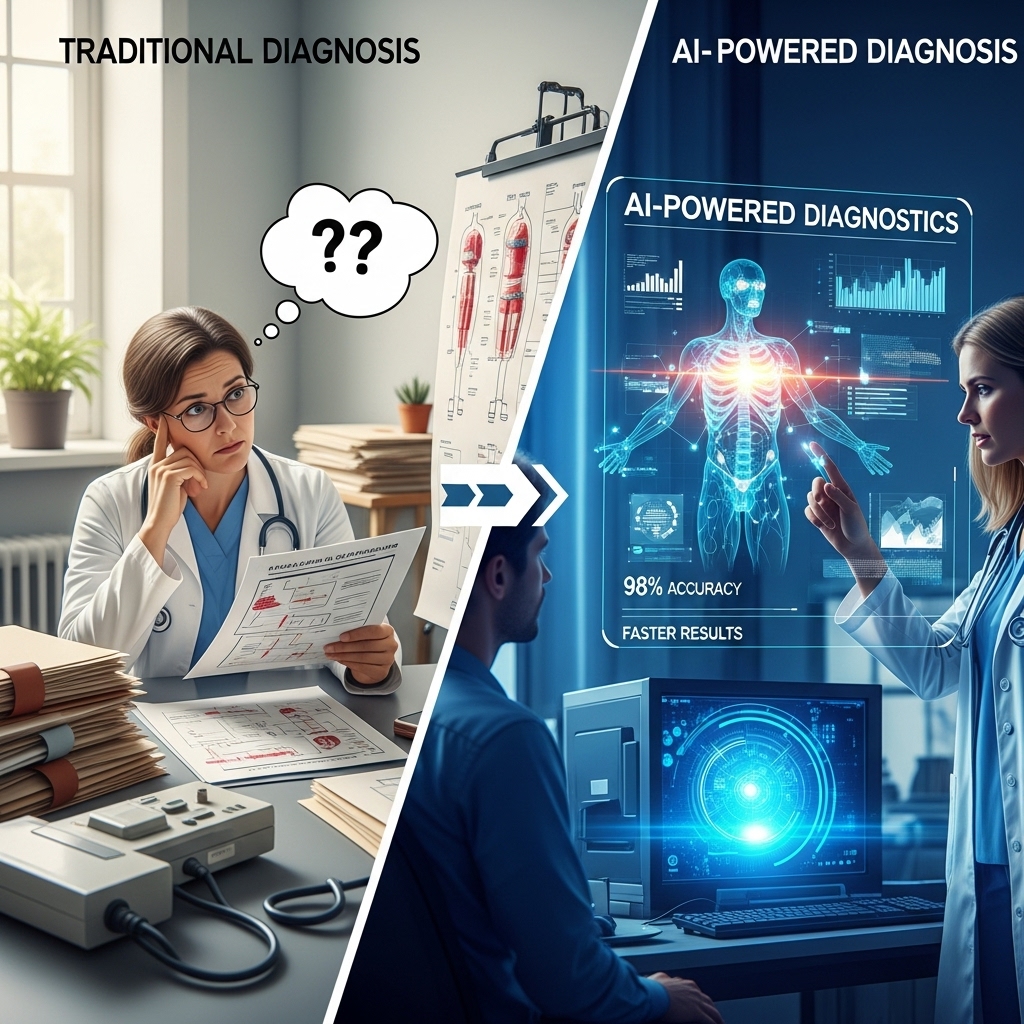
Artificial Intelligence (AI) has been transforming the healthcare industry in numerous ways, with one of the most significant impacts being on medical diagnosis. The integration of AI in medical diagnosis has led to a significant improvement in accuracy, speed, and efficiency. AI algorithms can analyze vast amounts of medical data, identify patterns, and make predictions, helping doctors and healthcare professionals make more accurate diagnoses. In this article, we will explore how AI transforms medical diagnosis accuracy and the various ways it is being used in the healthcare industry.
Pattern Recognition and Data Analysis
One of the primary ways AI improves medical diagnosis accuracy is through pattern recognition and data analysis. AI algorithms can analyze large amounts of medical data, including images, lab results, and patient histories, to identify patterns and anomalies. For example, AI-powered computer vision can analyze medical images such as X-rays, CT scans, and MRIs to detect abnormalities and diagnose conditions such as tumors, fractures, and vascular diseases. Additionally, AI can analyze electronic health records (EHRs) to identify high-risk patients and predict the likelihood of readmission.
For instance, a study published in the journal Nature Medicine found that an AI algorithm was able to detect breast cancer from mammography images with a high degree of accuracy, outperforming human radiologists. Similarly, an AI-powered system developed by Google was able to detect diabetic retinopathy from retinal scans with a high degree of accuracy, allowing for early detection and treatment.
Machine Learning and Predictive Analytics
Machine learning and predictive analytics are key components of AI in medical diagnosis. Machine learning algorithms can be trained on large datasets to learn patterns and relationships between variables, allowing them to make predictions and classify new data. Predictive analytics can be used to identify high-risk patients, predict disease progression, and optimize treatment plans. For example, an AI-powered system can analyze a patient's genetic profile, medical history, and lifestyle factors to predict their risk of developing a particular disease.
A study published in the Journal of the American Medical Association (JAMA) found that a machine learning algorithm was able to predict the risk of cardiovascular disease in patients with high accuracy, allowing for early intervention and prevention. Similarly, an AI-powered system developed by IBM was able to predict the likelihood of patient readmission, allowing hospitals to target interventions and reduce readmission rates.
Computer-Assisted Detection and Diagnosis
Computer-assisted detection and diagnosis (CAD) systems use AI algorithms to analyze medical images and detect abnormalities. CAD systems can be used to detect a wide range of conditions, including cancer, cardiovascular disease, and neurological disorders. For example, CAD systems can be used to detect lung nodules from CT scans, allowing for early detection and treatment of lung cancer.
A study published in the journal Radiology found that a CAD system was able to detect lung nodules from CT scans with a high degree of accuracy, reducing the number of false positives and false negatives. Similarly, a CAD system developed by Siemens Healthineers was able to detect breast lesions from mammography images, allowing for early detection and treatment of breast cancer.
Natural Language Processing and Clinical Decision Support
Natural language processing (NLP) and clinical decision support systems (CDSSs) are also being used to improve medical diagnosis accuracy. NLP can be used to analyze clinical notes and identify relevant information, such as symptoms, diagnoses, and treatments. CDSSs can provide healthcare professionals with real-time clinical decision support, allowing them to make more informed decisions.
For example, an NLP system can analyze clinical notes to identify patients with a high risk of sepsis, allowing for early intervention and treatment. A CDSS can provide healthcare professionals with real-time alerts and recommendations, such as warning them of potential drug interactions or suggesting alternative treatments.
Challenges and Limitations
While AI has the potential to transform medical diagnosis accuracy, there are several challenges and limitations that need to be addressed. One of the primary challenges is the quality and availability of data, as AI algorithms require large amounts of high-quality data to learn and make accurate predictions. Additionally, there are concerns about bias and variability in AI algorithms, as well as the need for transparency and explainability.
Furthermore, there are regulatory and ethical challenges that need to be addressed, such as ensuring patient privacy and confidentiality, as well as addressing issues related to liability and accountability. Despite these challenges, the potential benefits of AI in medical diagnosis are significant, and ongoing research and development are aimed at addressing these challenges and limitations.
Conclusion
In conclusion, AI has the potential to transform medical diagnosis accuracy, improving the speed, efficiency, and accuracy of diagnosis. Through pattern recognition, machine learning, and predictive analytics, AI can analyze large amounts of medical data, identify patterns, and make predictions, helping healthcare professionals make more informed decisions. While there are challenges and limitations that need to be addressed, the potential benefits of AI in medical diagnosis are significant, and ongoing research and development are aimed at realizing these benefits and improving patient outcomes.
As the healthcare industry continues to evolve, it is likely that AI will play an increasingly important role in medical diagnosis, helping to improve patient outcomes, reduce costs, and enhance the overall quality of care. By leveraging the power of AI, healthcare professionals can provide more accurate and effective diagnoses, leading to better patient outcomes and improved health outcomes.