
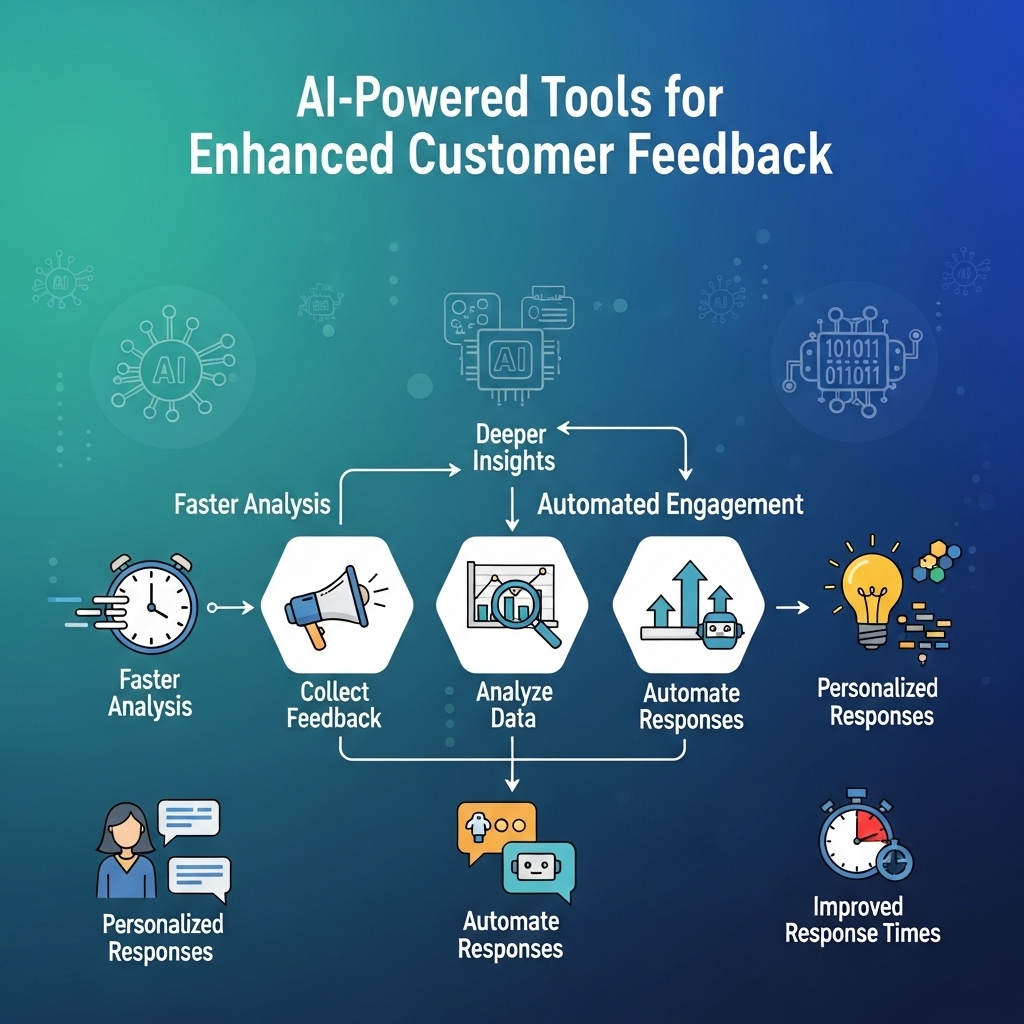
Customer feedback is a vital component of any business, providing valuable insights into customer needs, preferences, and pain points. However, analyzing and responding to customer feedback in a timely and effective manner can be a daunting task, especially for large businesses with numerous customer interactions. This is where AI-powered tools come in, revolutionizing the way businesses collect, analyze, and respond to customer feedback. By leveraging machine learning algorithms, natural language processing, and data analytics, AI-powered tools can help businesses improve customer feedback analysis and response times, ultimately leading to enhanced customer satisfaction, loyalty, and retention.
Automated Feedback Analysis
One of the primary benefits of AI-powered tools is their ability to automate the feedback analysis process. These tools can quickly and accurately analyze large volumes of customer feedback data, including text-based reviews, ratings, and survey responses. By using natural language processing (NLP) and machine learning algorithms, AI-powered tools can identify patterns, sentiment, and trends in customer feedback, providing businesses with actionable insights into customer needs and preferences. This automated analysis enables businesses to respond promptly to customer concerns, resolve issues efficiently, and make data-driven decisions to improve their products and services.
Key Features of AI-Powered Feedback Tools
Some of the key features of AI-powered feedback tools include:
- Sentiment analysis: AI-powered tools can analyze customer feedback to determine the sentiment behind the feedback, whether it's positive, negative, or neutral.
- Topic modeling: These tools can identify common topics or themes in customer feedback, enabling businesses to pinpoint areas for improvement.
- Entity recognition: AI-powered tools can recognize and extract specific entities such as products, services, or features, allowing businesses to identify areas of strength and weakness.
- Predictive analytics: By analyzing customer feedback data, AI-powered tools can predict customer behavior, enabling businesses to proactively address potential issues and improve customer satisfaction.
Real-Time Response and Alert Systems
AI-powered tools can also enable businesses to respond to customer feedback in real-time, using automated alert systems to notify customer support teams of new feedback or concerns. This ensures that customer issues are addressed promptly, reducing the risk of negative reviews, social media complaints, or lost business. By integrating with customer relationship management (CRM) systems, AI-powered tools can also provide customer support teams with a complete view of customer interactions, enabling them to respond to customer concerns in a personalized and effective manner.
Personalization and Customization
AI-powered tools can also help businesses personalize and customize their responses to customer feedback, using machine learning algorithms to analyze customer preferences and behavior. By tailoring responses to individual customers, businesses can demonstrate a deeper understanding of their customers' needs and preferences, building trust and loyalty. Additionally, AI-powered tools can help businesses identify opportunities to upsell or cross-sell products and services, driving revenue growth and customer lifetime value.
Measuring Success and ROI
Finally, AI-powered tools can help businesses measure the success of their customer feedback analysis and response efforts, using data analytics and metrics such as customer satisfaction (CSAT) scores, net promoter scores (NPS), and return on investment (ROI). By tracking these metrics, businesses can evaluate the effectiveness of their customer feedback strategies, identify areas for improvement, and make data-driven decisions to optimize their customer feedback processes. This enables businesses to maximize the value of their customer feedback, drive business growth, and stay ahead of the competition.
In conclusion, AI-powered tools have the potential to revolutionize customer feedback analysis and response times for businesses. By automating feedback analysis, providing real-time response and alert systems, enabling personalization and customization, and measuring success and ROI, AI-powered tools can help businesses improve customer satisfaction, loyalty, and retention. As the volume and complexity of customer feedback continue to grow, AI-powered tools will play an increasingly important role in helping businesses stay ahead of the curve and deliver exceptional customer experiences. By leveraging these tools, businesses can unlock the full value of their customer feedback, drive business growth, and achieve a competitive advantage in their respective markets.