
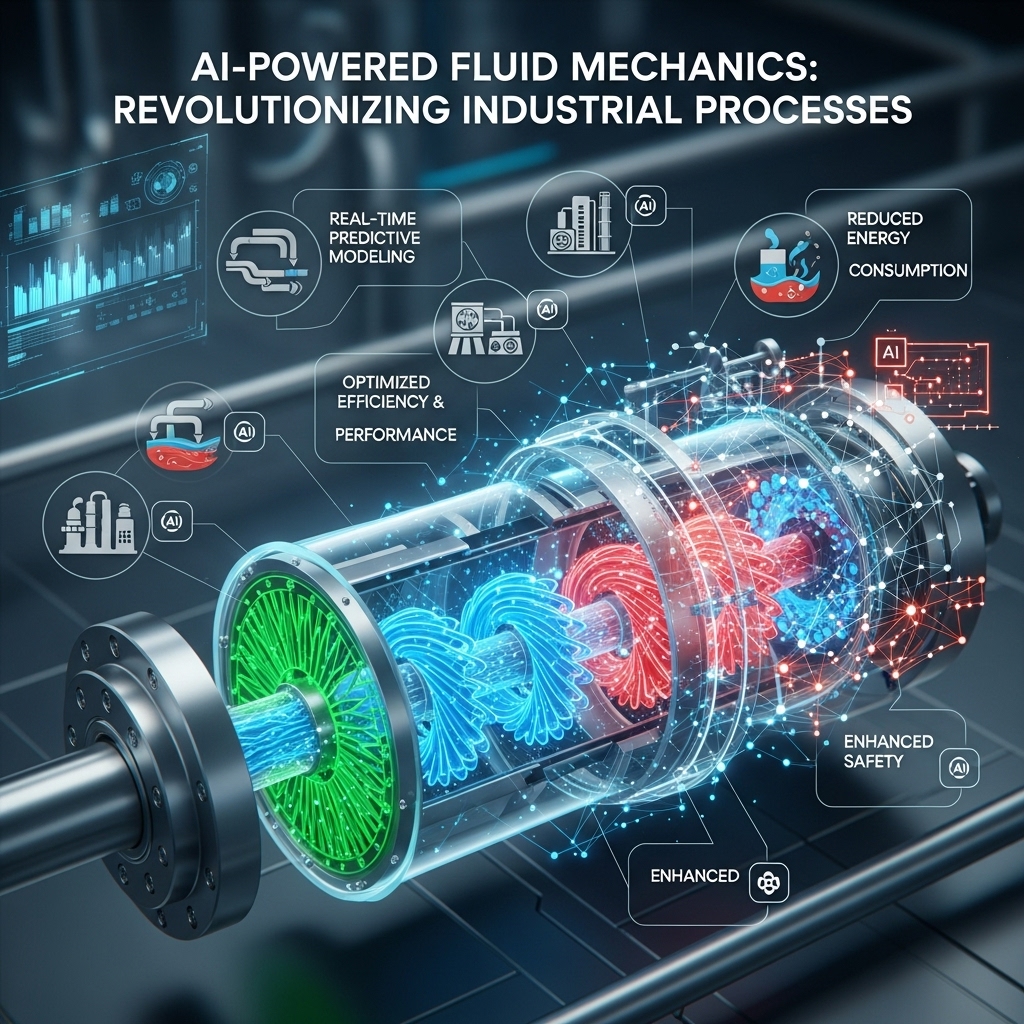
Artificial intelligence (AI) has revolutionized numerous fields, and its application in dynamic fluid mechanics is no exception. Dynamic fluid mechanics involves the study of fluids in motion, which is crucial in various industrial applications such as chemical processing, power generation, and aerospace engineering. The complexity of fluid dynamics makes it challenging to optimize systems using traditional methods, which is where AI comes into play. By leveraging AI, industries can improve efficiency, reduce costs, and enhance overall performance. In this context, AI can optimize dynamic fluid mechanics in industrial applications by analyzing vast amounts of data, identifying patterns, and making predictions to inform decision-making.
Key Applications of AI in Dynamic Fluid Mechanics
AI can be applied to various aspects of dynamic fluid mechanics, including simulation, modeling, and control. One of the primary applications of AI is in computational fluid dynamics (CFD), which involves using numerical methods to analyze fluid flow and heat transfer. AI algorithms can accelerate CFD simulations, reducing the time and computational resources required to obtain accurate results. Additionally, AI can be used to optimize the design of fluid-based systems, such as pipelines, pumps, and turbines, by analyzing data from sensors and simulations to identify the most efficient configurations.
Some of the ways AI optimizes dynamic fluid mechanics in industrial applications include:
- Predictive Maintenance: AI-powered sensors and machine learning algorithms can monitor equipment condition and predict when maintenance is required, reducing downtime and increasing overall efficiency.
- Optimization of Fluid Flow: AI can analyze data from simulations and sensors to optimize fluid flow in various systems, such as pipelines and chemical reactors, reducing energy consumption and improving productivity.
- Design Optimization: AI can be used to optimize the design of fluid-based systems, such as pumps and turbines, by analyzing data from simulations and experiments to identify the most efficient configurations.
- Real-Time Monitoring and Control: AI-powered systems can monitor fluid flow and other parameters in real-time, enabling rapid response to changes and optimizing system performance.
Machine Learning and Deep Learning in Dynamic Fluid Mechanics
Machine learning (ML) and deep learning (DL) are key AI technologies used in dynamic fluid mechanics. ML algorithms can be trained on data from simulations and experiments to predict fluid behavior, while DL algorithms can be used to analyze complex patterns in fluid flow data. These technologies enable the development of predictive models that can forecast fluid behavior under various conditions, allowing for more accurate design and optimization of fluid-based systems.
Challenges and Limitations
Despite the potential of AI in optimizing dynamic fluid mechanics, there are several challenges and limitations to its adoption. One of the primary challenges is the availability of high-quality data, which is essential for training AI models. Additionally, the complexity of fluid dynamics and the need for domain expertise can make it difficult to develop and interpret AI models. Furthermore, the integration of AI with existing systems and infrastructure can be a significant challenge, requiring significant investment and resources.
Future Directions
The application of AI in dynamic fluid mechanics is a rapidly evolving field, with significant potential for future innovation. Some of the future directions include the development of more advanced ML and DL algorithms, the integration of AI with other technologies such as the Internet of Things (IoT) and cloud computing, and the application of AI to new areas such as multiphase flow and non-Newtonian fluids. As AI continues to advance, we can expect to see significant improvements in the efficiency, productivity, and sustainability of fluid-based systems in various industries.
In conclusion, AI has the potential to revolutionize dynamic fluid mechanics in industrial applications by optimizing system performance, reducing costs, and improving efficiency. By leveraging AI technologies such as ML and DL, industries can analyze complex patterns in fluid flow data, predict fluid behavior, and make informed decisions. While there are challenges and limitations to the adoption of AI, the potential benefits make it an exciting and rapidly evolving field with significant potential for future innovation.