
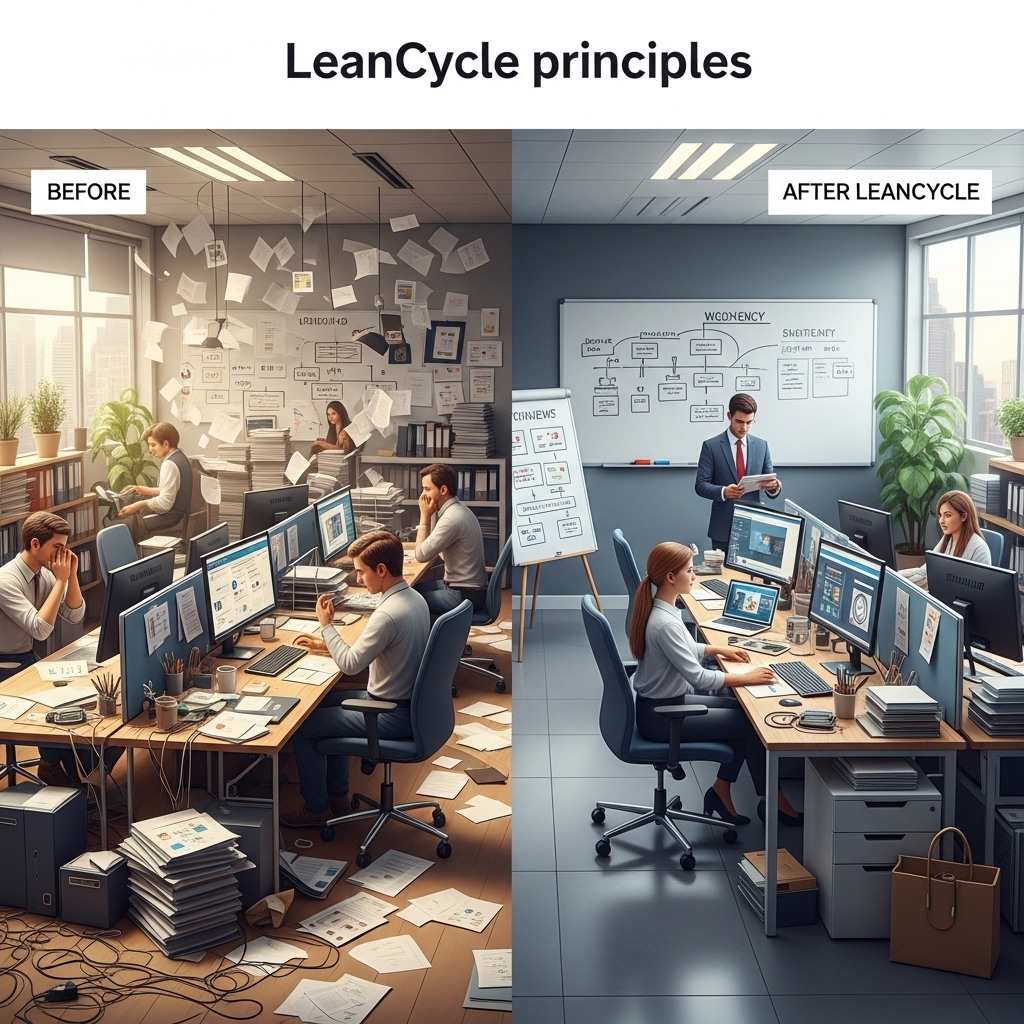
Implementing LeanCycle principles is a strategic approach for businesses to enhance their operational efficiency, reduce waste, and improve overall productivity. LeanCycle, an adaptation of the Lean methodology, focuses on continuous improvement and the elimination of non-value-added activities. By embracing LeanCycle, companies can streamline their processes, enhance customer satisfaction, and gain a competitive edge in the market. This approach is not limited to manufacturing but can be applied across various sectors, including services and software development. The core idea is to create more value for customers with fewer resources, which is achieved by understanding the value stream, identifying waste, and continually improving processes.
Understanding the Value Stream
The first step in implementing LeanCycle principles is to understand the value stream. This involves mapping out all the processes and activities involved in delivering a product or service to the customer. The value stream map (VSM) is a visual representation of every process in the material and information flow, from raw materials to end customers. It helps in identifying value-added and non-value-added activities, allowing businesses to focus on eliminating or reducing waste. The VSM is a critical tool for analyzing the current state and designing a future state with improved efficiency and reduced lead times.
Identifying and Eliminating Waste
LeanCycle emphasizes the identification and elimination of waste, which is anything that does not add value to the product or service from the customer's perspective. There are seven types of waste commonly identified in Lean: transportation, inventory, motion, waiting, overproduction, overprocessing, and defects. Each of these wastes can significantly impact operational efficiency and customer satisfaction. For instance, overproduction can lead to excess inventory, which in turn can result in waste due to storage needs, potential obsolescence, and the tying up of capital. By focusing on the elimination of these wastes, businesses can significantly improve their operational efficiency and reduce costs.
Key Principles for Implementation
Several key principles are essential for the successful implementation of LeanCycle:
- Pull Production: Producing and delivering products based on customer demand rather than producing in advance and storing inventory. This approach helps in reducing waste related to overproduction and inventory.
- Continuous Improvement (Kaizen): Encouraging a culture of ongoing improvement where all employees are empowered to identify areas for improvement and implement changes. This leads to sustained efficiency gains over time.
- Root Cause Analysis: When problems arise, instead of just treating the symptoms, businesses should seek to identify and solve the root cause. This prevents the recurrence of the problem and leads to more stable processes.
- Visual Management: Using visual cues and indicators to manage processes and communicate information. This helps in quickly identifying deviations from the standard and taking corrective actions.
Implementing LeanCycle in Service and Software Industries
While LeanCycle originated in manufacturing, its principles can be effectively applied to service and software development industries as well. In these sectors, the focus shifts from physical waste to waste in processes, such as unnecessary meetings, inefficient communication, and rework due to defects. For example, in software development, applying Lean principles can help in reducing cycle times for new feature development, improving quality, and enhancing team collaboration. Similarly, in service industries, Lean can help streamline customer service processes, reduce waiting times, and improve first-call resolution rates.
In conclusion, implementing LeanCycle principles offers businesses a structured approach to achieving operational efficiency, reducing waste, and enhancing customer value. By understanding the value stream, identifying and eliminating waste, and applying key Lean principles, companies can significantly improve their processes. Whether in manufacturing, services, or software development, the adaptability of LeanCycle makes it a valuable methodology for any organization seeking to improve its operations and stay competitive. The journey to Lean is continuous, requiring commitment, cultural change, and ongoing effort, but the rewards in terms of efficiency, customer satisfaction, and profitability make it a worthwhile endeavor.