
Congenital heart defects are abnormalities in the heart's structure and function that are present at birth. They are the most common type of birth defect, affecting approximately 1 in every 100 newborns. While some congenital heart defects are mild and may not require treatment, others can be life-threatening and require surgical intervention in the first few weeks or months of life. In this answer, we will discuss the most common congenital heart defects that require surgical intervention in newborns, including their causes, symptoms, diagnosis, and treatment options.
Types of Congenital Heart Defects
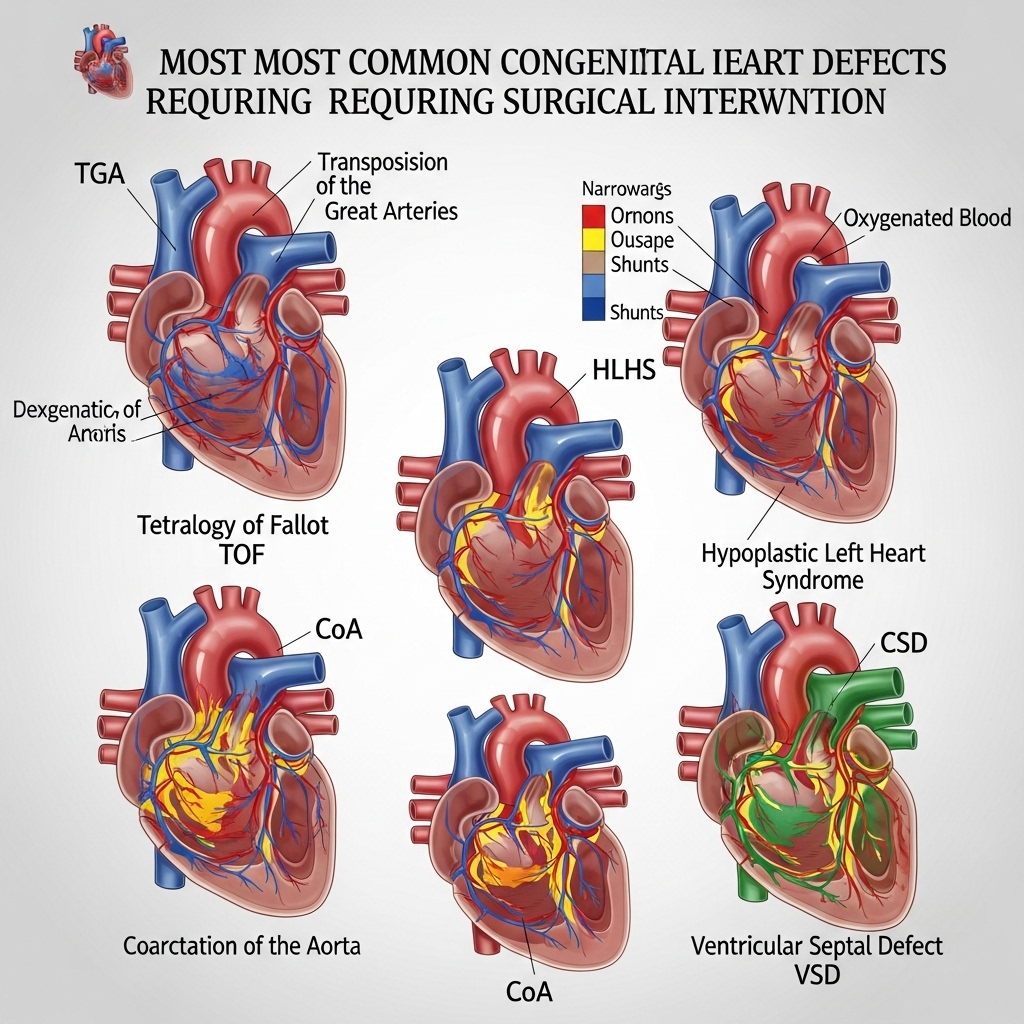
There are many different types of congenital heart defects, ranging from simple to complex. Some of the most common congenital heart defects that require surgical intervention in newborns include:
- Ventricular septal defect (VSD): a hole in the wall between the two ventricles, which can cause blood to flow from one ventricle to the other
- Atrial septal defect (ASD): a hole in the wall between the two atria, which can cause blood to flow from one atrium to the other
- Tetralogy of Fallot: a combination of four heart defects, including VSD, pulmonary stenosis, right ventricular hypertrophy, and an overriding aorta
- Transposition of the great arteries: a condition in which the two main arteries that carry blood away from the heart are reversed, causing the aorta to arise from the right ventricle and the pulmonary artery to arise from the left ventricle
- Hypoplastic left heart syndrome: a condition in which the left side of the heart is underdeveloped, causing the left ventricle to be small and unable to pump blood effectively
Causes and Risk Factors
The exact cause of congenital heart defects is not always known, but there are several risk factors that can increase the likelihood of a child being born with a heart defect. These include:
- Family history: having a family history of congenital heart defects can increase the risk of a child being born with a heart defect
- Genetic disorders: certain genetic disorders, such as Down syndrome, can increase the risk of congenital heart defects
- Maternal diabetes: women with diabetes are at a higher risk of having a child with a congenital heart defect
- Maternal obesity: women who are obese are at a higher risk of having a child with a congenital heart defect
- Exposure to certain substances: exposure to certain substances, such as tobacco smoke and certain medications, during pregnancy can increase the risk of congenital heart defects
Symptoms and Diagnosis
The symptoms of congenital heart defects can vary depending on the type and severity of the defect. Some common symptoms include:
- Cyanosis: a bluish discoloration of the skin and mucous membranes
- Shortness of breath: difficulty breathing or rapid breathing
- Fatigue: feeling tired or weak
- Poor feeding: difficulty feeding or failure to gain weight
- Sweating: excessive sweating, especially during feeding
Congenital heart defects are typically diagnosed using a combination of physical examination, medical history, and diagnostic tests, such as echocardiogram, electrocardiogram, and chest X-ray.
Treatment Options
The treatment for congenital heart defects depends on the type and severity of the defect. Some common treatment options include:
- Surgery: surgical repair or replacement of the defective heart tissue or valve
- Catheterization: a minimally invasive procedure that uses a catheter to repair or replace the defective heart tissue or valve
- Medications: medications to manage symptoms and prevent complications
- Heart transplant: in severe cases, a heart transplant may be necessary
In conclusion, congenital heart defects are a common and potentially life-threatening condition that requires prompt diagnosis and treatment. The most common congenital heart defects that require surgical intervention in newborns include VSD, ASD, tetralogy of Fallot, transposition of the great arteries, and hypoplastic left heart syndrome. While the exact cause of congenital heart defects is not always known, there are several risk factors that can increase the likelihood of a child being born with a heart defect. With advances in medical technology and surgical techniques, the prognosis for children with congenital heart defects is improving, and many children are able to lead active and healthy lives with proper treatment and management.