
Introduction to Digital Financial Tools for Indian SMEs
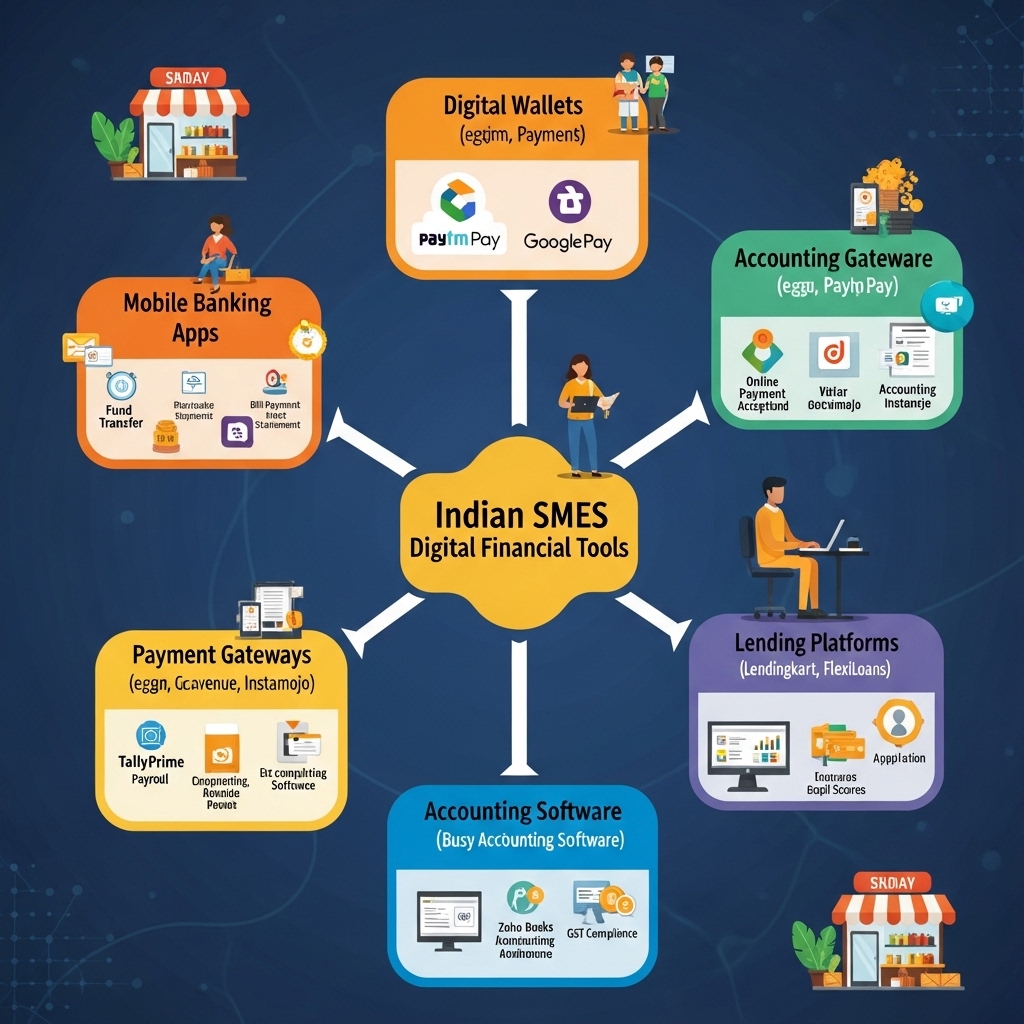
Small and Medium-sized Enterprises (SMEs) are the backbone of the Indian economy, contributing significantly to the country's GDP and employment. However, managing cash flow and payments remains a significant challenge for many Indian SMEs. The advent of digital financial tools has revolutionized the way SMEs manage their finances, making it easier, faster, and more efficient. In this article, we will explore the top digital financial tools used by Indian SMEs to manage cash flow and payments.
Overview of Digital Payment Systems
Digital payment systems have gained widespread acceptance in India, with the government's push for a cashless economy. Indian SMEs are increasingly adopting digital payment systems, such as Unified Payments Interface (UPI), credit/debit cards, and mobile wallets, to receive payments from customers. These systems have reduced the need for cash transactions, making it easier for SMEs to manage their cash flow. For example, UPI has become a popular mode of payment, with transactions exceeding ₹10 lakh crore in a single month.
Accounting and Invoicing Software
Accounting and invoicing software are essential tools for Indian SMEs to manage their finances. These software solutions help SMEs to track their income and expenses, generate invoices, and manage their accounts payable and receivable. Popular accounting and invoicing software used by Indian SMEs include Zoho Books, QuickBooks, and Tally. These software solutions are cloud-based, making it easy for SMEs to access their financial data from anywhere, at any time. For instance, Zoho Books offers a range of features, including invoicing, inventory management, and project management, making it a popular choice among Indian SMEs.
Digital Lending Platforms
Digital lending platforms have emerged as a significant source of funding for Indian SMEs. These platforms offer quick and easy access to credit, helping SMEs to meet their working capital requirements. Popular digital lending platforms used by Indian SMEs include Lendingkart, Capital Float, and Indifi. These platforms use data analytics and machine learning algorithms to assess the creditworthiness of SMEs, making it easier for them to access credit. For example, Lendingkart offers loans up to ₹1 crore, with interest rates starting from 12% per annum.
Cash Flow Management Tools
Cash flow management is critical for Indian SMEs, as it helps them to manage their day-to-day operations. Cash flow management tools, such as Cashbook, Pocket Expense, and Money Manager, help SMEs to track their cash inflows and outflows, making it easier for them to manage their cash flow. These tools also offer features, such as budgeting, forecasting, and reporting, helping SMEs to make informed decisions about their finances. For instance, Cashbook offers a range of features, including cash flow forecasting, budgeting, and accounts payable management, making it a popular choice among Indian SMEs.
Mobile Payment Apps
Mobile payment apps, such as Paytm, Google Pay, and PhonePe, have become increasingly popular among Indian SMEs. These apps offer a range of features, including payment acceptance, invoicing, and cash flow management, making it easier for SMEs to manage their finances. For example, Paytm offers a range of features, including payment acceptance, invoicing, and cash flow management, making it a popular choice among Indian SMEs. These apps also offer rewards and cashback, making it attractive for SMEs to use them for their payment needs.
Conclusion
In conclusion, digital financial tools have revolutionized the way Indian SMEs manage their cash flow and payments. From digital payment systems to accounting and invoicing software, digital lending platforms, cash flow management tools, and mobile payment apps, there are a range of tools available to help SMEs manage their finances. By adopting these tools, Indian SMEs can streamline their financial operations, reduce costs, and improve their overall efficiency. As the Indian economy continues to grow, it is likely that digital financial tools will play an increasingly important role in helping SMEs to manage their finances and achieve their business goals.