
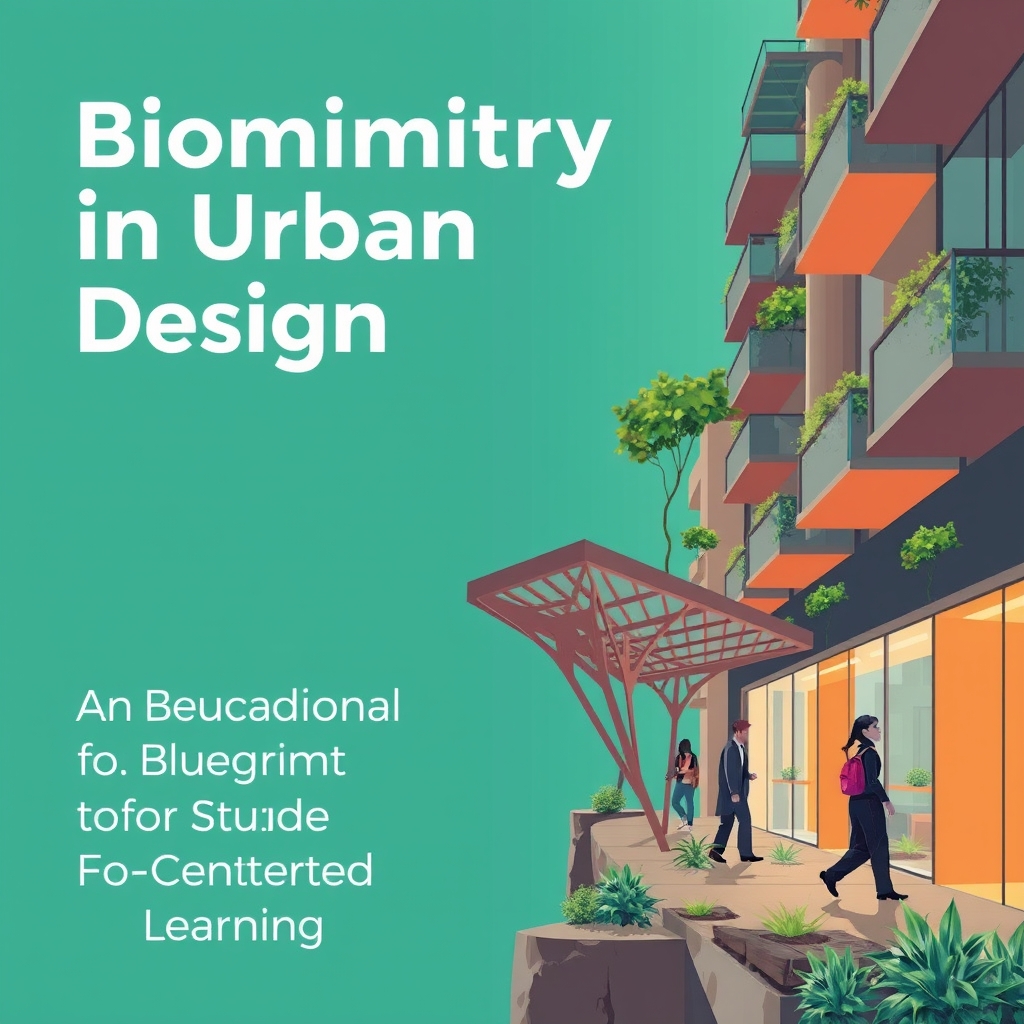
Biomimicry in Urban Design: An Educational Blueprint for Student-Centered Learning
Biomimicry, at its core, is the practice of looking to nature for design intelligence and translating observed strategies into human contexts. When applied to urban design, it invites students to examine cities not merely as static artifacts but as living systems capable of adaptation, resilience, and evolving collaboration among people, infrastructure, and ecosystems. This educational blueprint is intended for teachers, curriculum developers, and learners who want to explore how biomimicry can inform the planning, construction, and governance of cities in ways that are sustainable, equitable, and creative. Rather than presenting a fixed set of answers, this guide emphasizes inquiry, collaboration, and iterative experimentation. It invites students to treat urban design as a question rather than a collection of finished projects, asking them to observe, hypothesize, test, and refine ideas inspired by the natural world.
In this narrative, students will move through a sequence of authentic investigations that connect biology, engineering, environmental science, civic studies, and design thinking. They will ask questions such as: How does a forest manage water flow during heavy rainfall, and how might a city mimic that process to reduce flooding? What strategies do mangroves use to protect coastlines, and how could a shoreline neighborhood adopt similar principles for resilience? How do termite morts and bee hives organize the flow of information and materials, and what lessons might that yield for public transportation networks or waste systems? These questions are not trivia; they are invitations to observe patterns, test possibilities, and confront tradeoffs that arise when biology meets built environments.
Foundations of Biomimicry
Biomimicry rests on three core competencies: biopattern literacy, design thinking, and systems thinking. Biopattern literacy means reading the world with a bias toward nature-inspired patterns, such as scaling laws, energy efficiency, redundancy, and adaptive coloration or shading strategies. Design thinking provides a framework for translating those patterns into human-scale interventions that solve real problems. Systems thinking helps students see networks, feedback loops, and emergent behaviors across ecological, social, and technological domains. When these competencies are taught together, students develop a capacity to connect abstract ecological concepts to tangible urban needs—whether it is reducing heat islands, conserving water, or enhancing mobility equity.
Educators can introduce biomimicry through a cognitive map that links what students observe in nature to decisions people make in cities. A classic example is the design of buildings that harvest rainwater through porous materials or mimic the leaf architecture that maximizes photosynthesis. Another example is the way certain plants regulate temperature via stomatal control, inspiring building envelopes and urban canopies that respond to changing humidity and solar gain. The aim is not to copy a leaf’s exact structure but to translate the underlying logic into adaptable, scalable, and context-sensitive solutions. Students learn to ask whether a solution drawn from nature is robust under diverse climate conditions, whether it is economically viable, and whether it respects social values and cultural contexts. This triad of questions anchors responsible, creative exploration rather than shallow mimicry.
From Nature to City: Translating Principles
The translation process in biomimicry involves three phases: define, discover, and design. In the define phase, students articulate the urban challenge in ecological terms, identifying stakeholders, constraints, and measurable outcomes. Next, in the discover phase, learners study natural models that handle similar problems. They gather data, compare scales, and extract design principles rather than superficial features. Finally, in the design phase, students sketch, prototype, and evaluate a suite of interventions that translate the chosen principles into city-scale or neighborhood-scale programs. This structured approach helps learners avoid superficial imitation and instead focus on the functional logic that makes nature’s solutions robust.
Real-world examples illuminate this translation process. For instance, students might study how riparian plants stabilize soil and slow water flow during floods, then propose green corridors and bioswales that replicate those functions, integrating local flora, community spaces, and maintenance considerations. They might examine termite mounds’ passive ventilation systems to design building envelopes that reduce cooling energy without mechanical systems. In coastal communities, the study might center on mangrove structures that dissipate wave energy and trap sediment, inspiring shoreline buffers that combine natural habitats with human-scale amenities. The goal is not to create a one-size-fits-all solution but to cultivate flexibility, originality, and place-based thinking.
Case Studies: Small Scale to City Scale
Case studies offer a bridge between theory and practice. At the classroom level, a micro-case might examine a school garden designed to capture rainwater, maximize daylight, and support biodiversity. Students analyze plant root structures, soil porosity, and microclimates to determine how the garden influences runoff, temperature moderation, and air quality. They then translate those principles into a plan for a schoolyard that serves as a learning lab. On a neighborhood scale, a project may investigate how street canyons amplify wind patterns, how tree arrays and vegetated walls influence microclimates, and how shade and permeability affect energy consumption and comfort for residents. Moving to district or city scales, learners compare urban water cycles, waste streams, and mobility networks with natural analogs, asking how a city could mimic the self-regulating properties of ecological systems while maintaining governance, equity, and cost-effectiveness.
Each case study emphasizes process over product. Students document their observations, justify model choices, reflect on uncertainties, and communicate results to diverse audiences. They learn to present data in accessible formats, such as graphic simulations, guided tours, or policy briefs, so that stakeholders beyond the classroom can engage with biomimicry ideas. In this way, the learning experience remains grounded in civic relevance and social impact, ensuring that the educational journey prepares students for responsible participation in shaping urban futures.
Teaching Methods: Engaging Learners in Inquiry
Effective biomimicry instruction blends inquiry-based learning with collaborative projects. Teachers can structure units around a central question, such as: How can we design a neighborhood that stays cool in hot summers while saving energy and supporting biodiversity? Students work in interdisciplinary teams, drawing on science, mathematics, art, and social studies to explore natural analogs and translate them into design proposals. The classroom becomes a studio and a laboratory where observation, experimentation, and iteration are valued as core intellectual activities.
Assessment in this framework emphasizes process as much as product. Formative assessments capture students’ ability to articulate design criteria, justify their choices, and adapt plans in response to feedback. Summative assessments reward creativity, rigor, and the demonstration of ecological literacy. Rubrics focus on the alignment between biological principles and design decisions, the practicality and scalability of proposed solutions, and the degree to which equity and community voice are integrated.
To cultivate a culture of inquiry, teachers incorporate fieldwork, guest speakers, and community partnerships. Field experiences might include site visits to sustainable districts, wetlands, or urban farms. Guest speakers can include landscape architects, ecologists, urban planners, and residents whose experiences illuminate local challenges and opportunities. Community partnerships enable students to test ideas in real settings, gather stakeholder input, and observe the dynamics of city life beyond the classroom walls. This approach helps students see themselves as capable agents of change and reinforces the social relevance of biomimicry.
In addition to disciplinary integration, a key element is the development of ethical reasoning. Students consider how their designs affect ecosystems, vulnerable populations, and future generations. They grapple with questions about resource use, data privacy, cultural sensitivity, and the distribution of environmental benefits and burdens. By embedding ethics into the learning process, educators help students recognize that design decisions carry social consequences and that biomimicry is most powerful when it serves the common good rather than individual or corporate interests.
Methods for Student-Centered Assessment and Reflection
Reflection is a central practice in biomimicry education. Learners maintain research journals, annotated sketches, and reflective essays that trace the evolution of their ideas from observation to proposal. They document the constraints they encounter, the assumptions they test, and the tradeoffs they negotiate. Reflections help students articulate their reasoning and provide a narrative that connects scientific understanding with design outcomes. They also support metacognition, enabling learners to become more aware of how they learn and how they apply knowledge across contexts.
Peer review plays a crucial role in the learning process. Small groups critique each other’s proposals, focusing on the fidelity of principle translation, the plausibility of implementation, and the potential social and environmental impacts. Structured feedback frameworks empower students to give constructive critiques and receive feedback gracefully. This collaborative practice mirrors professional design environments, where multidisciplinary teams converge to solve complex problems and learn from one another’s perspectives.
One effective assessment strategy is a portfolio that blends narrative, data visualizations, models, and prototypes. A biomimicry portfolio might include a background section that explains the ecological principle, a design section that details the proposed intervention, a modeling section that presents simulations or comparative data, and a communication section that demonstrates how the idea would be framed for stakeholders. Portfolios encourage students to demonstrate growth over time and to connect diverse forms of evidence to their claims.
Engaging Communities and Places: Place-Based Learning
Place-based learning anchors biomimicry in the specific social, cultural, and ecological context of a locality. Instead of importing generic solutions, students investigate regional ecosystems, climate patterns, and historical urban forms to identify locally appropriate models. A coastal town might study dune systems, salt marshes, and tidal channels to inform living shorelines and adaptive flood defenses. A mountainous city might examine alpine wetlands, snowmelt dynamics, and forest canopies to guide water management and energy planning. In each case, learners connect to local knowledge holders, such as indigenous communities, environmental stewards, and neighborhood associations, to ensure that ideas honor place histories and community priorities.
Place-based biomimicry fosters meaningful civic engagement. Students learn to translate ecological insights into concrete benefits for residents, including safer streets, cooler neighborhoods, cleaner air, and more accessible green spaces. They also recognize potential conflicts, such as preserving natural habitats while expanding housing or transportation infrastructure. Through dialogue with community members, students refine proposals to maximize both ecological integrity and human well-being. This collaborative process models responsible citizenship and equips learners with practical skills for participatory urban governance.
Ethical and Social Implications: Equity, Justice, and Stewardship
Ethics sits at the heart of biomimicry education. Students examine who benefits from design choices, who bears costs, and how to ensure that vulnerable communities are not displaced or marginalized by new developments. They question the sustainability of materials, labor practices, and supply chains, asking whether natural analogs can be implemented without compromising social fairness. Discussions about energy consumption, waste streams, and climate resilience are complemented by critical inquiries into governance structures, public participation, and transparency. By foregrounding equity and justice, the learning experience becomes not only technically rigorous but also morally grounded.
In practice, ethical analysis translates into tangible design requirements. For example, a neighborhood cooling strategy might prioritize shade trees and permeable pavements in lower-income areas that experience higher heat exposure. A stormwater management plan could couple green infrastructure with jobs programs that hire local residents for maintenance and monitoring. Such decisions demonstrate that biomimicry is not an abstract intellectual exercise but a framework for shaping more just, resilient, and prosperous cities. Students learn to justify tradeoffs, defend their choices with evidence, and advocate for solutions that align ecological integrity with human dignity.
Technology, Data, and Digital Tools: Supporting Inquiry
Modern biomimicry education benefits from digital tools that help learners model, visualize, and communicate complex ideas. Geographic information systems (GIS) enable spatial analysis of land use, runoff, and vegetation, while energy simulations estimate cooling loads and solar gains under different design scenarios. Computational models can explore dynamic systems, such as how shade from trees affects urban heat islands across seasons or how water capture systems influence groundwater recharge. Data visualization techniques translate abstract patterns into accessible narratives for diverse audiences, including policymakers and community members who may not have technical backgrounds.
However, technology should augment—not replace—critical thinking and hands-on experience. Students still benefit from field observations, material testing, and tactile prototyping. Models can be simple, such as cardboard cutouts, 3D-printed components, or modular mockups, but they should be explicitly linked to the ecological principles being studied. The goal is to cultivate a sense of curiosity and agency: learners should feel empowered to experiment with materials, test ideas in real or simulated environments, and iterate based on feedback from peers and the community.
Curriculum Design: Integrating Biomimicry Across Disciplines
Integrating biomimicry across disciplines requires purposeful alignment of learning objectives, standards, and assessment methods. In science classes, students investigate ecological patterns and energy flows. In mathematics, they quantify changes in sun exposure, temperature, and water movement using models and data analysis. In social studies, they evaluate governance structures, public policies, and equity considerations. In art and design, they translate scientific insights into compelling visuals and tangible prototypes. This interdisciplinary approach helps students recognize that real-world problems do not fit neatly into single subjects; they demand a holistic perspective that draws on multiple ways of knowing.
Curriculum design also requires attention to pacing, sequencing, and accessibility. Educators should scaffold activities so that learners with diverse backgrounds and abilities can participate meaningfully. This includes providing multiple entry points for inquiry, offering different formats for presenting evidence, and ensuring that materials are culturally responsive and relevant to local communities. By creating an inclusive learning environment, teachers enable a wider range of students to experience the excitement of discovering nature-inspired urban solutions and to imagine themselves as future designers, researchers, planners, or policymakers.
Assessment of Learning Outcomes and Impact
Assessment in biomimicry-informed urban design emphasizes both learning processes and outcomes. Process-oriented assessments focus on how students reason, collaborate, and reflect, while outcome-oriented assessments evaluate the quality and feasibility of proposed interventions. A balanced assessment plan might combine rubrics for analytical thinking, creativity, and communication with performance tasks such as design proposals, simulations, and community-facing presentations. It is essential to include authentic measures that gauge real-world relevance, such as feedback from local stakeholders, potential cost estimates, and environmental impact analyses.
Longitudinal assessment can track student growth across grades, capturing improvements in ecological literacy, systems thinking, and civic engagement. By embedding biomimicry projects within ongoing school or district initiatives, educators can measure not only individual student outcomes but also organizational learning. This approach helps schools build a culture of inquiry and experimentation, where students contribute to meaningful community projects and teachers refine curricula based on feedback and observed needs.
Design Thinking and Prototyping: Making Ideas Tangible
Design thinking is a natural ally of biomimicry. It provides a structured path from empathy and problem framing to ideation, prototyping, testing, and scale. Students begin with user needs and community contexts, exploring how natural models can address those needs without sacrificing cultural values or ecological integrity. Prototyping can take many forms, from physical models to digital simulations to policy briefs. Iterative testing helps students understand uncertainties, refine assumptions, and communicate implications clearly. Ultimately, prototypes should demonstrate value in terms of performance, adaptability, and social benefit, not merely novelty.
In practice, a design sprint might unfold across several days: day one involves observation and problem framing; day two emphasizes ideation and selection of promising principles; day three focuses on prototyping and feedback; day four involves refinement and stakeholder presentation. Throughout, students document decisions, test assumptions, and evaluate potential unintended consequences. This disciplined, cyclical process echoes professional practice in urban design and helps learners develop resilience and adaptability as they navigate complex, dynamic contexts.
Building a Sustainable Future: Impacts and Vision
Ultimately, biomimicry in urban design aims to grow cities that function more like living systems—capable of learning, self-repair, and co-evolution with human communities. For students, this vision cultivates a sense of responsibility and possibility. They learn that creativity and scientific inquiry can converge to create environments that are healthier, more efficient, and more just. They also recognize that sustainable urban design requires ongoing collaboration among residents, practitioners, educators, and policymakers. When learners participate in co-created projects with real communities, the line between classroom and city becomes permeable, and the city itself becomes a dynamic classroom that keeps learning alive.
In this educational blueprint, the ultimate goal is not to produce a handful of finished products but to cultivate habits of mind that endure beyond school walls. Students become curious observers, careful testers, thoughtful communicators, and compassionate designers who view nature not solely as a source of inspiration but as a partner in shaping futures. By embracing biomimicry, teachers invite learners to imagine cities where ingenuity grows from ecological wisdom, where design respects place and people, and where learning itself mirrors the adaptive, collaborative processes that sustain life on Earth. This is an education for stewardship, creativity, and collective action—an education that prepares learners to contribute to urban ecosystems that are resilient, equitable, and thriving for generations to come.