
Introduction to Visual Intelligence in Robotics
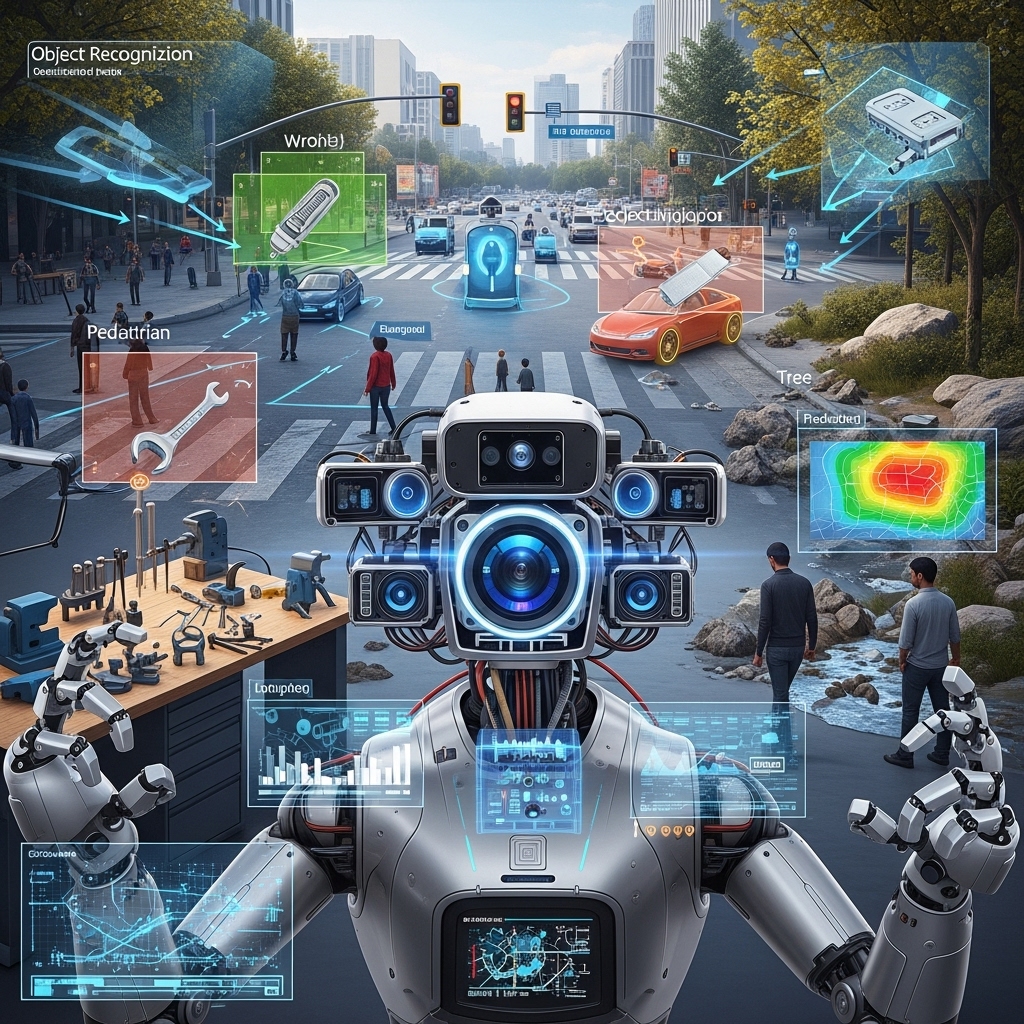
Visual intelligence is a crucial aspect of robotic perception systems, enabling robots to interpret and respond to their environment. As robots become increasingly prevalent in various industries, including manufacturing, healthcare, and transportation, the need for advanced visual intelligence has become more pressing. This article delves into the world of visual intelligence, exploring how robots perceive, process, and respond to visual data. We will examine the key components of visual intelligence, including computer vision, machine learning, and sensor systems, and discuss the challenges and opportunities in this rapidly evolving field.
Computer Vision: The Foundation of Visual Intelligence
Computer vision is the foundation of visual intelligence in robotics, enabling robots to capture and process visual data from their environment. This is achieved through the use of cameras, sensors, and algorithms that convert visual information into a digital format. Computer vision involves various techniques, including object recognition, tracking, and scene understanding, which allow robots to navigate and interact with their surroundings. For instance, a robot equipped with computer vision can recognize and classify objects, such as products on a conveyor belt, and respond accordingly. The development of computer vision has been driven by advances in machine learning, which has enabled robots to learn from large datasets and improve their visual perception over time.
Machine Learning in Visual Intelligence
Machine learning plays a vital role in visual intelligence, enabling robots to learn from experience and improve their performance over time. Deep learning algorithms, such as convolutional neural networks (CNNs), have been particularly effective in computer vision tasks, such as object recognition and image classification. These algorithms can be trained on large datasets, allowing robots to learn from a wide range of visual examples and adapt to new environments. For example, a robot equipped with a CNN can learn to recognize and classify different types of objects, such as toys or household items, and respond accordingly. The use of machine learning in visual intelligence has also enabled robots to learn from their mistakes, improving their performance and reducing errors over time.
Sensor Systems: Providing Context to Visual Data
Sensor systems provide critical context to visual data, enabling robots to understand their environment and respond accordingly. Sensors, such as lidar, radar, and ultrasonic sensors, provide information about the distance, speed, and trajectory of objects, which is essential for tasks such as navigation and obstacle avoidance. For instance, a self-driving car equipped with lidar sensors can detect and respond to pedestrians, other vehicles, and road obstacles, ensuring safe and efficient navigation. The integration of sensor systems with computer vision and machine learning has enabled robots to develop a more comprehensive understanding of their environment, allowing them to make informed decisions and respond to complex situations.
Applications of Visual Intelligence in Robotics
Visual intelligence has a wide range of applications in robotics, from manufacturing and logistics to healthcare and transportation. In manufacturing, visual intelligence enables robots to inspect products, detect defects, and perform quality control tasks. In logistics, visual intelligence enables robots to navigate warehouses, track inventory, and optimize supply chain operations. In healthcare, visual intelligence enables robots to assist with surgeries, diagnose diseases, and provide personalized care. For example, a robot equipped with visual intelligence can assist a surgeon during a procedure, providing real-time feedback and guidance to improve outcomes. The applications of visual intelligence in robotics are vast and continue to expand as the technology advances.
Challenges and Limitations of Visual Intelligence
Despite the significant advances in visual intelligence, there are still several challenges and limitations that need to be addressed. One of the major challenges is the complexity of real-world environments, which can be dynamic, cluttered, and unpredictable. Visual intelligence systems must be able to adapt to these environments, handling variations in lighting, texture, and context. Another challenge is the need for large amounts of labeled training data, which can be time-consuming and expensive to collect. Additionally, visual intelligence systems must be able to handle errors and uncertainties, such as sensor noise or occlusion, which can affect their performance and reliability. Addressing these challenges will require continued advances in machine learning, computer vision, and sensor systems, as well as the development of more robust and adaptable visual intelligence algorithms.
Future Directions in Visual Intelligence
The future of visual intelligence in robotics is exciting and rapidly evolving. Advances in machine learning, computer vision, and sensor systems will continue to drive improvements in visual perception and response. One area of research is the development of more advanced sensor systems, such as event-based cameras and neuromorphic sensors, which can provide more detailed and dynamic visual information. Another area of research is the integration of visual intelligence with other sensing modalities, such as auditory and tactile sensing, to create more comprehensive and multimodal perception systems. Additionally, the development of more explainable and transparent visual intelligence algorithms will be critical for building trust and confidence in robotic systems. As visual intelligence continues to advance, we can expect to see more sophisticated and capable robots that can interact and respond to their environment in a more human-like way.
Conclusion
In conclusion, visual intelligence is a critical component of robotic perception systems, enabling robots to interpret and respond to their environment. The development of computer vision, machine learning, and sensor systems has driven significant advances in visual intelligence, with applications in manufacturing, logistics, healthcare, and transportation. While there are still challenges and limitations to be addressed, the future of visual intelligence is exciting and rapidly evolving. As robots become increasingly prevalent in our daily lives, the need for advanced visual intelligence will continue to grow, driving innovation and advancements in this field. By continuing to push the boundaries of visual intelligence, we can create more sophisticated and capable robots that can interact and respond to their environment in a more human-like way, improving productivity, safety, and quality of life.