
Introduction to AI Automation for Business Owners
As the world becomes increasingly digital, entrepreneurs are constantly looking for ways to streamline their operations, reduce costs, and increase productivity. One of the most effective ways to achieve this is by leveraging Artificial Intelligence (AI) automation. AI automation refers to the use of intelligent machines and computer programs to perform tasks that typically require human intelligence, such as data analysis, customer service, and decision-making. In this article, we will explore how AI automation can boost business efficiency and productivity for entrepreneurs, and provide examples of how it can be applied in various industries.
What is AI Automation and How Does it Work?
AI automation uses machine learning algorithms and natural language processing to analyze data, identify patterns, and make decisions. It can be applied to various business functions, such as marketing, sales, customer service, and operations. For example, chatbots can be used to provide 24/7 customer support, while machine learning algorithms can be used to analyze customer data and predict their behavior. AI automation can also be used to automate repetitive tasks, such as data entry, bookkeeping, and inventory management, freeing up staff to focus on more strategic and creative tasks.
Benefits of AI Automation for Entrepreneurs
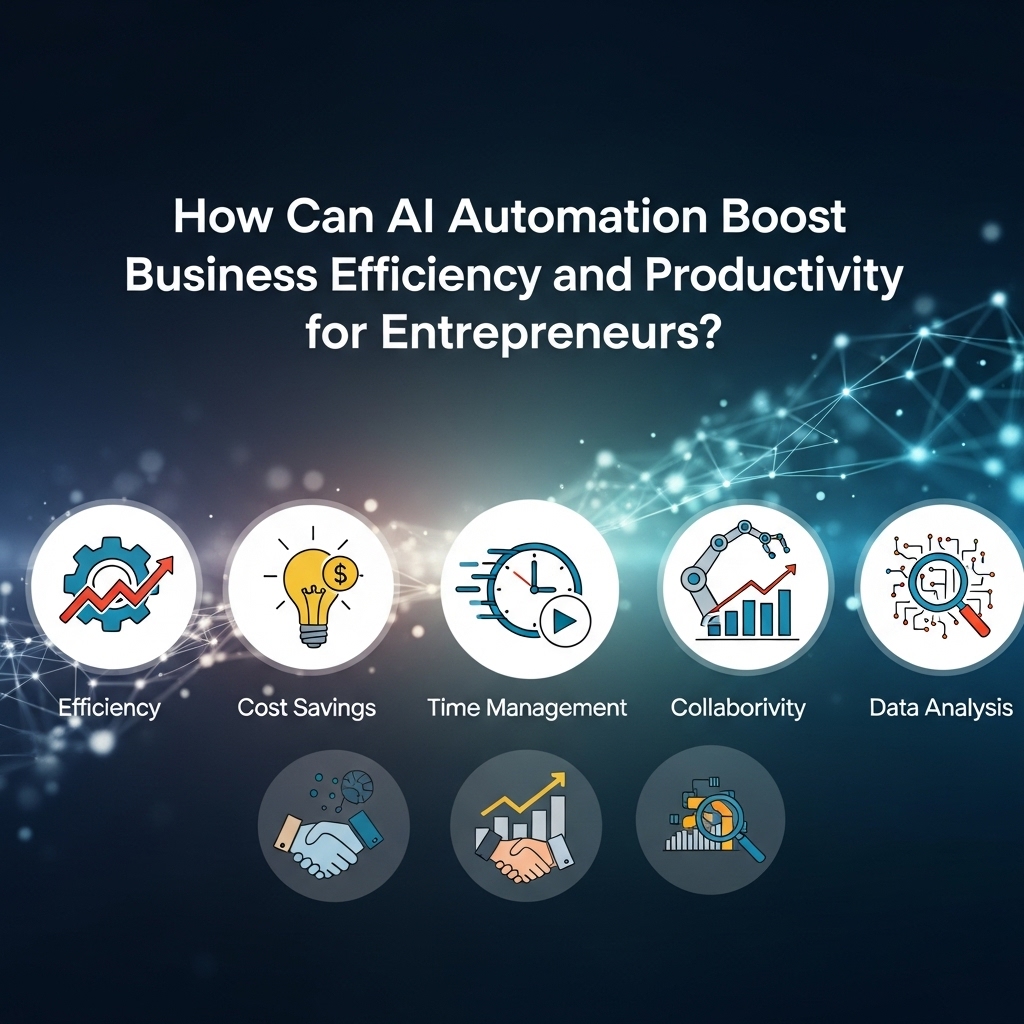
The benefits of AI automation for entrepreneurs are numerous. Firstly, it can help reduce labor costs by automating repetitive and time-consuming tasks. Secondly, it can improve customer service by providing 24/7 support and personalized recommendations. Thirdly, it can increase productivity by enabling staff to focus on more strategic and creative tasks. Finally, it can provide valuable insights and data analysis, enabling entrepreneurs to make informed decisions and drive business growth. For example, a retail business can use AI automation to analyze customer purchase history and provide personalized product recommendations, increasing sales and customer loyalty.
Applications of AI Automation in Business
AI automation can be applied to various industries and business functions. For example, in the healthcare industry, AI automation can be used to analyze medical images, diagnose diseases, and develop personalized treatment plans. In the finance industry, AI automation can be used to detect fraud, analyze credit risk, and provide investment advice. In the marketing industry, AI automation can be used to analyze customer data, create personalized marketing campaigns, and predict customer behavior. For instance, a marketing agency can use AI automation to analyze social media data and create targeted ads, increasing brand awareness and lead generation.
Real-World Examples of AI Automation in Business
There are many real-world examples of AI automation in business. For example, Amazon uses AI automation to power its recommendation engine, suggesting products to customers based on their purchase history and browsing behavior. Netflix uses AI automation to recommend TV shows and movies based on user viewing history and ratings. Domino's Pizza uses AI automation to analyze customer orders and predict demand, enabling it to optimize its supply chain and reduce wait times. These examples demonstrate how AI automation can be used to drive business growth, improve customer service, and increase efficiency.
Challenges and Limitations of AI Automation
While AI automation offers many benefits, there are also challenges and limitations to consider. Firstly, AI automation requires significant investment in technology and infrastructure, which can be a barrier for small businesses and startups. Secondly, AI automation can be complex and difficult to implement, requiring specialized skills and expertise. Thirdly, AI automation can also raise ethical concerns, such as job displacement and bias in decision-making. Finally, AI automation requires high-quality data to function effectively, which can be a challenge for businesses with limited data resources. For example, a small business may not have the resources to invest in AI automation, or may struggle to implement it effectively.
Conclusion
In conclusion, AI automation has the potential to revolutionize business operations and drive growth for entrepreneurs. By automating repetitive tasks, providing personalized customer service, and analyzing data, AI automation can help businesses increase efficiency, productivity, and profitability. While there are challenges and limitations to consider, the benefits of AI automation far outweigh the costs. As technology continues to evolve, we can expect to see even more innovative applications of AI automation in business, enabling entrepreneurs to stay ahead of the competition and achieve their goals. Whether you're a small business owner or a large corporation, AI automation is definitely worth considering as a way to boost business efficiency and productivity.