
Introduction to Revenue Optimization through Data Analytics
Data analytics has become a crucial component in the arsenal of modern businesses, enabling them to make informed decisions, streamline operations, and drive revenue growth. By leveraging data analytics, companies can uncover hidden opportunities, optimize their processes, and stay ahead of the competition. In this article, we will explore how businesses can utilize data analytics to identify opportunities for revenue growth and optimization, ultimately leading to increased profitability and success.
Understanding Data Analytics and Its Role in Revenue Optimization
Data analytics involves the examination of data sets to conclude about the information they contain. It is a broad field that encompasses various techniques, tools, and methodologies to extract insights from data. In the context of revenue optimization, data analytics helps businesses understand their customers, markets, and operations better. By analyzing data from various sources, such as sales, customer interactions, and market trends, companies can identify patterns, trends, and correlations that inform strategic decisions. For instance, a retail company can use data analytics to analyze customer purchase behavior, preferences, and demographics to tailor its marketing campaigns and improve sales.
Identifying Opportunities for Revenue Growth
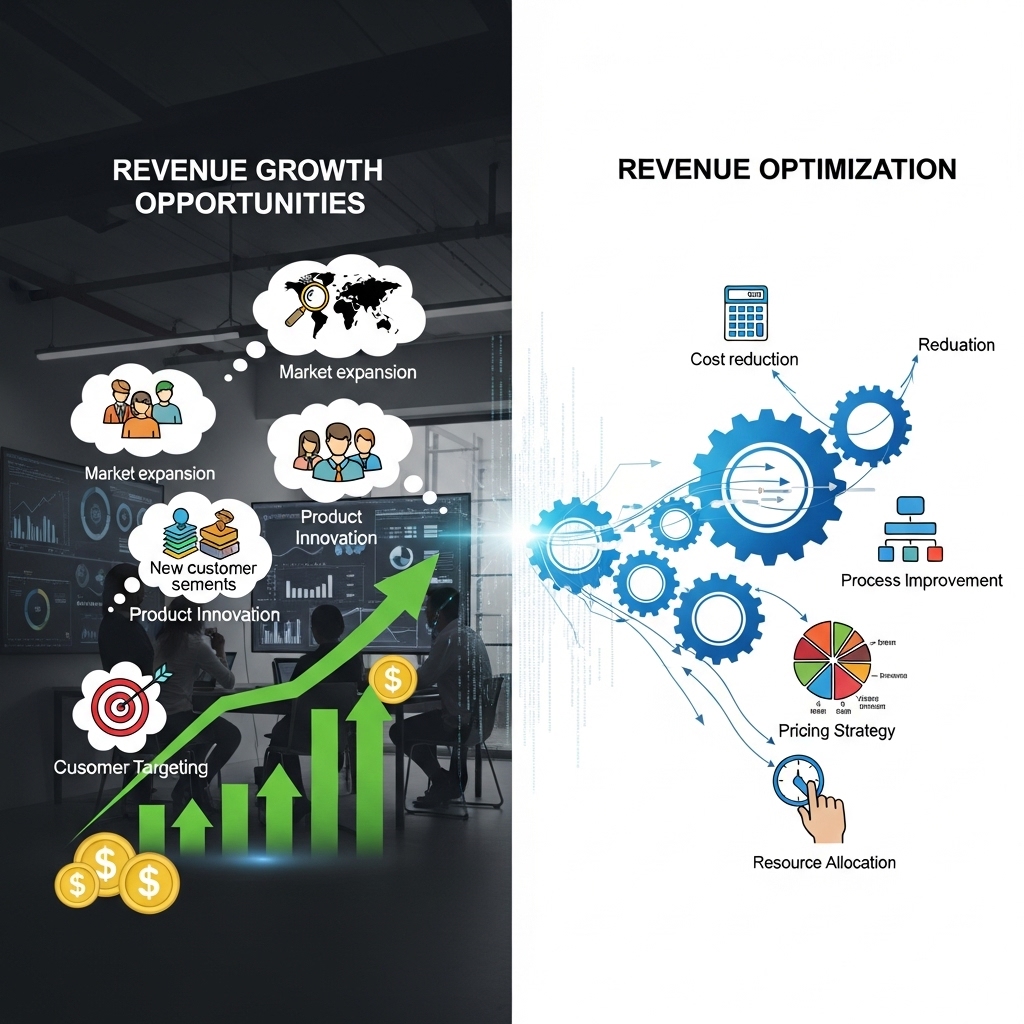
One of the primary applications of data analytics in revenue optimization is identifying opportunities for growth. By analyzing market trends, customer behavior, and competitor activity, businesses can pinpoint areas where they can expand their offerings, improve their services, or explore new markets. For example, a company like Netflix uses data analytics to understand viewer behavior and preferences, which helps it to recommend content, develop new shows, and expand its service into new markets. Similarly, a business can use data analytics to identify new revenue streams, such as offering premium services or subscription-based models, to increase its revenue potential.
Optimizing Operations for Revenue Growth
Data analytics also plays a critical role in optimizing business operations to drive revenue growth. By analyzing operational data, such as supply chain efficiency, inventory management, and logistics, companies can identify areas of inefficiency and implement changes to improve productivity and reduce costs. For instance, a manufacturing company can use data analytics to optimize its production process, reduce waste, and improve quality control, leading to increased efficiency and lower costs. Additionally, data analytics can help businesses optimize their pricing strategies, manage their inventory levels, and improve their customer service, all of which can contribute to revenue growth.
Using Predictive Analytics for Revenue Forecasting
Predictive analytics is a subset of data analytics that involves using statistical models and machine learning algorithms to forecast future events or behavior. In the context of revenue optimization, predictive analytics can be used to forecast revenue, identify potential risks and opportunities, and inform strategic decisions. For example, a company can use predictive analytics to forecast sales, revenue, and customer growth, which helps it to allocate resources effectively, manage its supply chain, and make informed decisions about investments and expansions. Predictive analytics can also be used to identify potential risks, such as market downturns or changes in customer behavior, allowing businesses to develop strategies to mitigate these risks and protect their revenue streams.
Implementing a Data-Driven Culture
To leverage data analytics effectively, businesses need to implement a data-driven culture that encourages the use of data to inform decisions. This involves creating an organizational mindset that values data-driven insights and empowers employees to use data to drive business outcomes. Companies can achieve this by providing training and resources to employees, establishing clear goals and objectives, and creating a culture of experimentation and innovation. For instance, a company like Google encourages a data-driven culture by providing employees with access to data and analytics tools, and empowering them to use data to drive business decisions. By implementing a data-driven culture, businesses can ensure that data analytics is integrated into every aspect of their operations, from strategy development to customer engagement.
Conclusion
In conclusion, data analytics is a powerful tool that businesses can leverage to identify opportunities for revenue growth and optimization. By understanding data analytics and its role in revenue optimization, identifying opportunities for growth, optimizing operations, using predictive analytics, and implementing a data-driven culture, companies can drive revenue growth, improve profitability, and stay ahead of the competition. As the business landscape continues to evolve, the importance of data analytics will only continue to grow, and companies that fail to leverage its power risk being left behind. By embracing data analytics and using it to inform their decisions, businesses can unlock new opportunities, drive innovation, and achieve long-term success.