
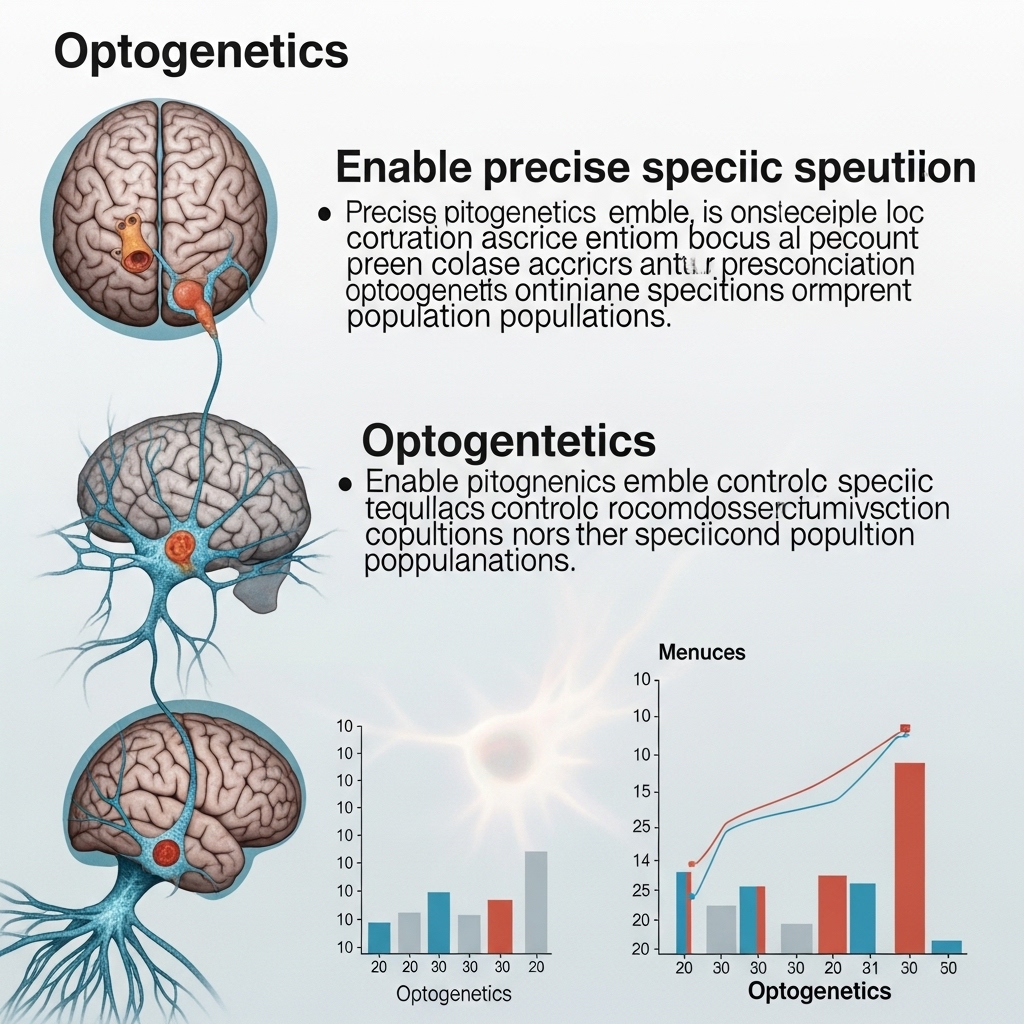
Introduction to Optogenetics
Optogenetics is a revolutionary neuroscientific technique that enables researchers to control specific neuronal populations in the brain with unprecedented precision. This innovative approach combines genetics and optics to manipulate neural activity, allowing scientists to explore the complex neural circuits that underlie various brain functions. By introducing light-sensitive proteins, called opsins, into specific neurons, researchers can activate or silence these cells with precise temporal and spatial control, using light as a trigger. This technology has far-reaching implications for our understanding of brain function and dysfunction, and holds great promise for the development of novel treatments for neurological and psychiatric disorders.
Principles of Optogenetics
The core principle of optogenetics involves the use of light to control neuronal activity. This is achieved by introducing opsins, which are light-sensitive proteins derived from microorganisms, into specific neurons. When these neurons are exposed to light of a specific wavelength, the opsins undergo a conformational change, triggering an electrical signal that either activates or silences the neuron. The most commonly used opsins are channelrhodopsin-2 (ChR2) and halorhodopsin (NpHR), which are activated by blue and yellow light, respectively. By selectively expressing these opsins in specific neuronal populations, researchers can target specific brain regions and cell types, allowing for precise control over neural activity.
Targeting Specific Neuronal Populations
One of the key advantages of optogenetics is its ability to target specific neuronal populations with high spatial and temporal resolution. This is achieved through the use of viral vectors, such as adeno-associated virus (AAV) or lentivirus, to deliver the opsin gene to specific neurons. By using cell-type specific promoters, researchers can restrict opsin expression to specific neuronal subpopulations, allowing for precise control over neural activity. For example, researchers have used optogenetics to target specific subpopulations of neurons in the hippocampus, a brain region critical for learning and memory, to study the neural mechanisms underlying these processes.
Applications of Optogenetics
Optogenetics has a wide range of applications in neuroscience, from basic research to clinical therapy. One of the most significant applications is in the study of neural circuits, where optogenetics allows researchers to dissect the complex interactions between different neuronal populations. For example, researchers have used optogenetics to study the neural circuits underlying Parkinson's disease, a neurodegenerative disorder characterized by motor dysfunction. By selectively activating or silencing specific neuronal populations, researchers have been able to identify key nodes in the neural circuit that contribute to the disease. Optogenetics also holds great promise for the development of novel treatments for neurological and psychiatric disorders, such as epilepsy, depression, and anxiety disorders.
Technical Considerations and Limitations
While optogenetics is a powerful tool for controlling neural activity, there are several technical considerations and limitations that must be taken into account. One of the main limitations is the need for invasive procedures to deliver the opsin gene to specific neurons, which can be challenging in certain brain regions. Additionally, the expression of opsins can be variable, and the efficiency of light delivery can be affected by factors such as tissue scattering and absorption. Furthermore, the use of optogenetics in humans is still in its infancy, and several technical and ethical challenges must be addressed before it can be widely adopted as a therapeutic tool.
Future Directions and Potential Therapeutic Applications
Despite the challenges and limitations, optogenetics holds great promise for the development of novel treatments for neurological and psychiatric disorders. One of the most exciting potential applications is in the treatment of blindness, where optogenetics can be used to restore vision in individuals with retinal degeneration. Researchers are also exploring the use of optogenetics to treat epilepsy, Parkinson's disease, and other neurological disorders. Additionally, optogenetics may also be used to develop novel therapies for psychiatric disorders, such as depression and anxiety disorders, by targeting specific neuronal populations involved in mood regulation. As the technology continues to evolve, we can expect to see significant advances in our understanding of brain function and dysfunction, and the development of innovative treatments for a range of neurological and psychiatric disorders.
Conclusion
In conclusion, optogenetics is a powerful tool for controlling specific neuronal populations in the brain, with far-reaching implications for our understanding of brain function and dysfunction. By combining genetics and optics, researchers can manipulate neural activity with unprecedented precision, allowing for the dissection of complex neural circuits and the development of novel treatments for neurological and psychiatric disorders. While there are technical considerations and limitations that must be taken into account, the potential of optogenetics to revolutionize our understanding of the brain and to develop innovative therapies is vast. As the technology continues to evolve, we can expect to see significant advances in our understanding of brain function and dysfunction, and the development of novel treatments for a range of neurological and psychiatric disorders.