
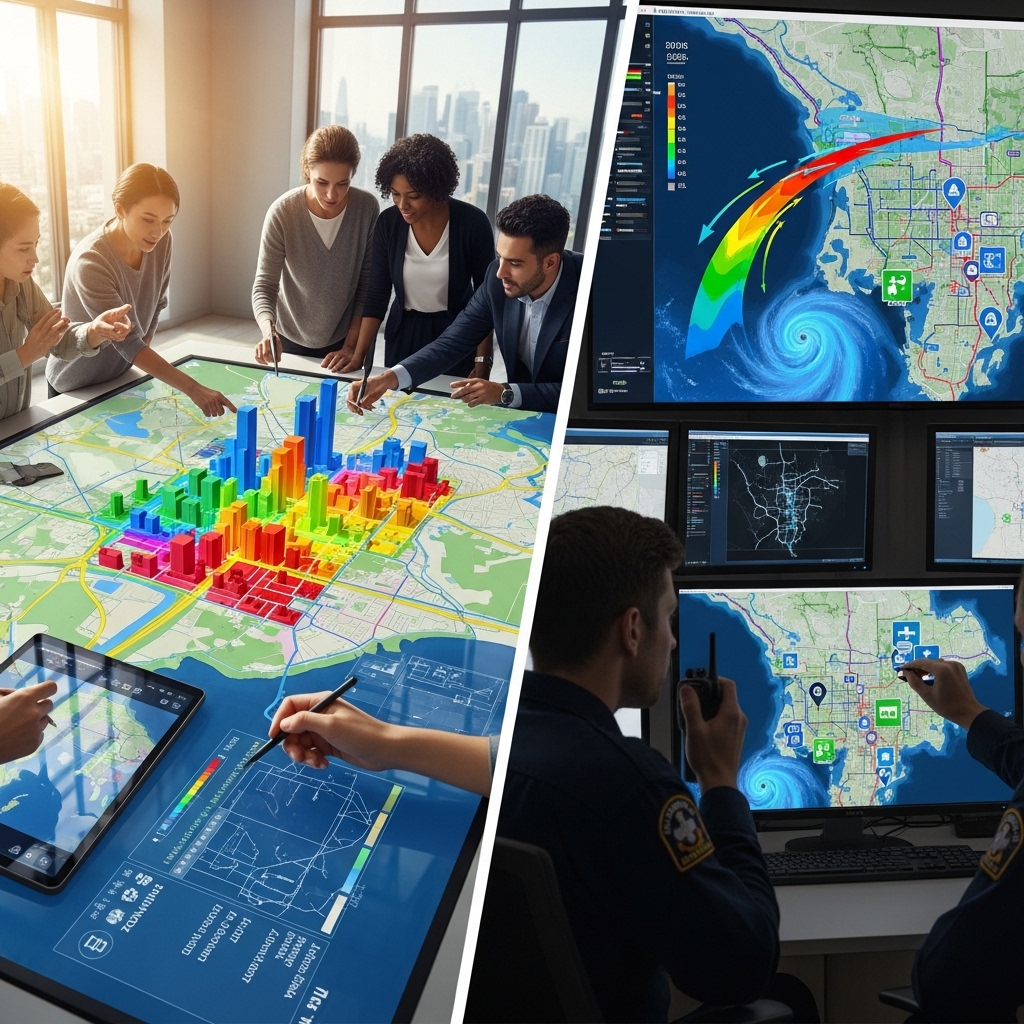
Introduction to Geographical Information Systems (GIS) in Urban Planning and Disaster Management
Geographical Information Systems (GIS) have become an essential tool in urban planning and disaster management efforts. By analyzing and interpreting geographic data, GIS technology enables planners and emergency responders to make informed decisions, optimize resource allocation, and improve response times. In this article, we will explore the role of GIS in urban planning and disaster management, highlighting its applications, benefits, and examples of successful implementations.
Urban Planning with GIS
GIS plays a vital role in urban planning by providing a platform for analyzing and visualizing spatial data. Urban planners use GIS to identify areas of high population density, track land use patterns, and monitor infrastructure development. This information helps planners to create more efficient and sustainable urban designs, ensuring that resources are allocated effectively and that the needs of citizens are met. For example, the city of New York uses GIS to manage its urban planning efforts, including the development of a comprehensive zoning map that guides land use decisions and ensures that new developments align with the city's long-term goals.
GIS in Disaster Management
In the event of a natural disaster, such as a hurricane, earthquake, or flood, GIS technology is crucial in emergency response efforts. GIS enables responders to quickly assess the extent of the damage, identify areas of need, and allocate resources accordingly. By analyzing satellite imagery and other geographic data, responders can identify affected areas, track the movement of people, and prioritize relief efforts. For instance, during Hurricane Katrina, GIS was used to track the storm's trajectory, identify areas of flooding, and coordinate relief efforts, ultimately saving countless lives.
GIS Applications in Disaster Response
There are several GIS applications that are particularly useful in disaster response, including damage assessment, evacuation route planning, and shelter location identification. Damage assessment involves analyzing satellite and aerial imagery to identify areas of damage and prioritize response efforts. Evacuation route planning uses GIS to identify safe routes for evacuees, taking into account factors such as road closures, traffic congestion, and hazard zones. Shelter location identification involves using GIS to identify suitable locations for temporary shelters, considering factors such as accessibility, safety, and proximity to affected areas.
Benefits of GIS in Urban Planning and Disaster Management
The use of GIS in urban planning and disaster management offers numerous benefits, including improved decision-making, increased efficiency, and enhanced collaboration. By providing a common platform for analyzing and sharing geographic data, GIS enables stakeholders to work together more effectively, ensuring that resources are allocated efficiently and that response efforts are coordinated. Additionally, GIS helps to reduce the risk of errors and miscommunication, which can be critical in emergency response situations. For example, the use of GIS in disaster response can help to reduce the time it takes to respond to emergencies, ultimately saving lives and reducing the economic impact of disasters.
Case Studies: Successful Implementations of GIS in Urban Planning and Disaster Management
There are numerous examples of successful implementations of GIS in urban planning and disaster management. The city of Tokyo, for instance, uses GIS to manage its urban planning efforts, including the development of a comprehensive disaster response plan. The plan uses GIS to identify areas of high risk, track the movement of people, and allocate resources accordingly. Similarly, the state of California uses GIS to manage its wildfire response efforts, analyzing satellite imagery and other geographic data to identify areas of high risk and prioritize response efforts.
Challenges and Future Directions
Despite the many benefits of GIS in urban planning and disaster management, there are several challenges that must be addressed, including data quality, interoperability, and accessibility. Ensuring that geographic data is accurate, up-to-date, and accessible to all stakeholders is critical to the effective use of GIS in urban planning and disaster management. Additionally, there is a need for greater investment in GIS technology and training, particularly in developing countries where resources may be limited. As GIS technology continues to evolve, we can expect to see new applications and innovations in urban planning and disaster management, including the use of unmanned aerial vehicles (UAVs), artificial intelligence, and the Internet of Things (IoT).
Conclusion
In conclusion, Geographical Information Systems (GIS) play a critical role in urban planning and disaster management efforts. By providing a platform for analyzing and interpreting geographic data, GIS enables planners and emergency responders to make informed decisions, optimize resource allocation, and improve response times. As the use of GIS technology continues to grow and evolve, we can expect to see new applications and innovations in urban planning and disaster management, ultimately leading to more sustainable, resilient, and safe communities. Whether used in urban planning or disaster response, GIS is an essential tool that has the potential to save lives, reduce economic losses, and improve the overall quality of life for citizens around the world.