
Interview Answer:
Garbage collection (GC) is an automated memory management strategy used in languages like Java, Python, Go, and many managed runtimes. Its purpose is to free unused memory so developers do not need to manually allocate and deallocate objects. GC helps prevent memory leaks, dangling pointers, and double-free errors that were common in languages like C and C++.
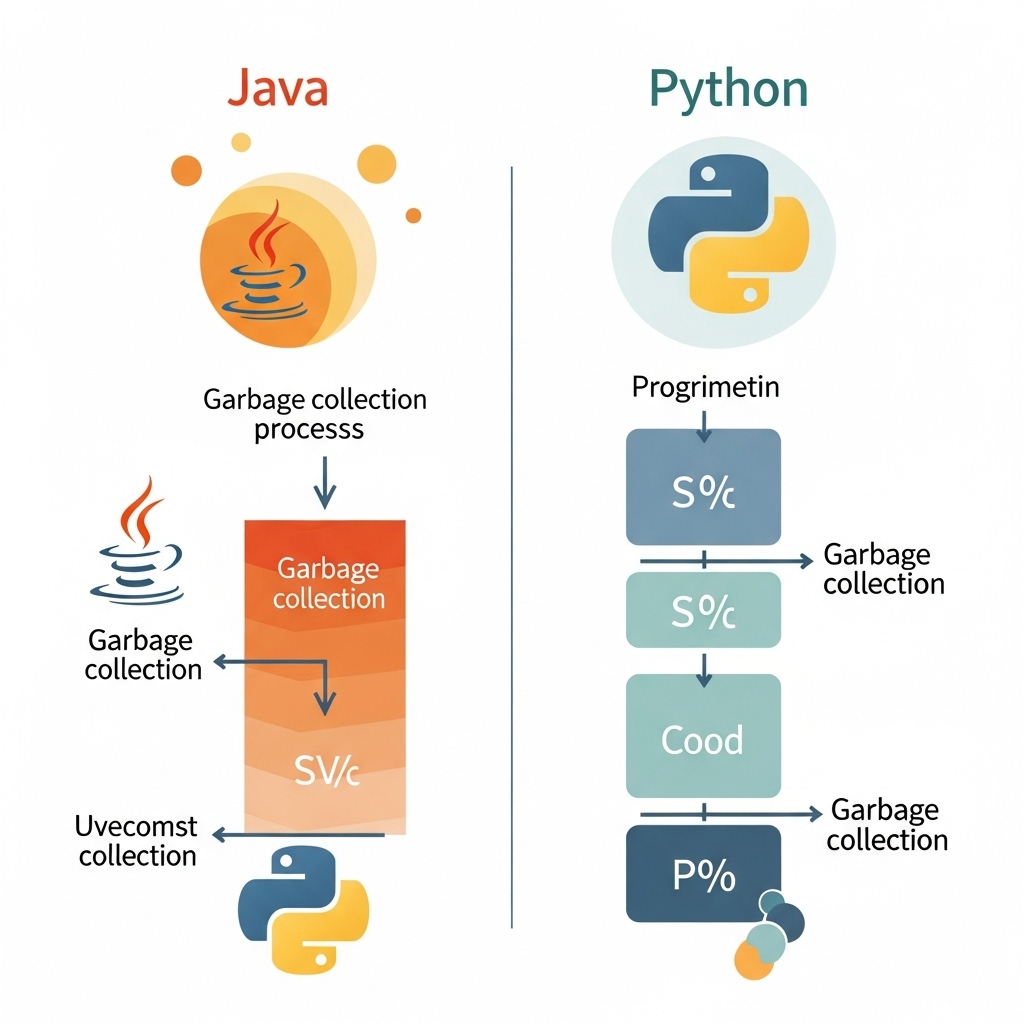
In Java, the JVM divides memory into regions such as the Young Generation, Old Generation, and Metaspace. Most objects are short-lived and allocated in the Young Generation. GC runs periodically to remove unreachable objects using algorithms like mark-and-sweep, copying collection, and generational GC. Modern collectors such as G1, ZGC, and Shenandoah use region-based, low-pause, and concurrent methods to minimize application interruptions.
Python uses reference counting combined with a cyclic garbage collector. Each object has a reference count that increments when referenced and decrements when released. When the count reaches zero, the memory is immediately freed. To handle reference cycles—where objects reference each other—Python periodically scans object graphs to identify cycles and clean them.
Garbage collectors optimize performance by running concurrently, using heuristics to reduce pauses, and prioritizing memory compaction where necessary. While GC makes development safer, it introduces runtime overhead, so tuning GC parameters is essential in large-scale applications.