
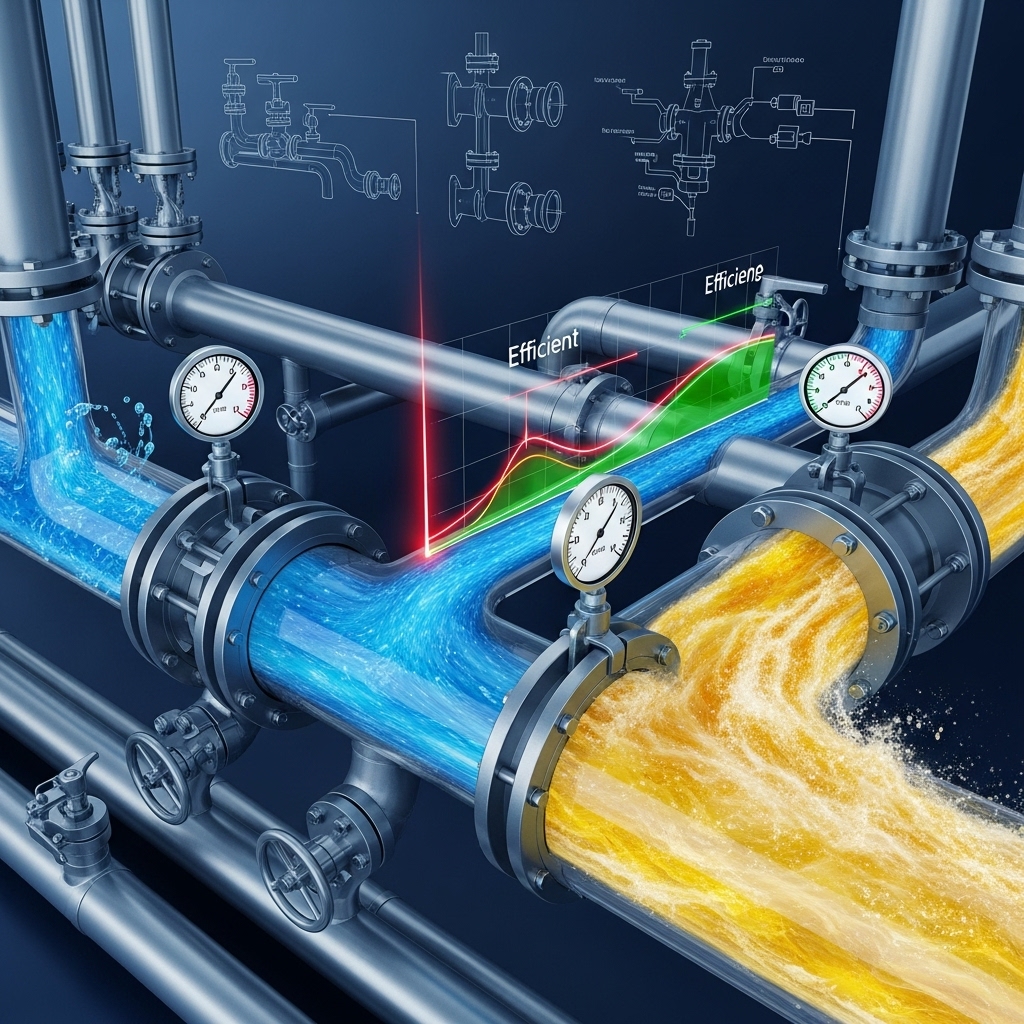
Introduction to Pipeline Efficiency
Pipelines are a crucial part of modern infrastructure, used for the transportation of fluids such as oil, gas, and water over long distances. The efficiency of these pipelines is of paramount importance to ensure the reliable and cost-effective delivery of these resources. Pipeline efficiency is influenced by various factors including flow dynamics and pressure management. Understanding and optimizing these factors can significantly reduce operational costs, enhance safety, and minimize environmental impact. This article delves into the principles of flow dynamics, pressure management strategies, and other critical aspects that affect pipeline efficiency, providing insights and examples to guide pipeline engineers and operators in optimizing their systems.
Understanding Flow Dynamics
Flow dynamics in pipelines is governed by several principles, including the laws of fluid mechanics. The flow of fluid through a pipeline can be either laminar or turbulent, with the latter being more common due to higher flow rates. Turbulent flow is characterized by chaotic, irregular motion of the fluid, which increases frictional losses and pressure drop along the pipeline. Factors such as pipe diameter, fluid viscosity, density, and flow rate influence the nature of the flow. For instance, larger pipes and higher flow rates tend to promote turbulent flow, while smaller pipes and lower flow rates may result in laminar flow. Understanding the nature of the flow is crucial because it directly affects the energy required to pump the fluid and, consequently, the operational costs.
Pressure Management Strategies
Pressure management is a critical aspect of pipeline operation, as it directly impacts the flow rate, energy consumption, and potential for leaks or ruptures. The goal of pressure management is to maintain optimal pressure levels throughout the pipeline to ensure efficient and safe operation. This can be achieved through the use of pumps, compressors, and valves. For example, booster pumps can be used to increase pressure at strategic points along the pipeline to counteract pressure drops due to friction. Similarly, pressure reducing valves can be employed to decrease pressure in sections of the pipeline where it exceeds safe operating limits, thereby preventing over-pressurization and potential failures.
Optimization Techniques for Pipeline Efficiency
Several techniques can be employed to optimize pipeline efficiency. One approach is to optimize pipe sizing, taking into account the flow rate, fluid properties, and the desired pressure drop per unit length of pipeline. Larger pipes result in lower frictional losses but are more expensive to install and maintain. Smaller pipes, while cheaper, may require more pumping energy due to higher frictional losses. Another technique involves the strategic placement of pumping stations or compressor stations to maintain optimal pressure levels along the pipeline. Additionally, the use of advanced materials and coatings can reduce friction and corrosion, further enhancing efficiency and extending the lifespan of the pipeline.
Role of Technology in Pipeline Optimization
Advances in technology have significantly contributed to the optimization of pipeline operations. For instance, pipeline simulation software allows engineers to model different scenarios and predict how changes in operational parameters will affect pipeline performance. This enables the identification of the most efficient operating conditions without the need for physical experimentation. Furthermore, the implementation of smart pipeline systems, which integrate sensors, monitoring systems, and automation, enables real-time monitoring of pipeline conditions. This facilitates prompt response to anomalies, such as leaks or blockages, reducing downtime and enhancing safety. Technologies like pipeline inspection gauges (PIGs) are also used for internal inspection of pipelines, helping in the early detection of defects and corrosion, thus preventing potential failures.
Environmental and Safety Considerations
The optimization of pipeline efficiency must also consider environmental and safety aspects. Pipelines can have significant environmental impacts, including the risk of spills and habitat disruption. Efficient operation and maintenance of pipelines are crucial in minimizing these risks. Regular inspections and the use of leak detection systems can help in the early identification of potential issues, allowing for proactive measures to prevent environmental damage. Safety is also a paramount concern, as pipeline failures can have severe consequences for both the environment and human populations. Optimizing pipeline efficiency through proper design, operation, and maintenance is essential for minimizing these risks and ensuring the safe transportation of fluids.
Conclusion
In conclusion, optimizing pipeline efficiency is a multifaceted challenge that requires a deep understanding of flow dynamics, pressure management strategies, and the application of advanced technologies. By applying these principles and techniques, pipeline operators can reduce operational costs, enhance safety, and minimize environmental impact. As the demand for efficient and reliable fluid transportation continues to grow, the importance of optimizing pipeline efficiency will only increase. Through ongoing research, development, and implementation of best practices, the pipeline industry can meet these challenges, ensuring the sustainable and safe delivery of vital resources to meet global needs.