
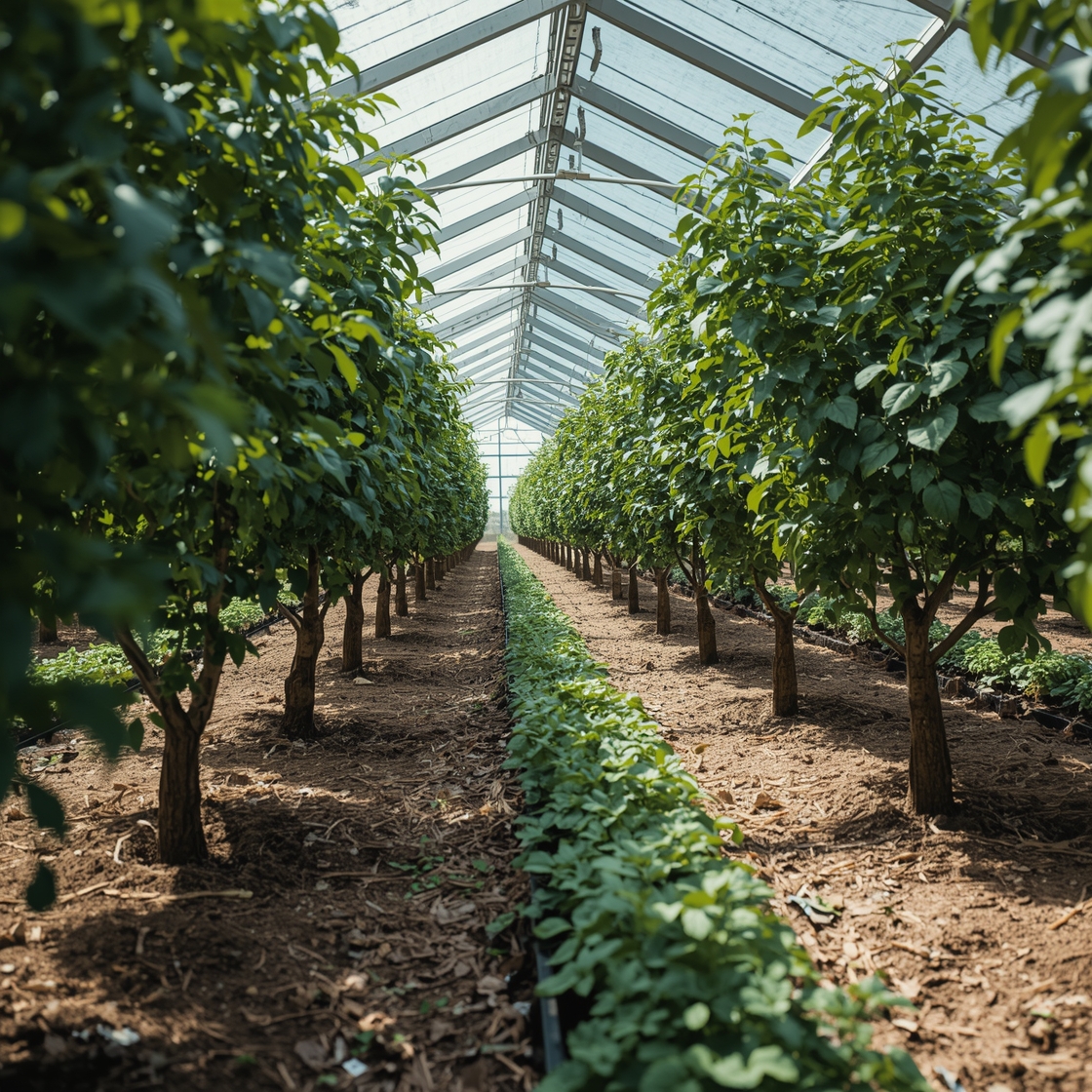
Quantum Orchard: SEO Optimized Guide to Decentralized Autonomous Farms in the 2040s
In a world where soil memory, sensor networks, and distributed decision engines shape food production, the concept of farming shifts from a single plot to a planetary grid of micro farms. This article explores how to write and optimize content about this topic in a futuristic context while maintaining clarity and search visibility. The word garden is replaced by networked farm systems that balance energy, water, and nutrients through autonomous routines. The objective is to present a comprehensive blueprint for readers and search engines alike, blending practical guidance with speculative foresight to illuminate the path toward resilient agriculture in the era of intelligent ecosystems.
The approach in this guide is pragmatic yet imaginative. It emphasizes scalable systems, transparent governance, and clear narratives that help readers connect complex technical ideas to everyday experiences. Readers will find actionable strategies for creating content that earns trust, ranks for relevant keywords, and helps communities participate in regenerative farming networks. While the future described here is technologically extended, the core principles remain grounded in accessible language, structured data, and verifiable outcomes. This is not a vision alone but a framework that blends science, engineering, and storytelling to make advanced farming comprehensible and useful.
Key themes and goals
The central themes of this guide include autonomy, interoperability, ecological balance, and continuous improvement. The content aims to achieve four outcomes: to educate readers about the architecture of decentralized autonomous farms, to illustrate how future SEO practices adapt to sensor rich environments, to provide practical blueprints for building resilient farm networks, and to offer measurable insights that readers can apply in real world contexts. The futuristic tone is balanced with precise explanations of data flows, governance models, and user oriented search strategies that prioritize relevance, clarity, and credibility.
Foundations of the decentralized autonomous farm
The decentralized autonomous farm is a system in which decision making is distributed across nodes that are physically dispersed yet logically connected through a shared protocol. Each micro farm operates with autonomy in planning, execution, and adaptation, while contributing to a larger grid that optimizes resource use and crop diversity. The architecture resembles a living organism with multiple organs that exchange energy, information, and matter. Sensors monitor soil moisture, temperature, salinity, nutrient levels, light intensity, and microclimate variables. Actuators adjust irrigation, shade, nutrient delivery, and pest control in response to automatic rules and learned models. The governance layer orchestrates these activities through consensus mechanisms, policy definitions, and performance feedback loops.
From a storytelling perspective, this concept invites readers to imagine the farm as a living network. Each node has a role, a history, and a set of capabilities. The mis sion is to ensure food security while minimizing environmental impact. The reality is a set of engineered solutions backed by data and experiments. In this guide we will translate these ideas into readable, SEO friendly narratives that highlight technologies, processes, and outcomes without overwhelming the reader with jargon. The ultimate aim is to empower readers to participate in or replicate aspects of the system, whether as researchers, practitioners, or informed consumers.
Autonomy and governance
Autonomy in farming means that local decisions are made with minimal human intervention while remaining aligned with global objectives. Governance provides the rules, safety checks, and ethical guardrails to ensure that all nodes act within acceptable bounds. The governance model includes policy layers such as energy budgets, water conservation limits, crop rotation rules, and pest management strategies. It also defines metrics for success, including yield stability, soil health, biodiversity indicators, and carbon intensity. A robust governance framework reduces risk, increases transparency, and supports accountability across the network. Readers can appreciate how governance interacts with automation to deliver predictable performance in changing climate conditions and market dynamics.
Sensor networks and the AI backbone
Sensor networks form the sensory skin of the decentralized farm. They capture real time data about soil, air, water, plant health, and microclimates. Edge AI units process data locally to make quick adjustments, while cloud based systems aggregate information for long term analysis and optimization. The AI backbone uses machine learning models to forecast water needs, nutrient requirements, disease risks, and harvest windows. These models are continuously updated with new data, validated against field experiments, and deployed through a secure update mechanism. The result is a dynamic system that learns over time and improves resource efficiency while reducing waste and environmental footprint.
One practical takeaway for readers is the importance of data quality. Good data enables better models and more reliable automation. High quality data is produced by well designed sensor networks, calibration routines, and standardized data formats. It also includes clear provenance so that decisions can be traced back to their inputs. Readers who implement similar setups will find that attention to data quality translates into clearer insights, stronger performance, and better SEO signals as content about validated results resonates with readers and search engines alike.
Data interoperability and standards
Interoperability is essential because farms in different regions use different sensors, actuators, and software stacks. A common vocabulary and data schema enable cross farm analysis, share learning across nodes, and support scalable growth. Standards are not rigid rules but flexible frameworks that evolve with innovation. They define how data is encoded, how events are timestamped, and how privacy controlled data can be accessed by authorized parties. Readers should look for content that explains the standards used in a credible way, including references to open protocols and real world demonstrations. This transparency improves credibility and helps content rank for technical queries that expect precise specifications.
SEO in the era of networked farming
SEO has evolved beyond keyword stuffing to embrace semantic relevance, user intent, and solution oriented content. In a world of networked farms, topics often intersect with climate resilience, data science, governance, and economics. The SEO strategy for futuristic farming content should emphasize clear problem statements, step by step approaches, and tangible outcomes. It should also leverage structured data to help search engines understand the relationships between concepts such as autonomy, sensors, energy, water, and crops. Semantic density and topic clustering become more important as readers search for integrated solutions rather than isolated facts.
A key aspect of future SEO is audience segmentation. Content should be organized so both novices and experts can find what they need quickly. For novices, introductory sections with simple explanations and visuals help build confidence. For experts, deeper dives into data schemas, governance policies, and performance metrics provide the detail needed to apply ideas in practice. The balance between accessibility and depth is essential for sustaining engagement and achieving higher dwell times, which are positive signals to search engines about content value.
Keyword strategy for 2040s farm topics
Keywords in the 2040s should reflect intent, context, and long term relevance. Focus on long tail phrases that combine a topic with a question or a practical outcome. Examples include questions about how autonomous farms manage drought, how sensor networks optimize nutrient delivery, and how governance frameworks ensure safety in distributed systems. Content should weave these phrases naturally into headings, sub headings, and narrative paragraphs. Avoid keyword stuffing and instead aim for clarity and usefulness. Rich snippets and tables can help search engines understand structured information and present it in an accessible way for readers.
Architectural blueprint for a future focused content strategy
The architectural blueprint for writing about decentralized autonomous farms combines three layers: concept exploration, practical implementation, and measured outcomes. The concept exploration layer describes the theory behind autonomous networks, governance, and data flows. The practical implementation layer provides blueprints for building real world analogs, including sensor layouts, control workflows, and data pipelines. The measured outcomes layer compiles metrics, case studies, and comparative analyses that demonstrate benefits and trade offs. A well designed content strategy includes all three layers with clear connectors that show how ideas translate into actions and results. This structure makes content helpful to readers and friendly to search engines.
System architecture overview
At a high level, the system architecture comprises three main components: the farm level, the network layer, and the analytics layer. The farm level includes micro farms with soil, water, nutrient management systems, and plant health monitoring. The network layer connects farms through secure channels, enabling policy distribution, resource sharing, and collaborative planning. The analytics layer aggregates data for predictive modeling, optimization, and reporting. Each component has interfaces and data contracts that ensure compatibility and future extensibility. When describing this architecture in content, emphasize the flow of data from sensors to actions and then to results. Use diagrams and tables to illustrate relationships, and provide concrete examples to ground abstract concepts.
Data schema and interoperability in practice
A practical data schema for the future farm world includes entities such as Sensor, Actuator, Node, Farm, Field, Crop, Schedule, and Experiment. Each entity has attributes such as id, type, timestamp, units, and status. Data lineage is important, so every data point should include provenance metadata, including the source device, calibration state, and operator notes where applicable. Interoperability is achieved by adopting canonical field names, unit conventions, and time formats across devices and platforms. Writers who describe data schemas clearly help readers implement their own systems with confidence, and this clarity improves the likelihood that content becomes a trusted reference in the field.
Practical blueprint: how to build a modern networked farm narrative
To create content that resonates with readers and ranks well, follow a practical blueprint. Start with a compelling problem statement that sets context and stakes. Then present the architecture and governance approach in simple terms, supported by concrete examples. Use visuals such as diagrams and tables to convey complex ideas succinctly. Provide a step by step guide that readers can follow, including prerequisites, tools, and expected outcomes. Finally, present a validation section with data and case studies that demonstrate success. This structure helps readers move from curiosity to understanding to application, which is the essence of effective futuristic content.
System layers and interaction patterns
The system layers include perception, decision making, and actuation. Perception collects data from sensors and external feeds. Decision making interprets data with models and rules. Actuation translates decisions into physical actions. Interaction patterns often involve feedback loops, where outcomes influence future decisions. For readers, describe these patterns with concrete examples such as adjusting irrigation in response to soil moisture trends, scheduling nutrient delivery based on crop growth stage, and deploying pest control only when risk indicators exceed thresholds. These examples illustrate the practical implications of abstract concepts and support reader understanding.
Case study: a sample farm grid and its performance metrics
Consider a hypothetical grid of micro farms distributed across a temperate region. Each micro farm grows a mix of vegetables, legumes, and leafy greens. Sensor nodes monitor soil moisture, temperature, humidity, and nutrient levels. An autonomous controller schedules irrigation windows, applies nutrients through precision dosing, and initiates pest control when needed. The grid coordinates crop planning to maximize biodiversity and minimize resource spikes. In this case study we outline the architecture, data flows, governance policies, and performance signals that illustrate how a futuristic farming network operates in practice. The goal is to translate theory into replicable patterns that readers can adopt or adapt in their own contexts.
Table of key metrics
| Metric | Definition | Value Range |
| Yield stability | Consistency of harvest over time | 0.8 to 1.0 |
| Water use efficiency | Crop yield per unit of water used | 0.5 to 2.5 kg per m3 |
| Soil health index | Composite measure of organic matter and biology | 0 to 100 |
| Energy intensity | Energy used per unit of produce | low to moderate |
The table above demonstrates how to present measurable outcomes in a compact, readable form. Readers can replicate these metrics with their own data and compare results across farms. Structured data like this supports rich snippets in search results and helps readers quickly assess the practicality of ideas described in the content.
Code snippets: practical examples without heavy jargon
Code blocks in futuristic farming content illustrate workflows, not just syntax. The examples here are intentionally minimal to avoid distracting readers with complex programming details. They show the basic structure of a control loop, a data validation check, and a simple scheduling rule. These lines are designed to be easy to port into real projects while remaining accessible to a broad audience. Use plain language comments to describe what each line does and why it matters for readers who are new to the topic.
initialize sensors
load calibration data
if soil moisture below threshold then
  activate irrigation schedule
end
for each sensor in node
  read value
  if value out of range then
    alert operator
  end
end
These examples provide a practical bridge between theory and implementation. They show readers how to translate a concept into executable steps without overwhelming them with syntax. The goal is to empower readers to try, test, and iterate in their own projects, which is a core principle of both futuristic farming and SEO focused content creation.
Future visions and practical implications
The future farm network will be shaped by rapid advances in hardware miniaturization, AI safety, and community governance. These changes will influence how content about farming is produced and consumed. Readers should anticipate shifts in what counts as credible evidence, how data is shared, and how trust is established across diverse stakeholders. By adopting transparent reporting, open data practices, and rigorous validation, creators can build enduring credibility that stands the test of time and search engine evolution. In this context, the futuristic farm becomes an opportunity to tell stories that are not only technically accurate but also emotionally compelling and socially responsible.
Ethics, safety, and societal impact
Ethical considerations include fairness in access to technology, protection of local labor ecosystems, and respect for ecological limits. Safety concerns involve fail save mechanisms, secure communications, and robust recovery procedures after disruptions. Social impact includes empowering small scale farmers, enabling participatory governance, and strengthening local food systems. Content that addresses these topics honestly tends to perform well because it appeals to readers seeking responsible innovation. The narrative should present both opportunities and challenges, acknowledging uncertainties while offering practical paths forward.
Concluding synthesis: integrating narrative, data, and strategy
The synthesis of narrative, data, and strategy is where futuristic content becomes valuable. Readers should come away with a clear understanding of what decentralized autonomous farms are, how they operate, and why they matter for the future of food, climate resilience, and local economies. The SEO components—clarity, relevance, and credibility—are not separate from the technical content but embedded within it. By describing architecture, governance, data flows, and measurable outcomes in a structured, accessible way, writers can create content that informs, inspires, and instructs. The result is a resource that supports learning, experimentation, and real world adoption, while remaining engaging to readers and favorable to search engines that value thoughtful, evidence based content.