
Introduction
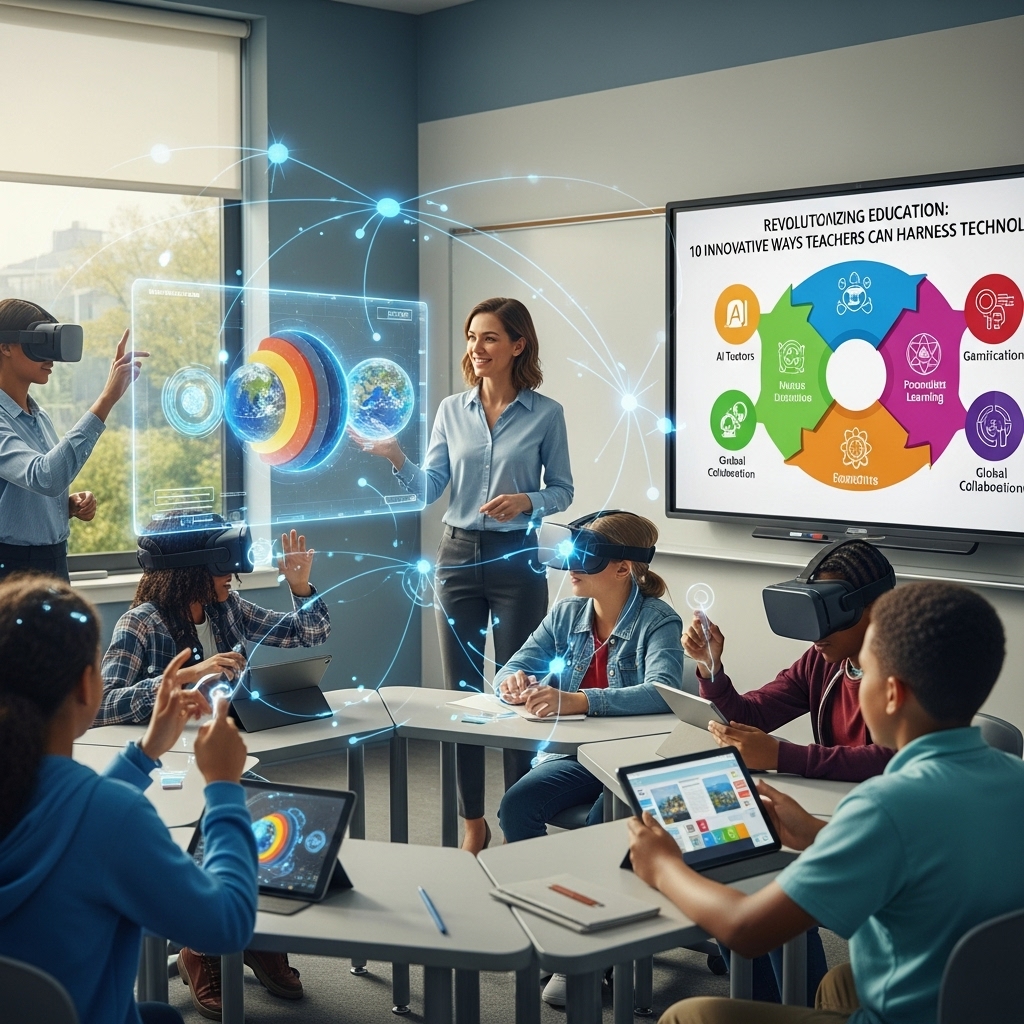
Technology has revolutionized the way we live, work, and learn. The education sector has not been left behind in this revolution, with teachers increasingly using technology to enhance the learning experience for their students. From online learning platforms to educational apps, technology has made it possible for teachers to engage their students in new and innovative ways. In this article, we will explore 10 innovative ways teachers can harness technology to improve the learning experience for their students.
The use of technology in education has numerous benefits, including increased student engagement, improved academic performance, and enhanced accessibility. With the rise of digital natives, it is essential for teachers to incorporate technology into their teaching practices to meet the needs of their students. In this article, we will discuss the various ways teachers can use technology to create a more interactive, inclusive, and effective learning environment.
1. Online Learning Platforms
Online learning platforms have made it possible for teachers to create virtual classrooms, where students can access course materials, participate in discussions, and submit assignments. These platforms, such as Moodle, Blackboard, and Canvas, provide a range of tools and features that enable teachers to manage their courses, track student progress, and communicate with students. For example, teachers can use online learning platforms to create online quizzes, assignments, and discussions, which can be accessed by students at any time and from any location.
Online learning platforms also provide opportunities for collaboration and feedback. Teachers can use these platforms to create group projects, where students can work together on a task, share resources, and provide feedback to each other. Additionally, teachers can use online learning platforms to provide instant feedback to students, which can help to improve student outcomes and motivation.
2. Educational Apps
Educational apps have become increasingly popular in recent years, with many apps available for various subjects and age groups. These apps provide interactive and engaging ways for students to learn, with features such as games, quizzes, and simulations. For example, apps like Duolingo and Khan Academy provide interactive lessons and exercises for language learning and math, respectively.
Teachers can use educational apps to supplement their teaching, providing students with additional resources and practice opportunities. For example, a math teacher can use an app like Mathway to provide students with step-by-step solutions to math problems, while a language teacher can use an app like Quizlet to provide students with interactive flashcards and vocabulary practice.
3. Virtual Field Trips
Virtual field trips have made it possible for students to explore places and locations that may be difficult or impossible to visit in person. Using virtual reality (VR) and augmented reality (AR) technologies, students can explore historical sites, museums, and other locations in a highly immersive and interactive way.
Teachers can use virtual field trips to enhance the learning experience, providing students with a more engaging and memorable experience. For example, a history teacher can use VR to take students on a virtual tour of a historical site, while a science teacher can use AR to provide students with interactive 3D models of cells and molecules.
4. Flipped Classrooms
The flipped classroom model involves reversing the traditional lecture-homework format, where students learn at home through pre-recorded videos and other online resources, and work on activities and projects in the classroom. This approach has been shown to improve student engagement and outcomes, as students are able to learn at their own pace and receive more personalized support from teachers.
Teachers can use technology to create flipped classrooms, recording video lectures and providing online resources for students to access at home. For example, a teacher can use a tool like Screencast-O-Matic to record video lectures, while a learning management system like Canvas can be used to provide students with access to online resources and assignments.
5. Gamification and Simulation
Gamification and simulation involve using game design and simulation technologies to create interactive and engaging learning experiences. These approaches can be used to teach a range of subjects, from math and science to language and social studies.
Teachers can use gamification and simulation to create interactive lessons and activities, providing students with a more engaging and motivating experience. For example, a teacher can use a tool like Classcraft to create a gamified classroom, where students can earn points and badges for completing tasks and achieving goals. Similarly, a teacher can use a simulation tool like SimCity to teach students about urban planning and management.
6. Collaborative Tools
Collaborative tools, such as Google Docs and Padlet, provide opportunities for students to work together on projects and assignments. These tools enable students to share resources, provide feedback, and collaborate in real-time, regardless of their location.
Teachers can use collaborative tools to facilitate group work and projects, providing students with opportunities to develop essential skills such as communication, teamwork, and problem-solving. For example, a teacher can use Google Docs to create a collaborative document, where students can work together on a research project, while a tool like Padlet can be used to create a virtual bulletin board, where students can share ideas and resources.
7. Data Analytics
Data analytics involves using data and statistics to inform teaching practices and improve student outcomes. Teachers can use data analytics tools to track student progress, identify areas of strength and weakness, and provide targeted support and intervention.
Teachers can use data analytics to inform their teaching practices, providing students with a more personalized and effective learning experience. For example, a teacher can use a tool like Learning Analytics to track student progress and identify areas where students need additional support, while a tool like Khan Academy can be used to provide students with personalized learning recommendations and resources.
Conclusion
In conclusion, technology has the potential to revolutionize education, providing teachers with a range of innovative tools and approaches to enhance the learning experience for their students. From online learning platforms and educational apps to virtual field trips and collaborative tools, there are many ways teachers can harness technology to improve student outcomes and engagement.
As technology continues to evolve and improve, it is essential for teachers to stay up-to-date with the latest developments and trends. By incorporating technology into their teaching practices, teachers can create a more interactive, inclusive, and effective learning environment, providing students with the skills and knowledge they need to succeed in the 21st century.
Ultimately, the key to successful technology integration is to focus on the needs and goals of students, using technology to support and enhance teaching practices rather than replace them. By working together and sharing best practices, teachers can harness the power of technology to create a brighter future for their students and for education as a whole.