
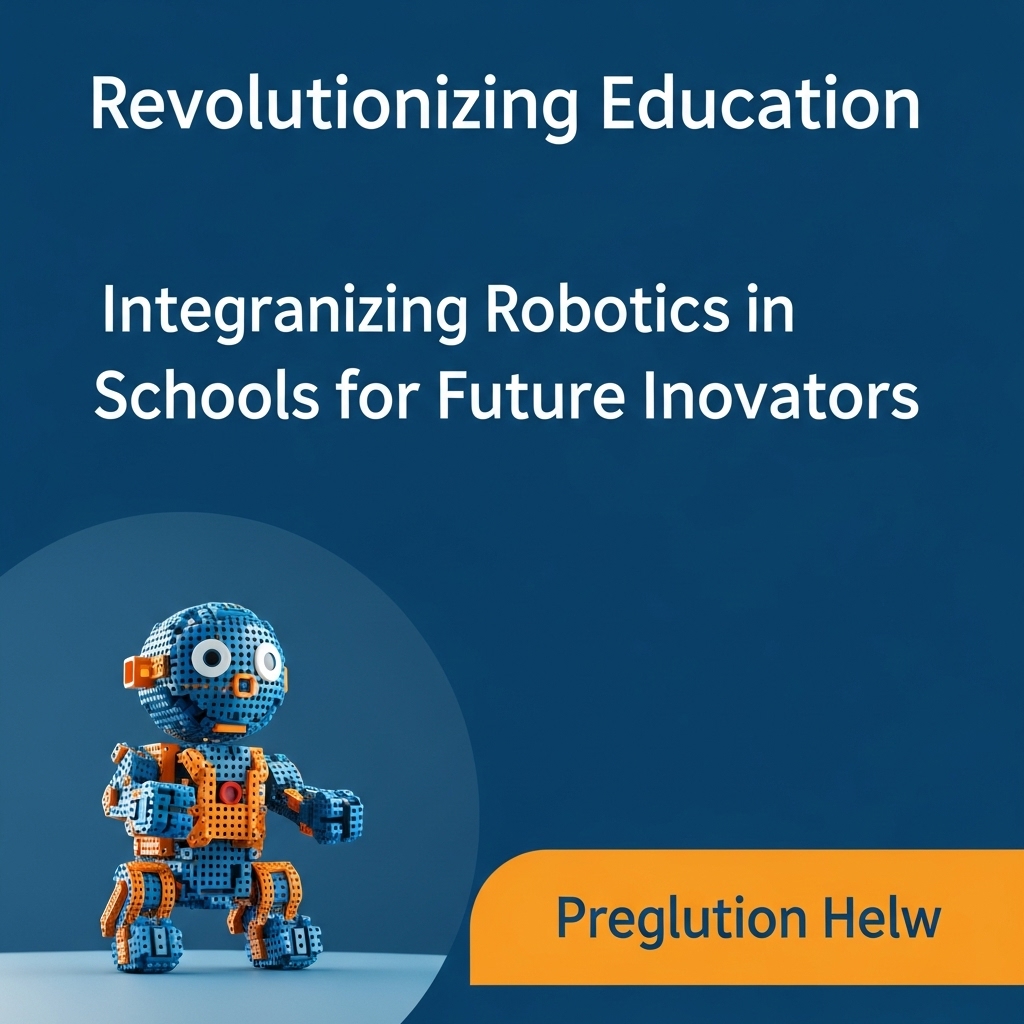
Introduction to Robotics in Schools
The world is on the cusp of a technological revolution, and it's imperative that the next generation is equipped with the skills to navigate and innovate in this new landscape. Robotics, with its unique blend of science, technology, engineering, and mathematics (STEM), is at the forefront of this revolution. Integrating robotics in schools is not just about introducing a new subject; it's about fostering a mindset that encourages curiosity, creativity, and problem-solving. This approach to education can transform the way students learn and prepare them to become the innovators of the future.
The Benefits of Robotics in Education
Robotics offers a multifaceted approach to learning, combining theoretical knowledge with practical application. It enhances students' understanding of complex concepts by making them tangible and interactive. For instance, programming a robot to perform a specific task teaches students about algorithms, loops, and conditional statements in a way that is both engaging and memorable. Moreover, robotics encourages teamwork, as students often work in groups to design, build, and program their robots, promoting communication, collaboration, and mutual respect.
Another significant benefit of integrating robotics in schools is its ability to make STEM subjects more appealing and accessible. Traditional teaching methods can sometimes make these subjects seem abstract and detached from real-life applications. Robotics brings these subjects to life, showing students how math and science are used to create innovative solutions to real-world problems. This can inspire students to pursue careers in STEM fields, which are crucial for driving technological advancement and economic growth.
Practical Applications of Robotics in Schools
There are numerous ways robotics can be integrated into school curricula, ranging from basic programming courses to advanced robotics engineering classes. For younger students, introductory courses can focus on simple programming using visual interfaces, such as block-based coding languages. As students progress, they can move on to more complex programming languages like Python or C++, and work with more sophisticated robots that can perform a variety of tasks, from line following to object recognition.
For example, schools can incorporate robotics into their science classes by having students design and build robots that can collect data on environmental factors such as light, temperature, and sound. This not only teaches students about programming and robotics but also about scientific methodology and data analysis. In math classes, students can use robotics to visualize and solve complex mathematical problems, making abstract concepts more concrete and understandable.
Addressing Challenges and Accessibility
Despite the benefits, integrating robotics into schools can pose several challenges, including cost, teacher training, and accessibility. High-quality robotics kits and equipment can be expensive, making it difficult for some schools to afford them. Moreover, teachers may need training to effectively teach robotics and programming, which can require additional resources and time.
To address these challenges, schools can explore cost-effective solutions such as open-source robotics platforms and DIY kits that allow students to build their own robots using affordable materials. Additionally, online resources and community forums can provide valuable support for teachers, offering lesson plans, project ideas, and troubleshooting advice. Collaboration between schools and local tech companies or universities can also help, providing access to expertise, equipment, and funding.
Preparing Students for the Future
The integration of robotics in schools is not just about preparing students for careers in robotics or STEM fields; it's about equipping them with skills that are valuable across all industries. In a future dominated by automation and artificial intelligence, the ability to understand, program, and interact with technology will be essential. Students who learn robotics and programming develop a unique combination of technical, creative, and critical thinking skills, making them adaptable and innovative problem solvers.
Furthermore, the process of designing, building, and programming robots teaches students about resilience and perseverance. They learn to approach problems systematically, to test and refine their solutions, and to view failures as opportunities for learning. These skills are crucial for success in any field and will serve students well as they navigate the challenges of the 21st century.
Real-World Examples and Success Stories
There are numerous examples of schools and programs around the world that have successfully integrated robotics into their curricula, achieving remarkable results. For instance, robotics clubs and competitions, such as the FIRST Robotics Competition, provide students with the opportunity to design, build, and compete with their robots, fostering a sense of community and healthy competition among young innovators.
Some schools have also developed innovative programs that use robotics to teach other subjects. For example, using robots to teach languages, where students program robots to perform tasks based on verbal commands in a foreign language, combining programming skills with language learning. These initiatives demonstrate the versatility of robotics in education and its potential to enhance learning across various disciplines.
Conclusion: Embracing the Future of Education
In conclusion, integrating robotics in schools is a forward-thinking approach to education that prepares students for a future where technology will play an increasingly dominant role. By providing students with the skills to understand, design, and interact with technology, we are not only fostering their potential as future innovators but also ensuring they are well-equipped to thrive in a rapidly changing world. While there are challenges to overcome, the benefits of robotics in education are undeniable, making it an investment worth pursuing for the sake of our students and our collective future.
As we move forward, it's essential to continue exploring innovative ways to integrate robotics into education, making it accessible and engaging for students of all ages and backgrounds. By doing so, we can unlock the full potential of the next generation, empowering them to create, innovate, and lead in a world that is increasingly driven by technology and innovation.