
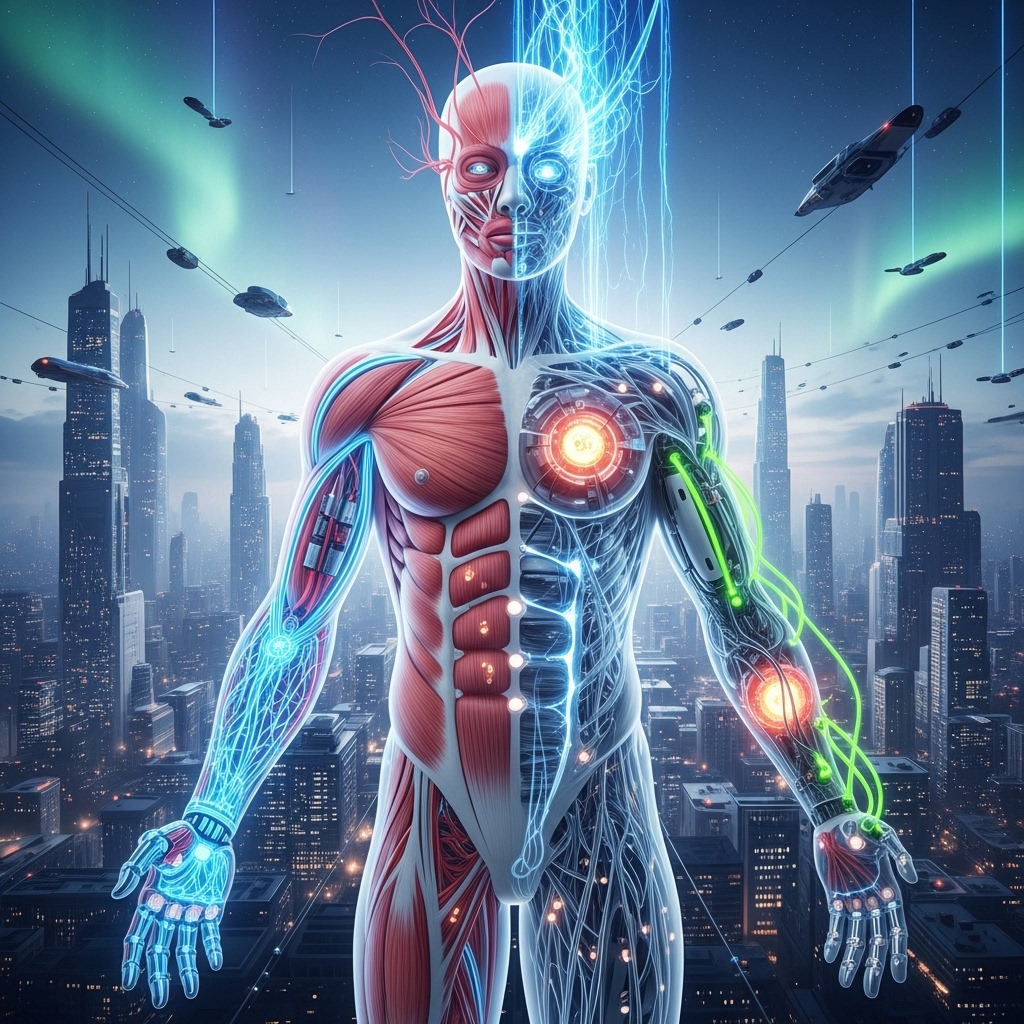
Introduction to BioRobotics Integration
The intersection of biology and robotics, known as bio-robotics, has been a subject of fascination for decades, promising to revolutionize human evolution by enhancing our physical and cognitive abilities. This innovative field combines the principles of biology and engineering to create systems that can mimic, augment, or even surpass human capabilities. The potential applications of bio-robotics are vast, ranging from prosthetic limbs and exoskeletons to brain-computer interfaces and genetic engineering. As technology continues to advance at an unprecedented rate, the possibilities for merging biology and robotics become increasingly exciting and profound.
Understanding the Foundations of BioRobotics
At its core, bio-robotics involves the integration of biological systems with robotic systems, aiming to create a synergy that leverages the strengths of both. Biological systems offer adaptability, self-healing, and efficiency, while robotic systems provide precision, strength, and durability. By combining these elements, scientists and engineers can develop novel solutions to long-standing challenges in healthcare, manufacturing, and environmental conservation. For instance, robotic prosthetics can be designed to mimic the natural movement and sensory feedback of human limbs, significantly improving the quality of life for amputees. Similarly, bio-inspired robots can be engineered to navigate and interact with complex environments in ways that traditional robots cannot.
Advancements in Prosthetics and Exoskeletons
One of the most tangible applications of bio-robotics is in the development of advanced prosthetics and exoskeletons. These devices are designed to restore or enhance human mobility and strength, using a combination of mechanical, electrical, and biological components. For example, mind-controlled prosthetic limbs can be connected directly to the user's nervous system, allowing for intuitive control and sensory feedback. Exoskeletons, on the other hand, can amplify human strength and endurance, enabling individuals to perform tasks that would otherwise be impossible. Companies like Ekso Bionics and ReWalk Robotics are already commercializing these technologies, offering new hope to individuals with paralysis, muscular dystrophy, and other mobility disorders.
Brain-Computer Interfaces: The Future of Human-Machine Interaction
Brain-computer interfaces (BCIs) represent another frontier in bio-robotics, enabling people to control devices with their thoughts. BCIs use electroencephalography (EEG) or other techniques to decode brain signals, which are then translated into commands for robots, computers, or other machines. This technology has the potential to revolutionize the treatment of neurological disorders such as ALS, allowing patients to communicate and interact with their environment in new ways. Furthermore, BCIs could also enhance human cognition and productivity by enabling people to control devices with unprecedented speed and precision. Companies like Neuralink, founded by Elon Musk, are pushing the boundaries of BCI technology, aiming to integrate the human brain with computers and robots seamlessly.
Genetic Engineering and Synthetic Biology
Genetic engineering and synthetic biology are also crucial components of the bio-robotics landscape, as they enable the design and construction of new biological systems with specific functions. By editing genes and engineering microorganisms, scientists can create bio-factories that produce biofuels, clean up environmental pollutants, or even manufacture pharmaceuticals. This field is rapidly advancing, with tools like CRISPR/Cas9 allowing for precise and efficient genome editing. The potential applications of genetic engineering in bio-robotics are vast, from creating biological sensors and actuators to developing novel materials and energy sources. However, these technologies also raise important ethical questions about the boundaries between living and non-living systems, and the potential risks and unintended consequences of tampering with nature.
Challenges and Ethical Considerations
While the potential of bio-robotics is immense, the field is not without its challenges and ethical considerations. One of the primary concerns is the potential for uneven access to these technologies, which could exacerbate existing social and economic inequalities. There are also questions about the long-term safety and reliability of bio-robotic systems, particularly those that involve the integration of biological and synthetic components. Additionally, the development of advanced bio-robotic systems raises important ethical questions about human identity, free will, and the potential for machines to surpass human intelligence. As such, it is crucial to establish robust regulatory frameworks and ethical guidelines that ensure the responsible development and deployment of bio-robotic technologies.
Conclusion: Embracing the Future of Human Evolution
In conclusion, the merger of biology and robotics holds the key to a revolutionary future, where human evolution is accelerated and transformed by technology. From prosthetics and exoskeletons to brain-computer interfaces and genetic engineering, the possibilities are endless and profound. As we embark on this journey, it is essential to address the challenges and ethical considerations that arise, ensuring that these technologies benefit humanity as a whole. By embracing the synergy between biology and robotics, we can create a future where humans are augmented, empowered, and connected like never before, paving the way for a new era of human evolution that is more exciting, more sustainable, and more extraordinary than we can currently imagine.