
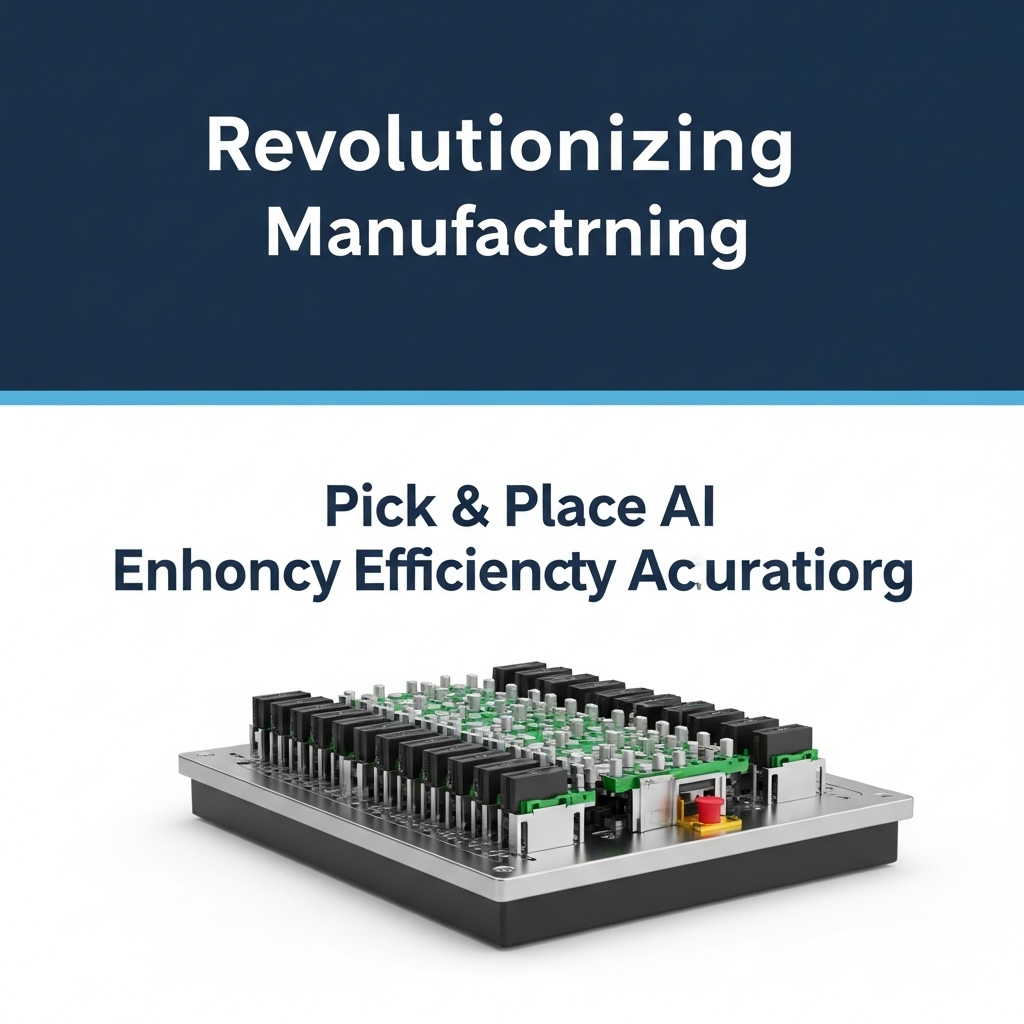
Introduction to Pick and Place AI
The manufacturing industry has undergone significant transformations over the years, with technological advancements playing a crucial role in enhancing efficiency, accuracy, and productivity. One such innovation that has revolutionized the manufacturing landscape is Pick and Place AI. This technology has transformed the way products are assembled, inspected, and packaged, making it an essential component of modern manufacturing. In this article, we will delve into the world of Pick and Place AI, exploring its benefits, applications, and the impact it has on the manufacturing industry.
What is Pick and Place AI?
Pick and Place AI refers to the use of artificial intelligence and machine learning algorithms to control and optimize the pick and place process in manufacturing. This process involves the selection and placement of components, such as electronic parts, mechanical components, or other materials, onto a production line or into a specific location. The AI system uses computer vision, sensors, and robotic arms to identify, pick, and place components with high precision and speed. This technology has improved the efficiency and accuracy of the manufacturing process, reducing errors and increasing productivity.
Benefits of Pick and Place AI
The implementation of Pick and Place AI in manufacturing offers numerous benefits, including increased efficiency, improved accuracy, and enhanced productivity. With the ability to work around the clock without fatigue, Pick and Place AI systems can significantly increase production volumes and reduce lead times. Additionally, the high precision of these systems minimizes errors and defects, resulting in higher quality products and reduced waste. For example, a leading electronics manufacturer implemented Pick and Place AI in their production line, resulting in a 30% increase in productivity and a 25% reduction in defects.
Applications of Pick and Place AI
Pick and Place AI has a wide range of applications across various industries, including electronics, automotive, pharmaceuticals, and food processing. In the electronics industry, Pick and Place AI is used for the assembly of printed circuit boards (PCBs), where components such as capacitors, resistors, and integrated circuits are placed with high precision. In the automotive industry, Pick and Place AI is used for the assembly of vehicles, where components such as engines, transmissions, and electrical systems are placed with accuracy. For instance, a leading automotive manufacturer used Pick and Place AI to assemble engine components, resulting in a 40% reduction in production time and a 20% increase in quality.
How Pick and Place AI Works
Pick and Place AI systems typically consist of a robotic arm, computer vision system, and machine learning algorithms. The computer vision system uses cameras and sensors to identify and locate components, while the machine learning algorithms analyze data and optimize the pick and place process. The robotic arm then uses this information to pick and place components with high precision. The system can be programmed to adapt to changing production requirements, such as new component designs or production schedules. For example, a manufacturer of medical devices used Pick and Place AI to assemble complex medical instruments, where the system adapted to new component designs and production schedules, resulting in a 50% reduction in production time.
Challenges and Limitations of Pick and Place AI
While Pick and Place AI has revolutionized the manufacturing industry, there are still challenges and limitations to its adoption. One of the main challenges is the high upfront cost of implementing Pick and Place AI systems, which can be prohibitively expensive for small and medium-sized manufacturers. Additionally, the complexity of the technology requires specialized training and maintenance, which can be time-consuming and costly. Furthermore, the reliance on computer vision and sensors can be affected by factors such as lighting, dust, and vibration, which can impact the accuracy and efficiency of the system.
Conclusion
In conclusion, Pick and Place AI has transformed the manufacturing industry by enhancing efficiency, accuracy, and productivity. With its ability to work around the clock, high precision, and adaptability to changing production requirements, Pick and Place AI has become an essential component of modern manufacturing. While there are challenges and limitations to its adoption, the benefits of Pick and Place AI far outweigh the costs. As the technology continues to evolve and improve, we can expect to see even more innovative applications of Pick and Place AI in the manufacturing industry, leading to increased productivity, quality, and competitiveness.