
Introduction
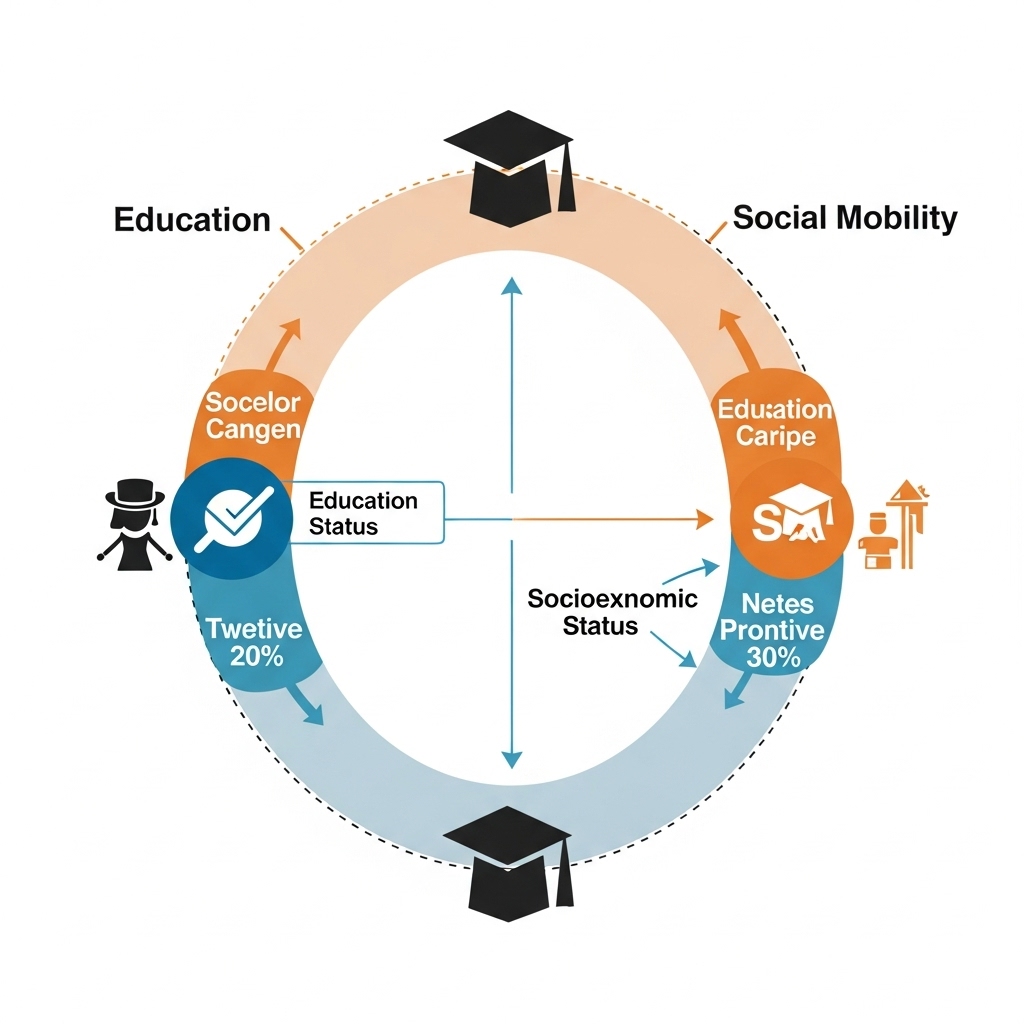
Social mobility, or the ability to move up or down the social ladder, is a complex and multifaceted issue that has been debated by sociologists and researchers for decades. At the heart of this debate is the question of what drives social mobility: is it education or socioeconomic status? While both factors are undoubtedly important, research suggests that they have different effects on social mobility, and that one may be a more significant predictor than the other. In this article, we will explore the relationship between education, socioeconomic status, and social mobility, and examine the evidence for which factor is the greater predictor.
Defining Social Mobility
Social mobility refers to the movement of individuals, families, or groups up or down the social ladder, often measured in terms of income, occupation, or education level. It can be intergenerational, meaning that it occurs between parents and children, or intragenerational, meaning that it occurs within an individual's lifetime. Social mobility is often seen as a key indicator of a society's fairness and equality, as it reflects the extent to which individuals have opportunities to improve their socioeconomic position regardless of their background.
The Role of Education in Social Mobility
Education is often seen as a key driver of social mobility, as it provides individuals with the skills and knowledge necessary to secure better-paying jobs and improve their socioeconomic position. Research has consistently shown that individuals with higher levels of education tend to have higher incomes and better job prospects than those with lower levels of education. For example, a study by the Pew Research Center found that in the United States, workers with a bachelor's degree typically earn about 50% more than those with only a high school diploma. Additionally, education can provide individuals with the cultural capital and social connections necessary to navigate the job market and access better job opportunities.
The Impact of Socioeconomic Status on Social Mobility
Socioeconomic status, on the other hand, refers to an individual's or family's position within the social and economic hierarchy, often measured in terms of income, occupation, and education level. Socioeconomic status can have a significant impact on social mobility, as it affects access to resources, opportunities, and social networks. For example, individuals from lower socioeconomic backgrounds may face barriers to accessing quality education, job training, and other resources that can help them improve their socioeconomic position. Additionally, socioeconomic status can influence an individual's social connections and networks, which can be important for accessing job opportunities and advancing in their career.
Comparing the Effects of Education and Socioeconomic Status
While both education and socioeconomic status are important factors in social mobility, research suggests that socioeconomic status may be a more significant predictor. For example, a study by the Economic Policy Institute found that in the United States, the relationship between socioeconomic status and social mobility is stronger than the relationship between education and social mobility. The study found that individuals from lower socioeconomic backgrounds face significant barriers to social mobility, regardless of their level of education. This suggests that socioeconomic status may be a more important factor in determining social mobility than education, as it affects access to resources, opportunities, and social networks.
Examples and Case Studies
There are several examples and case studies that illustrate the complex relationship between education, socioeconomic status, and social mobility. For example, a study of the "American Dream" found that individuals who were born into low-income families but went on to attend college were more likely to experience social mobility than those who did not attend college. However, the study also found that even among college-educated individuals, those from lower socioeconomic backgrounds faced significant barriers to social mobility. Another example is the experience of immigrant groups, who may face significant barriers to social mobility despite having high levels of education. For example, a study of immigrant groups in the United States found that individuals with high levels of education and skills often face significant barriers to accessing job opportunities and advancing in their careers.
Conclusion
In conclusion, while both education and socioeconomic status are important factors in social mobility, the evidence suggests that socioeconomic status may be a more significant predictor. Education can provide individuals with the skills and knowledge necessary to secure better-paying jobs and improve their socioeconomic position, but it is not a guarantee of social mobility. Socioeconomic status, on the other hand, affects access to resources, opportunities, and social networks, and can have a significant impact on an individual's ability to experience social mobility. Ultimately, addressing the complex issues surrounding social mobility will require a comprehensive approach that takes into account the interplay between education, socioeconomic status, and other factors. By understanding the relationship between these factors, policymakers and researchers can develop more effective strategies for promoting social mobility and reducing inequality.