
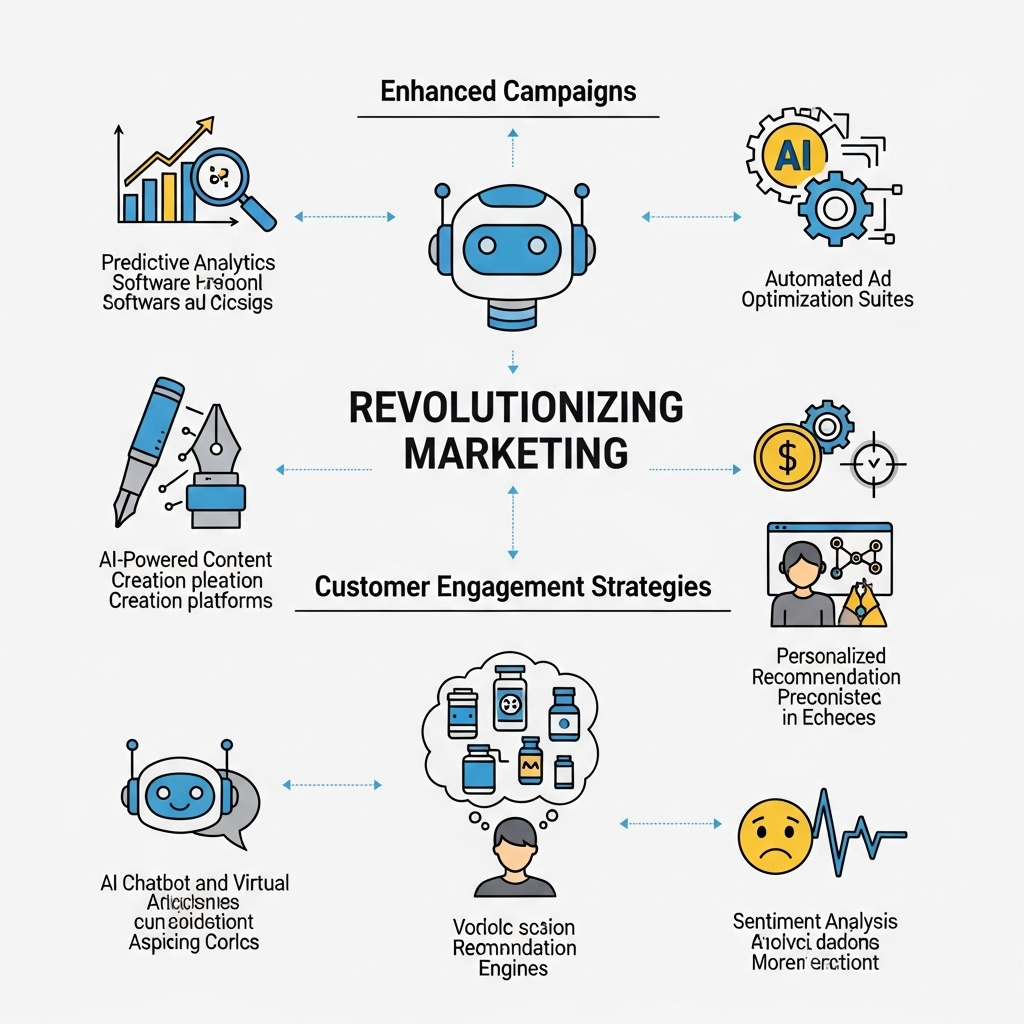
Introduction to AI-Powered Marketing
The marketing landscape has undergone a significant transformation in recent years, with the integration of Artificial Intelligence (AI) being a key driver of this change. AI tools have revolutionized the way marketers approach campaign creation, customer engagement, and data analysis. By leveraging AI, marketers can now automate routine tasks, gain deeper insights into customer behavior, and create personalized experiences that drive conversions. In this article, we will explore the top AI tools for marketers, highlighting their features, benefits, and examples of successful implementation.
AI-Powered Chatbots for Enhanced Customer Engagement
Chatbots are one of the most popular AI tools used in marketing, enabling businesses to provide 24/7 customer support and improve engagement. These chatbots use Natural Language Processing (NLP) to understand customer queries and respond accordingly. For instance, Domino's Pizza uses a chatbot to allow customers to order pizzas directly from the company's website or through messaging platforms like Facebook Messenger. This not only enhances customer experience but also reduces the workload on human customer support agents. Other examples of chatbot implementation include Sephora's virtual assistant, which helps customers find products and provides makeup tutorials, and Uber's chatbot, which enables users to track their rides and receive updates on estimated arrival times.
Predictive Analytics for Data-Driven Decision Making
Predictive analytics is another crucial AI tool for marketers, enabling them to forecast customer behavior and make data-driven decisions. By analyzing historical data and market trends, predictive analytics tools can identify patterns and predict future outcomes. For example, Walmart uses predictive analytics to forecast demand for products, allowing the company to optimize inventory levels and reduce waste. Similarly, Netflix uses predictive analytics to recommend content to users based on their viewing history and preferences. This not only enhances user experience but also increases engagement and reduces churn rates.
Content Generation and Optimization with AI
AI-powered content generation tools are revolutionizing the way marketers create and optimize content. These tools use machine learning algorithms to analyze data and generate high-quality content, such as blog posts, social media posts, and product descriptions. For instance, The Washington Post uses an AI tool called Heliograf to generate sports articles, allowing the publication to cover more games and events without increasing staff. Another example is the use of AI-powered content optimization tools, such as Acrolinx, which helps marketers optimize their content for better readability, tone, and style.
Personalization and Recommendation Engines
Personalization is a key aspect of modern marketing, and AI-powered recommendation engines are making it possible for businesses to offer tailored experiences to their customers. These engines use machine learning algorithms to analyze customer data and behavior, providing personalized product recommendations and content suggestions. For example, Amazon's recommendation engine suggests products based on a customer's browsing and purchase history, while Netflix's recommendation engine suggests TV shows and movies based on a user's viewing history. Other examples include Spotify's Discover Weekly playlist, which uses AI to curate a weekly playlist of songs tailored to a user's listening habits, and Starbucks' mobile app, which offers personalized promotions and discounts based on a customer's purchase history.
AI-Driven Social Media Monitoring and Management
Social media is a critical channel for marketers, and AI-powered tools are helping businesses to monitor and manage their social media presence more effectively. These tools use machine learning algorithms to analyze social media data, providing insights into customer sentiment, brand reputation, and campaign performance. For instance, Hootsuite's social media management platform uses AI to analyze social media data, providing marketers with insights into customer engagement and campaign performance. Another example is the use of AI-powered social media monitoring tools, such as Brandwatch, which helps businesses to track brand mentions and respond to customer queries in real-time.
Conclusion and Future of AI in Marketing
In conclusion, AI tools are revolutionizing the marketing landscape, enabling businesses to automate routine tasks, gain deeper insights into customer behavior, and create personalized experiences that drive conversions. From chatbots and predictive analytics to content generation and recommendation engines, the applications of AI in marketing are vast and varied. As AI technology continues to evolve, we can expect to see even more innovative applications in the marketing space. Marketers who adopt AI tools early on will be well-positioned to stay ahead of the competition and drive business growth in an increasingly complex and data-driven market. By leveraging the power of AI, marketers can create more effective campaigns, enhance customer engagement, and ultimately drive revenue growth and business success.