
Introduction to Metal Fusion and Welding Technology
Metal fusion, commonly referred to as welding, is a fabrication process that joins two metal pieces together by applying heat, pressure, or both, with or without filler metal, to produce a strong and lasting bond. The welding process has been a cornerstone of manufacturing and construction for centuries, with its applications ranging from the automotive and aerospace industries to construction and consumer goods. As technology advances, the field of welding has seen significant improvements, leading to more efficient, safer, and higher-quality welds. This article delves into the advanced welding techniques and technologies that are revolutionizing metal fusion.
Understanding Traditional Welding Techniques
Before exploring the advanced techniques, it's essential to understand the traditional methods that have been the backbone of the welding industry. These include Shielded Metal Arc Welding (SMAW), Gas Metal Arc Welding (GMAW), Gas Tungsten Arc Welding (GTAW), and Flux Cored Arc Welding (FCAW). Each of these methods has its advantages and disadvantages, including variations in cost, speed, and the quality of the weld. For instance, SMAW is known for its simplicity and versatility, while GTAW offers high-quality welds but at a slower pace. Understanding these traditional techniques provides a foundation for appreciating the advancements in welding technology.
Advanced Welding Techniques: Improving Efficiency and Quality
Advanced welding techniques have been developed to address the limitations of traditional methods, focusing on improving efficiency, reducing costs, and enhancing the quality of welds. One such technique is Laser Beam Welding (LBW), which uses a laser to create the weld. LBW offers high precision, minimal distortion, and the ability to weld materials that are difficult to join by conventional means. Another technique is Friction Stir Welding (FSW), which uses a rotating tool to generate frictional heat, causing the material to soften and form a joint. FSW is particularly useful for welding aluminum and other soft metals, producing high-strength welds without melting the material.
Robotics and Automation in Welding
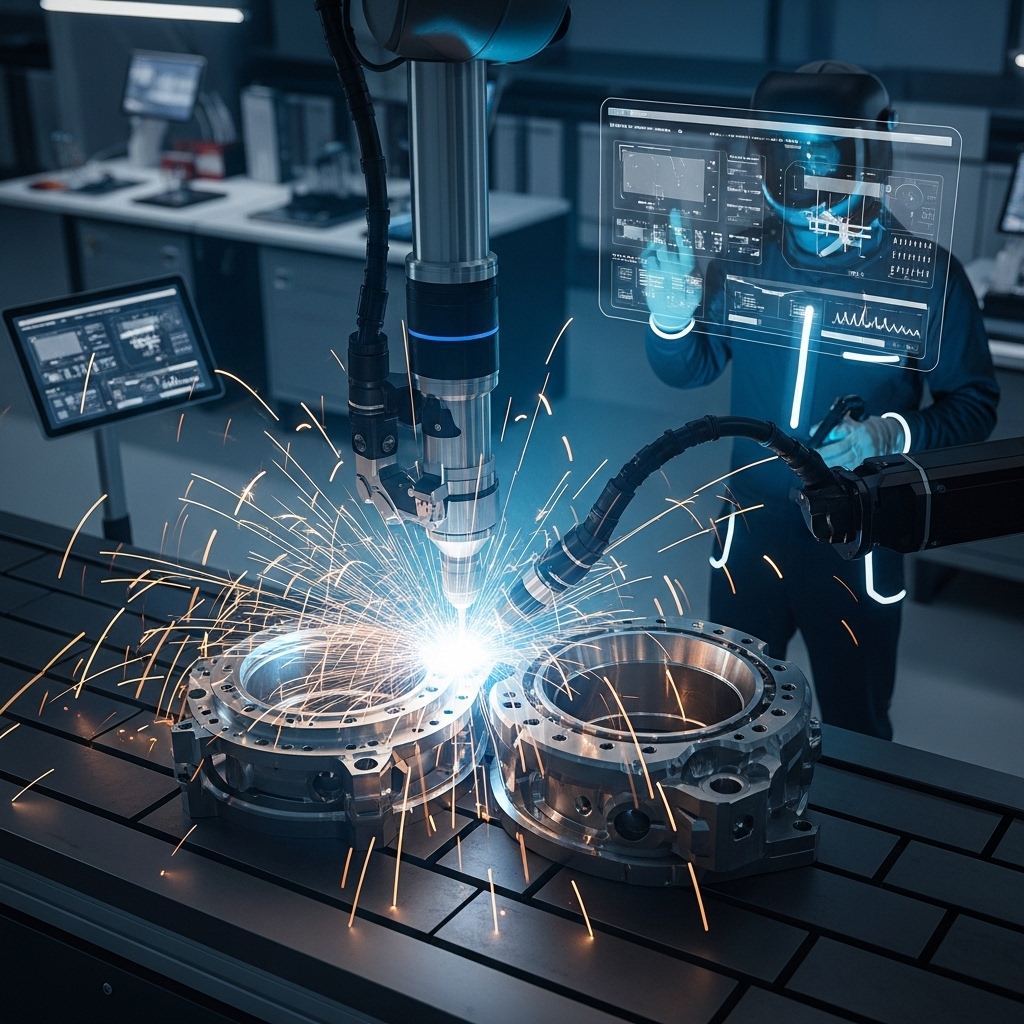
The integration of robotics and automation in welding has significantly impacted the industry, offering improved consistency, reduced labor costs, and enhanced safety. Robotic welding systems can perform complex welds with high precision and speed, operating around the clock without fatigue. These systems are especially beneficial in high-volume production environments, such as automotive manufacturing, where consistency and speed are crucial. Additionally, advancements in programming and sensor technology have made it possible to automate welding processes for complex geometries and variable thickness materials, further expanding the capabilities of robotic welding.
Materials Science and Welding: New Frontiers
Advancements in materials science have introduced new challenges and opportunities for welding. The development of high-strength, low-alloy (HSLA) steels, advanced aluminum alloys, and composite materials requires welding techniques that can match their unique properties. For example, welding HSLA steels demands careful control of heat input to prevent degradation of mechanical properties. Similarly, welding composite materials, which are increasingly used in aerospace and automotive applications, requires specialized techniques to ensure the integrity of the weld without damaging the material's structural properties. Researchers are continually developing new welding methodologies and consumables to address these challenges.
Safety and Environmental Considerations
Safety and environmental considerations are paramount in the welding industry. Advanced welding technologies often include features that enhance safety, such as improved fume extraction systems, automated welding cells that reduce operator exposure to hazardous conditions, and personal protective equipment (PPE) designed to protect against welding hazards. Furthermore, there is a growing focus on reducing the environmental impact of welding, including the development of more energy-efficient welding processes and the use of eco-friendly consumables. Initiatives aimed at minimizing waste and reducing emissions are also becoming more prevalent, reflecting a broader commitment to sustainability within the industry.
Conclusion: The Future of Metal Fusion
The welding industry is on the cusp of a revolution, driven by advancements in technology, materials science, and a growing emphasis on sustainability. As researchers and manufacturers continue to push the boundaries of what is possible with metal fusion, we can expect to see even more efficient, safer, and higher-quality welding techniques emerge. The integration of robotics, advanced materials, and digital technologies will play a pivotal role in shaping the future of welding, enabling the creation of complex structures and components that were previously unimaginable. Whether in the fabrication of critical infrastructure, the manufacture of consumer goods, or the exploration of space, the impact of advanced welding techniques and technologies will be profound, transforming industries and improving lives in the process.