
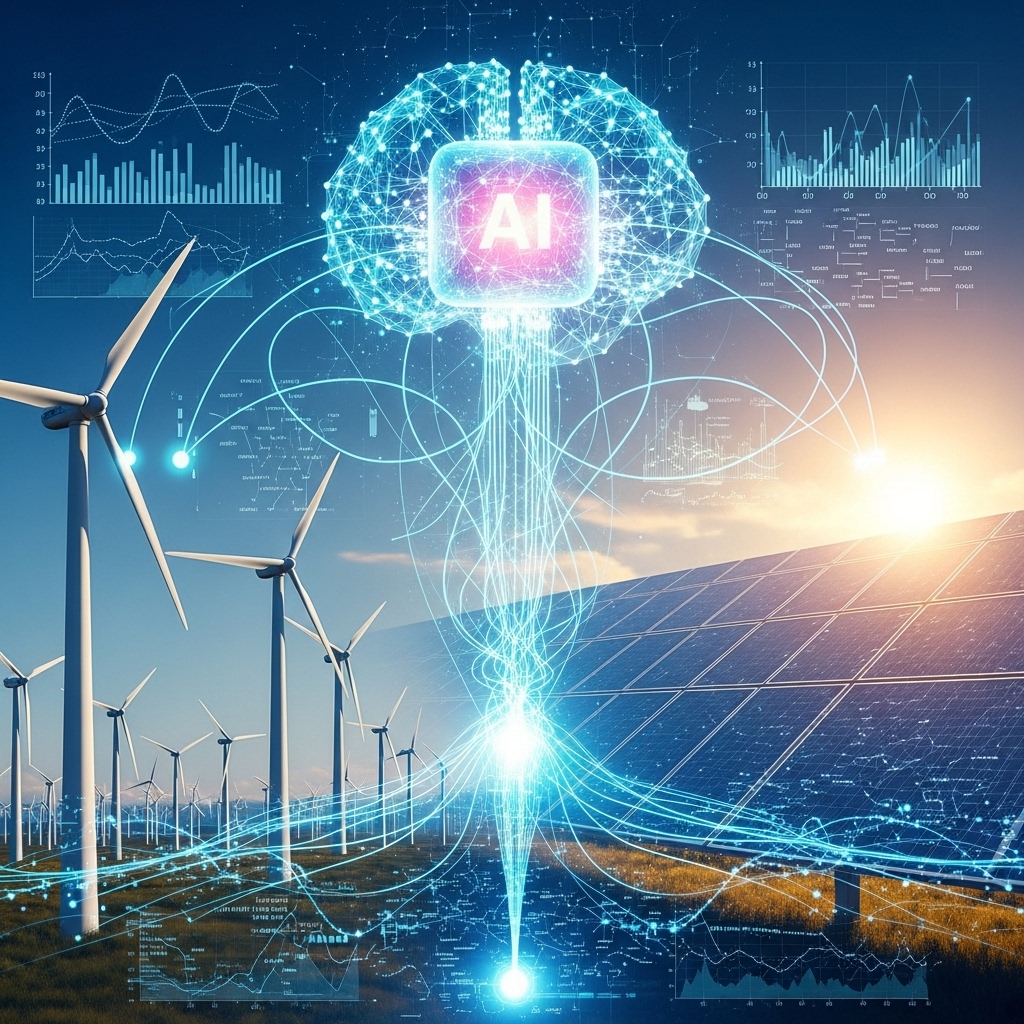
Introduction to AI in Renewable Energy
The world is shifting towards renewable energy sources to reduce its reliance on fossil fuels and mitigate climate change. However, the integration of renewable energy into the grid poses significant challenges, including intermittency and variability. This is where Artificial Intelligence (AI) comes in – a game-changer in the renewable energy sector. AI enhances renewable energy optimization and efficiency by predicting energy demand, optimizing energy storage, and improving grid management. In this article, we will explore the role of AI in revolutionizing sustainability and making renewable energy a more viable option.
Predicting Energy Demand with AI
Predicting energy demand is crucial for ensuring a stable and efficient energy supply. AI algorithms can analyze historical data, weather forecasts, and other factors to predict energy demand with high accuracy. For instance, Google's AI-powered prediction system can forecast energy output from its wind farms, allowing for better grid management and reduced energy waste. Similarly, companies like Siemens and GE are using AI to predict energy demand and optimize energy supply in real-time. By predicting energy demand, AI helps utilities and grid operators to balance supply and demand, reducing the likelihood of power outages and grid instability.
Optimizing Energy Storage with AI
Energy storage is a critical component of renewable energy systems, as it helps to mitigate the intermittency of solar and wind power. AI can optimize energy storage by predicting energy demand and supply, and adjusting energy storage levels accordingly. For example, Tesla's AI-powered energy storage system can predict energy demand and adjust the charging and discharging of batteries to optimize energy storage. Similarly, companies like Sonnen and LG Chem are using AI to optimize energy storage and provide grid services like frequency regulation and peak shaving. By optimizing energy storage, AI helps to ensure a stable and efficient energy supply, even when the sun is not shining or the wind is not blowing.
Improving Grid Management with AI
Grid management is a complex task that involves balancing energy supply and demand in real-time. AI can improve grid management by analyzing data from sensors and other sources, and making predictions about energy demand and supply. For instance, the UK's National Grid is using AI to predict energy demand and optimize energy supply, reducing the likelihood of power outages and grid instability. Similarly, companies like ABB and Schneider Electric are using AI to improve grid management and provide grid services like voltage regulation and fault detection. By improving grid management, AI helps to ensure a reliable and efficient energy supply, even in the face of increasing renewable energy penetration.
Enhancing Renewable Energy Forecasting with AI
Renewable energy forecasting is critical for ensuring a stable and efficient energy supply. AI can enhance renewable energy forecasting by analyzing data from weather stations, satellites, and other sources, and making predictions about energy output. For example, companies like Vestas and Siemens Gamesa are using AI to predict wind energy output, allowing for better grid management and reduced energy waste. Similarly, companies like SunPower and Enel Green Power are using AI to predict solar energy output, optimizing energy supply and reducing the likelihood of power outages. By enhancing renewable energy forecasting, AI helps to ensure a reliable and efficient energy supply, even in the face of variable weather conditions.
Case Studies: Real-World Applications of AI in Renewable Energy
There are many real-world examples of AI being used to optimize renewable energy systems. For instance, the city of Copenhagen is using AI to optimize its district heating system, which is powered by a combination of biomass, solar, and wind energy. The AI system analyzes data from sensors and other sources, and makes predictions about energy demand and supply, optimizing energy production and reducing energy waste. Similarly, the company Enel Green Power is using AI to optimize its wind farms, predicting energy output and adjusting turbine settings to maximize energy production. These case studies demonstrate the potential of AI to revolutionize sustainability and make renewable energy a more viable option.
Conclusion: The Future of AI in Renewable Energy
In conclusion, AI is revolutionizing sustainability by enhancing renewable energy optimization and efficiency. By predicting energy demand, optimizing energy storage, and improving grid management, AI is helping to make renewable energy a more viable option. As the world continues to transition towards renewable energy, the role of AI will become increasingly important. We can expect to see more advanced AI applications in the future, including the use of machine learning and deep learning algorithms to optimize renewable energy systems. With the help of AI, we can create a more sustainable and efficient energy system, reducing our reliance on fossil fuels and mitigating climate change. The future of energy is renewable, and AI is leading the way.