
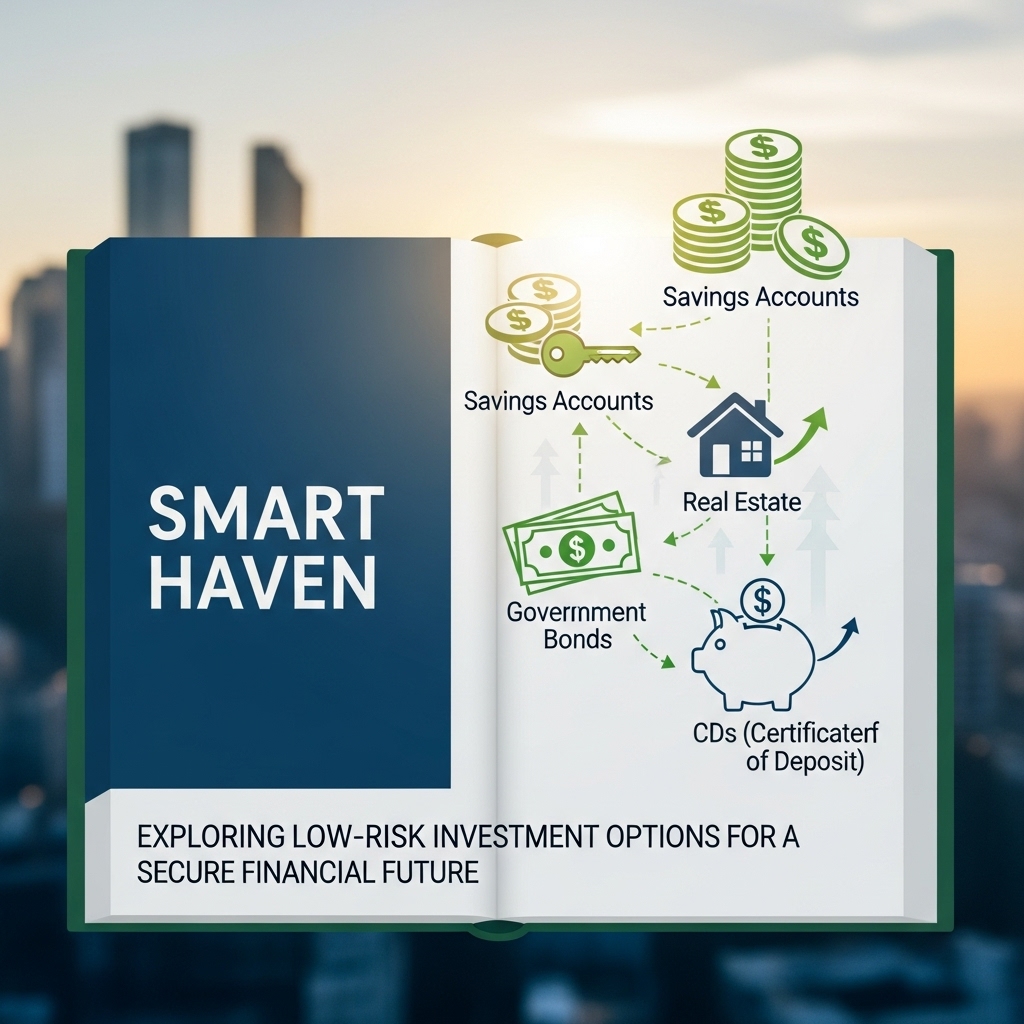
Introduction to Smart Haven
Investing in the financial market can be a daunting task, especially for those who are risk-averse. The volatility of the market can be unsettling, and the fear of losing hard-earned money can be overwhelming. However, investing is a crucial step towards securing a stable financial future. This is where the concept of Smart Haven comes in – a haven for low-risk investment options that can provide a sense of security and stability. In this article, we will delve into the world of low-risk investments, exploring the various options available and providing guidance on how to make informed decisions.
Understanding Low-Risk Investments
Low-risk investments are those that carry a lower likelihood of losing value or generating returns that are lower than expected. These investments are typically characterized by their stability, predictability, and lower volatility. Examples of low-risk investments include bonds, treasury bills, and certificates of deposit (CDs). These investments are often backed by governments or large financial institutions, which reduces the risk of default. For instance, U.S. Treasury bonds are considered to be one of the safest investments in the world, with a default risk of almost zero.
High-Yield Savings Accounts
High-yield savings accounts are another type of low-risk investment that can provide a safe and stable return on investment. These accounts are offered by banks and credit unions, and they typically offer a higher interest rate than traditional savings accounts. High-yield savings accounts are FDIC-insured, which means that deposits are insured up to $250,000, providing an additional layer of protection. For example, Ally Bank's Online Savings Account offers a 2.20% APY, which is significantly higher than the national average. This type of account is ideal for those who want to keep their money liquid while earning a decent return.
Index Funds and ETFs
Index funds and exchange-traded funds (ETFs) are a type of investment that tracks a specific market index, such as the S&P 500. These funds provide broad diversification, which can help reduce risk. Index funds and ETFs are often considered to be low-risk investments because they are not actively managed, which means that they are less susceptible to market fluctuations. For instance, Vanguard's 500 Index Fund (VFIAX) is a popular index fund that tracks the S&P 500, providing investors with exposure to the broader market. This type of investment is ideal for those who want to invest in the stock market without taking on excessive risk.
Real Estate Investment Trusts (REITs)
Real Estate Investment Trusts (REITs) are companies that own or finance real estate properties, such as office buildings, apartments, and shopping centers. REITs provide a way for individuals to invest in real estate without directly owning physical properties. REITs are considered to be a low-risk investment because they provide a steady stream of income through rental properties. For example, Realty Income (O) is a REIT that owns a portfolio of commercial properties, providing investors with a 4% dividend yield. This type of investment is ideal for those who want to invest in real estate without the hassle of direct property management.
Diversification and Asset Allocation
Diversification and asset allocation are crucial components of a low-risk investment strategy. Diversification involves spreading investments across different asset classes, such as stocks, bonds, and real estate, to reduce risk. Asset allocation involves allocating investments based on an individual's risk tolerance, investment horizon, and financial goals. For instance, a conservative investor may allocate 60% of their portfolio to bonds and 40% to stocks, while an aggressive investor may allocate 80% to stocks and 20% to bonds. A well-diversified portfolio can help reduce risk and increase potential returns over the long term.
Conclusion
In conclusion, Smart Haven provides a range of low-risk investment options that can help individuals secure a stable financial future. From high-yield savings accounts to index funds and REITs, there are numerous options available for those who are risk-averse. By understanding the different types of low-risk investments and diversifying a portfolio, individuals can reduce risk and increase potential returns. It's essential to remember that investing always involves some level of risk, but with a well-informed approach, individuals can make smart investment decisions that align with their financial goals. Whether you're a seasoned investor or just starting out, Smart Haven can provide a safe and secure haven for your investments.