
Overview
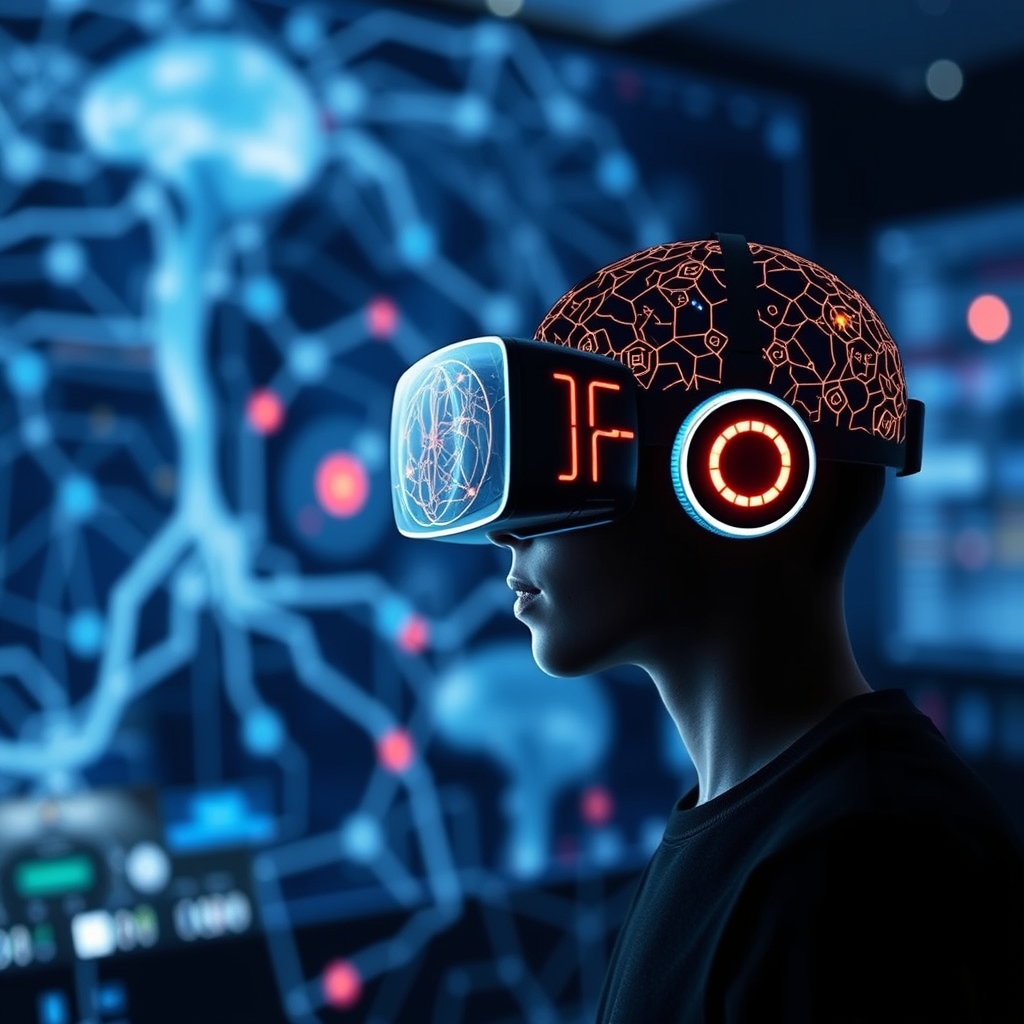
Immersive virtual reality has transformed how learners interact with ideas by placing them inside experiences that feel tangible. This educational question explores how the brain changes when learning in immersive environments, what cognitive processes are most engaged, and how these insights can inform effective teaching. The goal is to generate a deep understanding of the mechanisms of learning in virtual space and to translate theory into practical guidelines for classrooms, laboratories, and remote learning settings. The topic is unique in its focus on the intersection of neurobiology, cognitive psychology, instructional design, and technology policy as they converge in immersive media. Throughout this exploration a number of guiding questions will recur: How does immersive presence influence attention and memory encoding? What forms of feedback optimize retention without overwhelming the learner? How can educators design VR experiences that promote transfer of learning to real world tasks? What ethical and accessibility challenges arise as students increasingly engage with virtual worlds? And how can we rigorously evaluate learning outcomes in VR in ways that are both scientifically robust and practically feasible?
Foundations of neuroplasticity and memory
Neuroplasticity refers to the brain s ability to change its structure and function in response to experience. In the context of VR based learning this is not simply about repeating a task but about forming meaningful associations, strengthening synaptic connections, and reorganizing networks to support retrieval under varied contexts. The immersive environment provides multisensory cues that can enhance encoding by linking conceptual content to perceptual and motor experiences. Yet plasticity is not automatic. The brain requires appropriate challenge, feedback, and rest for consolidation to occur. Sleep plays a crucial role in stabilizing memories formed during a VR session, whereas stress can disrupt encoding. The learner s prior knowledge shapes how new information is integrated, and this integration determines the durability and accessibility of the memory trace. When designing VR experiences we must consider the balance between novelty and familiarity, as novelty can boost attention but too much unpredictability can overwhelm working memory. In this sense VR becomes a laboratory for studying how different encoding conditions influence long term retention and the precision of retrieved knowledge.
Attention and cognitive load in virtual environments
Immersive environments have the potential to capture attention in powerful ways by providing rich contextual cues, compelling narratives, and embodied interactions. However this same richness can impose cognitive load that overwhelms learners, particularly for novices encountering complex content. Cognitive load theory suggests that working memory has limited capacity, and effective instruction should optimize intrinsic load while distributing extraneous load and promoting germane processing that supports schema formation. In VR this balance depends on the design of interactions, the pace of information delivery, and the clarity of goals. For example, realistic physics simulations can help learners develop intuition but may require streamlined interfaces and guided prompts to prevent cognitive overload. Eye tracking, adaptive hints, and progressive disclosure of information are practical tools to maintain attention without saturating mental resources. By monitoring engagement indicators and adjusting task difficulty in real time, educators can maintain a state of productive struggle that is just within the learner s capacity and leave room for reflection and consolidation.
Mechanisms of learning in VR
Encoding and consolidation in VR are shaped by presence, perspective taking, and the degree to which learners can act within a simulated world. Embodied cognition posits that knowledge is grounded in sensorimotor systems; when students can manipulate objects, simulate actions, and observe consequences, learning becomes more robust. VR also offers opportunities for contextualized learning where abstract concepts are anchored in meaningful environments. For instance, learning about physics can be grounded in a virtual lab where learners manipulate forces and observe resultant motion, facilitating intuition that complements mathematical formalism. Retrieval practice in VR can be enhanced by spaced repetition and varied contexts, promoting flexible recall rather than rigid memorization. The emotional valence of experiences also affects encoding; scenarios that evoke curiosity, challenge, or safe risk can increase motivation and engagement, contributing to deeper learning. Finally, neural efficiency improves when learners practice with feedback that is specific, timely, and aligned with learning objectives. The media form itself does not guarantee deep learning; it amplifies or interferes with innate cognitive processes depending on how it is designed and used.
Educational implications and design principles
The implications for educators center on designing VR experiences that leverage the strengths of immersive media while mitigating potential drawbacks. Embodied learning techniques encourage learners to perform actions that mirror real world tasks, such as assembling a model, solving a puzzle with physical gestures, or navigating a complex environment that requires planning and adaptation. Multimodal feedback supports different learning styles and helps learners form robust representations by reinforcing correct concepts across sensory channels. Spaced practice, immediate yet non punitive feedback, and opportunities for deliberate reflection enhance long term retention. A critical principle is transfer: learners should be able to apply what they learned in VR to real world tasks. Achieving transfer requires careful alignment between the VR activity and the target domain, including the design of assessment that captures both performance in VR and capability in real settings. Finally ethical considerations, accessibility, and equity must be integrated into design decisions from the start to ensure that VR based learning is inclusive and respectful of diverse student needs.
Practical considerations for educators and workflow
Incorporating VR into education demands careful planning around pedagogy, technology, and assessment. Faculty need professional development to understand not only how to operate hardware but also how to design instruction that takes advantage of immersive capabilities. Student safety and comfort are essential; considerations include ergonomics, room scale, and motion sickness mitigations. Hardware constraints such as field of view, resolution, and input devices influence what is feasible in a given course. Assessment strategies should capture both procedural skill and conceptual understanding, using a mix of in VR performance metrics and traditional evaluations. Scheduling and resource management are practical challenges that require institutional support, including dedicated spaces, maintenance plans, and data privacy policies. When designed thoughtfully, VR can enrich learning experiences by providing authentic problems, collaborative possibilities, and opportunities for inquiry that would be difficult to simulate otherwise.
Designing VR experiences that promote transfer
Transfer oriented design begins with a clear statement of the real world task or professional practice that should be enhanced by VR training. Tasks should be sequenced from simple to complex, with scaffolds that gradually fade as learners gain competence. Scenarios should be authentic yet safe, providing a credible sense of consequence without exposing learners to unnecessary risk. Interventions such as reflection prompts, debrief sessions, and metacognitive checks help learners articulate what they learned and how it applies beyond the virtual scene. Assessment should include both in situ performance in VR and post VR evaluations that simulate real world decision making. Collaboration and social learning features, where appropriate, can mirror professional environments and improve retention through discussion and collective problem solving. By aligning VR activities with real outcomes, educators increase the likelihood that skills transfer beyond the headset.
Ethical and accessibility considerations
Ethical issues in VR learning include data privacy, consent, and the potential for manipulation through adaptive systems. Learners should be informed about what data is collected, how it will be used, and who will have access to it. Accessibility requires inclusive design that accommodates diverse abilities, including navigation without motion sickness, captioning for audio content, and color contrast for learners with visual impairments. There is also a need to ensure equity in access to hardware and bandwidth, so that disparities do not widen educational gaps. Policy makers and institutions must consider energy use and the environmental footprint of VR deployments, promoting sustainable practices. Finally instructors should be prepared to address potential psychological effects of immersive experiences, including confusion between virtual and real world cues and the management of expectations about the capabilities of technology.
Equity and accessibility
Equity means ensuring that all students can participate meaningfully, regardless of socioeconomic status, disability, or geographic location. Inclusive VR design includes options for alternative modalities when VR is not feasible, such as high quality 2D simulations, narrated walkthroughs, or tactile substitutes. Accessibility features such as adjustable locomotion, text to speech, and screen reader compatibility help learners with disabilities to engage with content. In practice this requires collaboration with students, disability services, and accessibility experts during the design and testing phases. The goal is not to replace traditional instruction but to augment it with experiences that would be impossible or impractical in ordinary classrooms. By embedding accessibility goals early the learned can enjoy a richer educational experience while maintaining fairness and opportunity for all learners.
Case studies and experimental designs
To translate theory into evidence we can imagine a set of case studies and experiments that test hypotheses about VR based learning. A case study might explore how medical students learn anatomy through a VR dissection and whether distributed practice across days improves retention compared with a single extended session. A second case study could examine engineering students learning circuit assembly through an immersive lab and compare performance and transfer to real components. In both cases robust measures would include in VR performance metrics, post test of domain knowledge, and longitudinal assessments of skill retention. Ethical safeguards include informed consent, data privacy, and options for withdrawal. These studies could use randomized controlled designs or cross over designs where learners experience both VR and traditional learning conditions, enabling within subject comparisons. In addition neurophysiological measures such as eye tracking or peripheral physiological signals could enrich the understanding of cognitive load and engagement, provided privacy and cost considerations are managed.
Case study example one
In a case study on biology education a VR module allows students to manipulate cellular processes at the organelle level within a living cell simulation. The experiment would compare two groups with equivalent instructional content delivered in different modalities. One group uses VR to explore the cell and perform virtual experiments while the other uses a combination of 2D diagrams and physical models. Outcome measures would include procedural fluency, conceptual understanding and the ability to explain processes to peers. The VR group might show stronger initial encoding and richer mental models, but long term retention would depend on how well the content is reinforced through reflection and spaced practice. The study would also collect qualitative data on learner experience to understand how immersion affected motivation and perceived relevance.
Case study example two
A second case could investigate history education with a VR field trip through ancient cities. Learners navigate the environment, observe artifacts, and reconstruct events through guided tasks. Transfer would be assessed by performance on a simulated debate or a writing assignment that requires applying historical reasoning to unfamiliar prompts. Here the emphasis would be on narrative comprehension, source analysis, and evidence based argumentation. Data analysis would examine whether VR participants demonstrate deeper contextual understanding and more nuanced interpretation compared with traditional methods, while controlling for prior knowledge and interest in the topic. Ethical considerations include ensuring authentic representation of cultures and avoiding stereotypes, with meaningful consultation from subject matter experts and community stakeholders.
Research questions and experimental designs
The field benefits from clearly articulated research questions and rigorous designs. Core questions include how presence modulates cognitive load during complex problem solving, whether VR fosters more robust mental models than traditional media, and how different feedback modalities influence motivation and persistence. Experimental designs might involve randomized controlled trials with pretest posttest or longitudinal designs spanning weeks or months. Within subject designs can provide high power by exposing the same learners to multiple conditions in counterbalanced order. Measures should combine objective performance data with subjective assessments of confidence, perceived usefulness, and satisfaction. When possible, neural or physiological data can offer converging evidence about cognitive processing, as long as privacy and practicality constraints are respected. Reporting should follow open science practices so that results can be replicated and extended by other researchers and practitioners.