
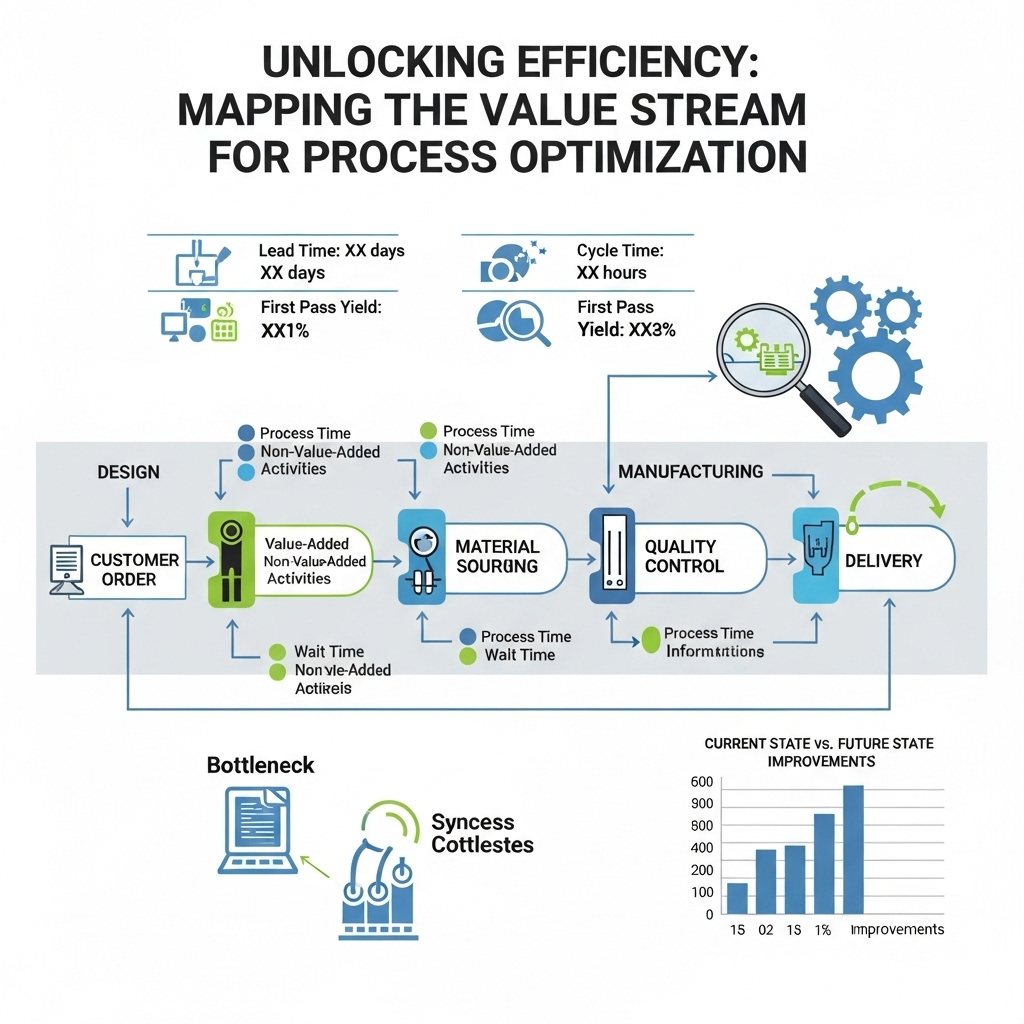
Unlocking Efficiency: Mapping the Value Stream for Process Optimization
In today's fast-paced and competitive business landscape, organizations are constantly seeking ways to improve efficiency, reduce waste, and enhance customer satisfaction. One effective approach to achieving these goals is by mapping the value stream, a methodology that helps identify and optimize the series of processes that create value for customers. In this article, we will delve into the concept of value stream mapping, its benefits, and how it can be applied to unlock efficiency and drive process optimization.
Introduction to Value Stream Mapping
Value stream mapping is a visual representation of a company's workflows, from raw materials to delivery of the final product or service. It is a tool used to analyze and design the flow of material and information across processes, identifying areas of waste, inefficiency, and opportunities for improvement. The methodology originated in the manufacturing sector, particularly in the Toyota Production System, but has since been widely adopted across various industries, including healthcare, finance, and software development.
The core objective of value stream mapping is to create a future state that is more efficient, effective, and customer-centric. By mapping the current state of processes, organizations can identify areas where value is being created and where waste is occurring, allowing them to focus on eliminating non-value-added activities and optimizing value-added ones.
Benefits of Value Stream Mapping
The benefits of value stream mapping are numerous and well-documented. Some of the most significant advantages include improved efficiency, reduced lead times, and increased customer satisfaction. By eliminating waste and optimizing processes, organizations can reduce costs, enhance productivity, and improve quality. Additionally, value stream mapping promotes a culture of continuous improvement, encouraging employees to think critically about their work and identify opportunities for improvement.
For example, a manufacturing company that implements value stream mapping may discover that a significant amount of time is being wasted due to unnecessary transportation of materials between departments. By streamlining the workflow and reducing transportation distances, the company can reduce lead times, lower costs, and improve product quality.
Key Components of Value Stream Mapping
A value stream map typically consists of several key components, including customer requirements, material and information flow, process boxes, and metrics. Customer requirements define the needs and expectations of the customer, while material and information flow represent the movement of goods, services, and information across the value stream. Process boxes represent the individual processes that create value, and metrics provide a way to measure performance and identify areas for improvement.
Other important components of value stream mapping include swimlanes, which represent different departments or functions, and kaizen bursts, which highlight areas for improvement. Value stream maps can be created using a variety of tools, including sticky notes, whiteboards, and specialized software.
Applying Value Stream Mapping in Different Industries
While value stream mapping originated in the manufacturing sector, its applications extend far beyond. In healthcare, for example, value stream mapping can be used to improve patient flow, reduce wait times, and enhance the overall quality of care. In software development, value stream mapping can help teams identify and eliminate waste in the development process, resulting in faster time-to-market and higher quality products.
In the finance sector, value stream mapping can be used to streamline processes such as accounts payable and accounts receivable, reducing errors and improving cash flow. In each of these industries, the core principles of value stream mapping remain the same: identify the value stream, map the current state, identify areas for improvement, and design a future state that is more efficient and effective.
Common Challenges and Best Practices
While value stream mapping can be a powerful tool for process optimization, it is not without its challenges. Common obstacles include resistance to change, lack of data, and insufficient resources. To overcome these challenges, organizations should establish a clear vision and goals, engage stakeholders and employees, and provide training and support.
Best practices for value stream mapping include starting small, focusing on high-impact areas, and using data to drive decision-making. It is also essential to establish a culture of continuous improvement, encouraging employees to identify and address areas for improvement on an ongoing basis. By following these best practices and avoiding common pitfalls, organizations can unlock the full potential of value stream mapping and achieve significant improvements in efficiency and effectiveness.
Conclusion
In conclusion, value stream mapping is a powerful tool for process optimization, offering a range of benefits including improved efficiency, reduced lead times, and increased customer satisfaction. By understanding the key components of value stream mapping and applying them in different industries, organizations can unlock efficiency and drive continuous improvement. While challenges and obstacles may arise, best practices such as starting small, focusing on high-impact areas, and using data to drive decision-making can help overcome these hurdles.
As organizations continue to seek ways to improve and stay competitive, value stream mapping is an essential methodology to consider. By mapping the value stream and optimizing processes, companies can create a more efficient, effective, and customer-centric organization, ultimately driving long-term success and sustainability. Whether in manufacturing, healthcare, finance, or software development, value stream mapping is a versatile and effective approach to achieving operational excellence.