
Introduction to Credit Default Swaps
Credit default swaps (CDS) are a type of financial derivative that has gained significant attention in recent years due to their role in the global financial crisis. A CDS is essentially an insurance contract between two parties, where one party purchases protection against default by a third party, typically a corporation or sovereign entity. In this article, we will delve into the world of credit default swaps, exploring how they work, their benefits and drawbacks, and the impact they have on the financial markets.
How Credit Default Swaps Work
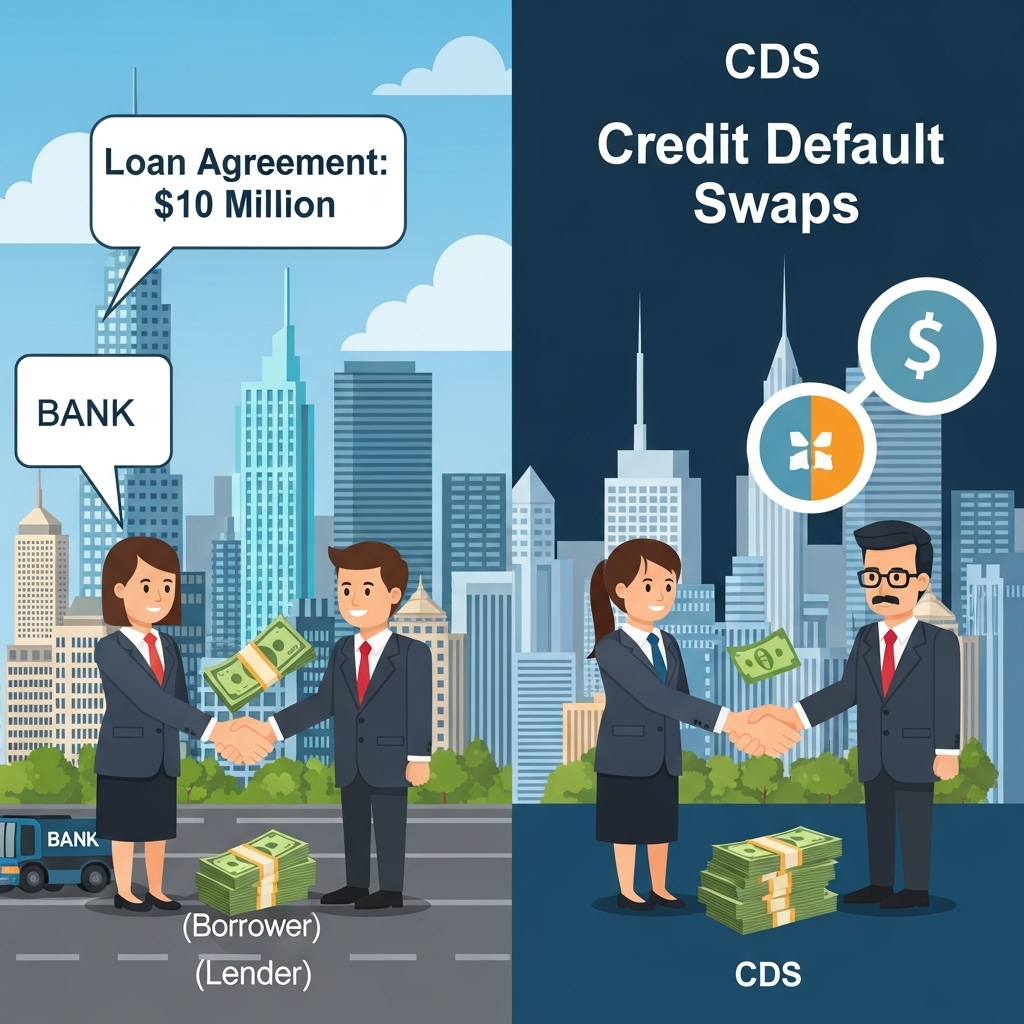
A credit default swap involves three main parties: the buyer, the seller, and the reference entity. The buyer of the CDS purchases protection against default by the reference entity, which can be a corporation, a sovereign government, or a financial institution. The seller of the CDS, on the other hand, provides this protection and receives regular payments from the buyer in exchange. If the reference entity defaults on its debt obligations, the seller of the CDS is required to pay the buyer the face value of the debt, minus any recovery amount. For example, let's say an investor buys a CDS from a bank to protect against default by a corporation. If the corporation defaults, the bank will pay the investor the face value of the debt, minus any amount recovered from the corporation's assets.
Types of Credit Default Swaps
There are several types of credit default swaps, including single-name CDS, index CDS, and basket CDS. Single-name CDS provide protection against default by a specific reference entity, while index CDS provide protection against default by a group of reference entities. Basket CDS, on the other hand, provide protection against default by a portfolio of reference entities. For instance, an investor may buy a single-name CDS to protect against default by a specific corporation, or an index CDS to protect against default by a group of corporations in a particular industry.
Benefits of Credit Default Swaps
Credit default swaps offer several benefits to investors and financial institutions. They provide a way to manage credit risk and protect against potential losses due to default. CDS also allow investors to speculate on the creditworthiness of a reference entity, potentially earning a profit if the entity's credit rating improves or deteriorates. Additionally, CDS can be used to diversify a portfolio and reduce overall risk. For example, a portfolio manager may buy CDS to hedge against potential losses in a portfolio of corporate bonds, or to speculate on the creditworthiness of a particular industry.
Risks and Drawbacks of Credit Default Swaps
While credit default swaps offer several benefits, they also involve significant risks and drawbacks. One of the main risks is counterparty risk, which is the risk that the seller of the CDS defaults on their obligations. This can leave the buyer of the CDS with a loss, even if the reference entity defaults. CDS also involve liquidity risk, which is the risk that the buyer or seller is unable to buy or sell the CDS at a fair price. Furthermore, CDS can be complex and difficult to understand, making them inaccessible to many investors. For instance, the complexity of CDS contracts can make it difficult for buyers to determine the true value of the protection they are purchasing, or for sellers to determine the true risk they are taking on.
Real-World Examples of Credit Default Swaps
Credit default swaps have been involved in several high-profile cases in recent years. One notable example is the case of Lehman Brothers, which filed for bankruptcy in 2008. At the time, Lehman Brothers had a significant amount of CDS outstanding, which meant that many investors and financial institutions had purchased protection against default by the firm. When Lehman Brothers defaulted, these investors and financial institutions were able to recover some of their losses through the CDS market. Another example is the case of Greece, which has struggled with debt repayment in recent years. Investors who purchased CDS to protect against default by Greece were able to recover some of their losses when the country restructured its debt.
Regulation of Credit Default Swaps
The credit default swap market has been subject to increasing regulation in recent years, particularly in the wake of the global financial crisis. In the United States, the Dodd-Frank Act has introduced new regulations governing the CDS market, including requirements for central clearing and trade reporting. In Europe, the European Union has introduced similar regulations, including the European Market Infrastructure Regulation (EMIR). These regulations aim to increase transparency and reduce systemic risk in the CDS market, making it safer and more stable for investors and financial institutions.
Conclusion
In conclusion, credit default swaps are a complex and often misunderstood financial instrument. While they offer several benefits, including the ability to manage credit risk and speculate on creditworthiness, they also involve significant risks and drawbacks. As the CDS market continues to evolve and grow, it is essential that investors and financial institutions understand the mechanics and risks of these instruments. By providing a way to manage credit risk and protect against potential losses, credit default swaps play an important role in the global financial system. However, their complexity and potential for abuse also highlight the need for careful regulation and oversight to ensure that they are used responsibly and safely.