
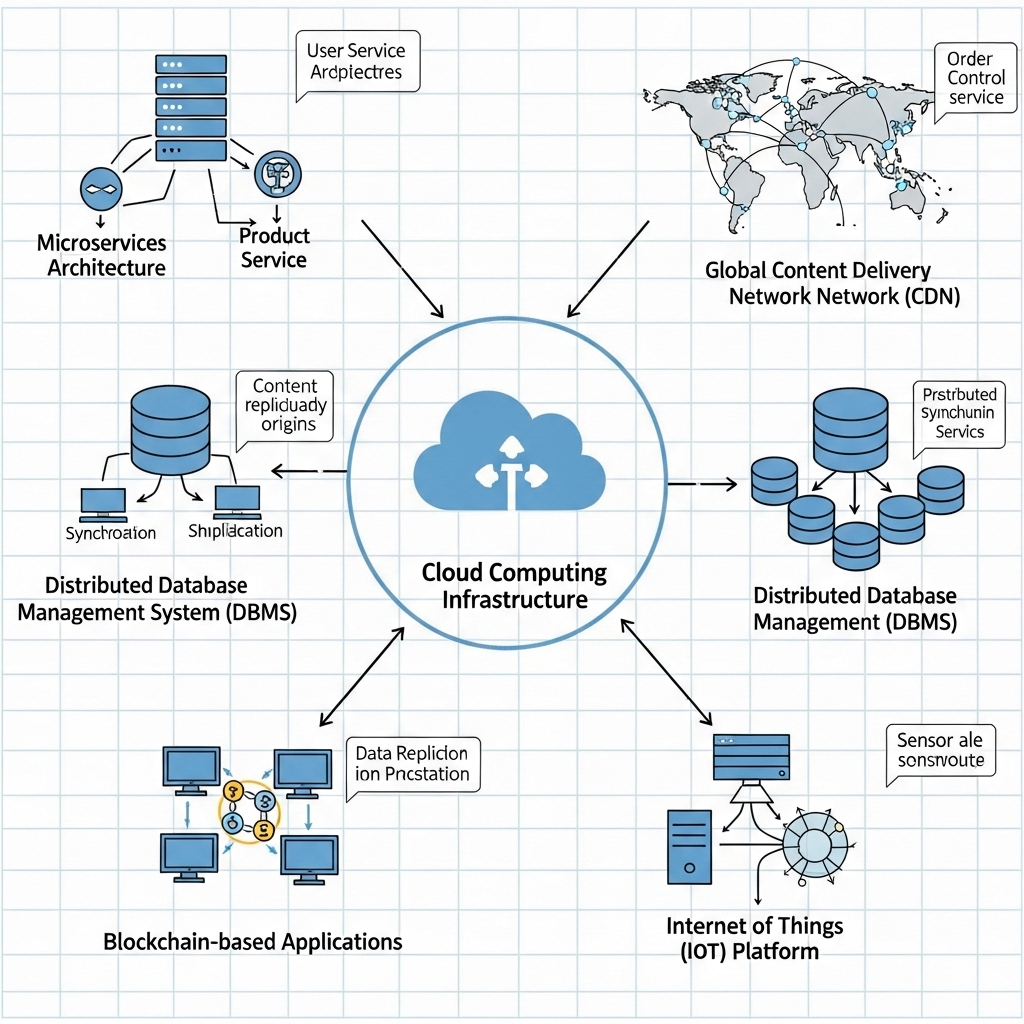
Introduction to Distributed System Projects
Distributed systems are networks of computers that work together to achieve a common goal, providing a shared resource or service. These systems are designed to be scalable, fault-tolerant, and highly available, making them suitable for a wide range of applications. Distributed system projects involve designing, implementing, and managing these complex systems, which can be challenging but also highly rewarding. In this article, we will explore some examples of distributed system projects, highlighting their characteristics, benefits, and applications.
Cloud Computing Projects
Cloud computing is a classic example of a distributed system, where resources such as computing power, storage, and applications are provided as a service over the internet. Cloud computing projects involve designing and implementing cloud-based systems that can scale to meet the needs of large numbers of users. For example, Amazon Web Services (AWS) and Microsoft Azure are two popular cloud computing platforms that provide a range of services, including computing power, storage, and databases. These platforms are designed to be highly available and fault-tolerant, with data centers located around the world.
Another example of a cloud computing project is Google Drive, which provides a cloud-based storage service that allows users to store and access their files from anywhere. Google Drive uses a distributed system to store and retrieve files, with data centers located around the world. This allows users to access their files quickly and reliably, regardless of their location.
Big Data Processing Projects
Big data processing is another area where distributed systems are commonly used. Big data refers to the large amounts of data that are generated by organizations and individuals every day, and distributed systems are used to process and analyze this data. For example, Hadoop is a popular distributed system for processing big data, which uses a cluster of computers to process large datasets. Hadoop is designed to be scalable and fault-tolerant, making it suitable for large-scale data processing applications.
Another example of a big data processing project is Apache Spark, which is a distributed system for processing large-scale data sets. Apache Spark uses a cluster of computers to process data in parallel, making it much faster than traditional data processing systems. Apache Spark is widely used in industries such as finance, healthcare, and retail, where large amounts of data need to be processed quickly and efficiently.
Real-Time Systems Projects
Real-time systems are distributed systems that require predictable and fast response times, often in the order of milliseconds. These systems are commonly used in applications such as financial trading, air traffic control, and medical devices. For example, a real-time system might be used to process stock trades, where fast and predictable response times are critical. Distributed systems are used in these applications to ensure that data is processed quickly and reliably, even in the presence of failures or network partitions.
Another example of a real-time system project is a distributed system for monitoring and controlling industrial processes, such as manufacturing or power generation. These systems use sensors and actuators to monitor and control the process, and distributed systems are used to process the data and make decisions in real-time. For example, a distributed system might be used to monitor the temperature and pressure of a chemical reaction, and adjust the controls to optimize the process.
Blockchain Projects
Blockchain is a distributed system that uses a network of computers to record transactions and data in a secure and transparent way. Blockchain projects involve designing and implementing blockchain-based systems for a wide range of applications, including cryptocurrency, supply chain management, and voting systems. For example, Bitcoin is a popular cryptocurrency that uses a blockchain to record transactions and manage the currency. The blockchain is maintained by a network of computers around the world, making it highly available and resistant to tampering.
Another example of a blockchain project is a supply chain management system, which uses a blockchain to track the movement of goods and materials. This allows companies to verify the authenticity and provenance of their products, and to track their movement through the supply chain. Blockchain-based systems are also being used in voting systems, where they provide a secure and transparent way to record and count votes.
Internet of Things (IoT) Projects
The Internet of Things (IoT) refers to the network of physical devices, vehicles, and other items that are embedded with sensors, software, and connectivity, allowing them to collect and exchange data. IoT projects involve designing and implementing distributed systems that can collect, process, and analyze data from these devices. For example, a smart home system might use a distributed system to collect data from sensors and devices, and to control the lighting, temperature, and security of the home.
Another example of an IoT project is a distributed system for monitoring and controlling industrial equipment, such as pumps, motors, and valves. These systems use sensors and actuators to monitor the equipment, and distributed systems are used to process the data and make decisions in real-time. For example, a distributed system might be used to monitor the vibration and temperature of a pump, and to adjust the controls to optimize its performance and prevent failures.
Conclusion
In conclusion, distributed system projects are diverse and widespread, and are used in a wide range of applications, from cloud computing and big data processing to real-time systems and blockchain. These systems are designed to be scalable, fault-tolerant, and highly available, making them suitable for large-scale and mission-critical applications. By understanding the characteristics and benefits of distributed systems, developers and organizations can design and implement distributed system projects that meet their needs and provide a competitive advantage.
As technology continues to evolve, we can expect to see even more innovative and complex distributed system projects, with applications in areas such as artificial intelligence, machine learning, and the Internet of Things. Whether you are a developer, engineer, or simply someone interested in technology, distributed system projects are an exciting and rapidly evolving field that is worth exploring.