
Introduction to Cloud Services
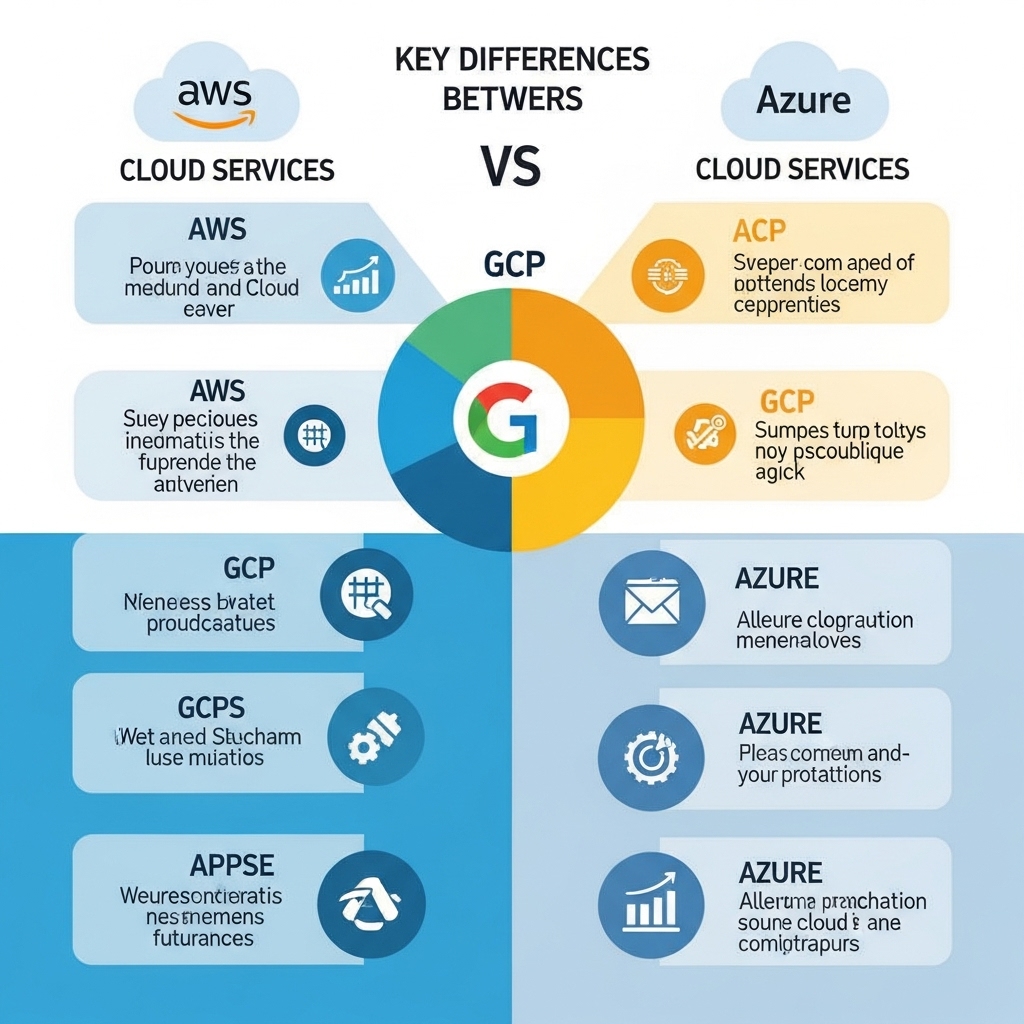
The cloud computing market has grown exponentially over the past decade, with Amazon Web Services (AWS), Google Cloud Platform (GCP), and Microsoft Azure being the top three players. These cloud services provide a wide range of benefits, including scalability, flexibility, and cost-effectiveness, making them an attractive option for businesses and individuals alike. However, with so many options available, it can be challenging to choose the right cloud service provider. In this article, we will explore the key differences between AWS, GCP, and Azure cloud services, helping you make an informed decision for your specific needs.
Overview of AWS, GCP, and Azure
AWS, launched in 2006, is the oldest and most mature cloud service provider. It offers a wide range of services, including computing, storage, databases, analytics, and more. GCP, launched in 2010, is a close second, with a strong focus on artificial intelligence, machine learning, and data analytics. Azure, launched in 2010, is a fast-growing cloud service provider, with a strong focus on enterprise customers and hybrid cloud solutions. Each of these cloud service providers has its strengths and weaknesses, which we will discuss in more detail below.
Computing Services
Computing services are a crucial aspect of cloud computing, providing the processing power and resources needed to run applications and workloads. AWS offers a wide range of computing services, including EC2, Lambda, and Elastic Beanstalk. GCP offers Compute Engine, App Engine, and Cloud Functions, while Azure offers Virtual Machines, Azure Functions, and App Service. One key difference between the three is the pricing model. AWS and GCP offer a pay-as-you-go model, while Azure offers a more complex pricing model, with discounts for committed usage. For example, if you need to run a web application, AWS EC2 or GCP Compute Engine might be a good choice, while Azure App Service might be a better option for enterprise applications.
Storage Services
Storage services are another critical aspect of cloud computing, providing a secure and scalable way to store and retrieve data. AWS offers a wide range of storage services, including S3, EBS, and Glacier. GCP offers Cloud Storage, Cloud Datastore, and Cloud Bigtable, while Azure offers Blob Storage, File Storage, and Disk Storage. One key difference between the three is the storage pricing model. AWS and GCP offer a pay-as-you-go model, while Azure offers a more complex pricing model, with discounts for committed usage. For example, if you need to store large amounts of unstructured data, AWS S3 or GCP Cloud Storage might be a good choice, while Azure Blob Storage might be a better option for structured data.
Security and Compliance
Security and compliance are critical aspects of cloud computing, ensuring that data and applications are protected from unauthorized access and meet regulatory requirements. All three cloud service providers offer a wide range of security and compliance features, including identity and access management, network security, and data encryption. However, Azure has a strong focus on enterprise security and compliance, with features such as Azure Active Directory and Azure Information Protection. GCP also has a strong focus on security, with features such as Cloud IAM and Cloud Key Management Service. AWS offers a wide range of security features, including IAM, Cognito, and Inspector. For example, if you need to meet PCI-DSS or HIPAA compliance requirements, Azure or GCP might be a good choice, while AWS might be a better option for smaller businesses or startups.
Artificial Intelligence and Machine Learning
Artificial intelligence (AI) and machine learning (ML) are critical aspects of modern cloud computing, enabling businesses to build intelligent applications and services. GCP has a strong focus on AI and ML, with features such as Cloud AI Platform, AutoML, and TensorFlow. AWS offers a wide range of AI and ML services, including SageMaker, Rekognition, and Comprehend. Azure also offers a wide range of AI and ML services, including Machine Learning, Cognitive Services, and Bot Service. One key difference between the three is the level of abstraction. GCP offers a high-level abstraction, with features such as AutoML, while AWS and Azure offer a lower-level abstraction, with features such as SageMaker and Machine Learning. For example, if you need to build a custom ML model, GCP might be a good choice, while AWS or Azure might be a better option for pre-built AI and ML services.
Conclusion
In conclusion, the key differences between AWS, GCP, and Azure cloud services lie in their strengths and weaknesses, pricing models, and focus areas. AWS is a mature and feature-rich cloud service provider, with a wide range of services and a strong focus on scalability and flexibility. GCP is a fast-growing cloud service provider, with a strong focus on AI, ML, and data analytics. Azure is a fast-growing cloud service provider, with a strong focus on enterprise customers and hybrid cloud solutions. When choosing a cloud service provider, it's essential to consider your specific needs and requirements, including computing, storage, security, and AI/ML needs. By understanding the key differences between AWS, GCP, and Azure, you can make an informed decision and choose the best cloud service provider for your business or application.