
Introduction to Internal Factors in SWOT Analysis
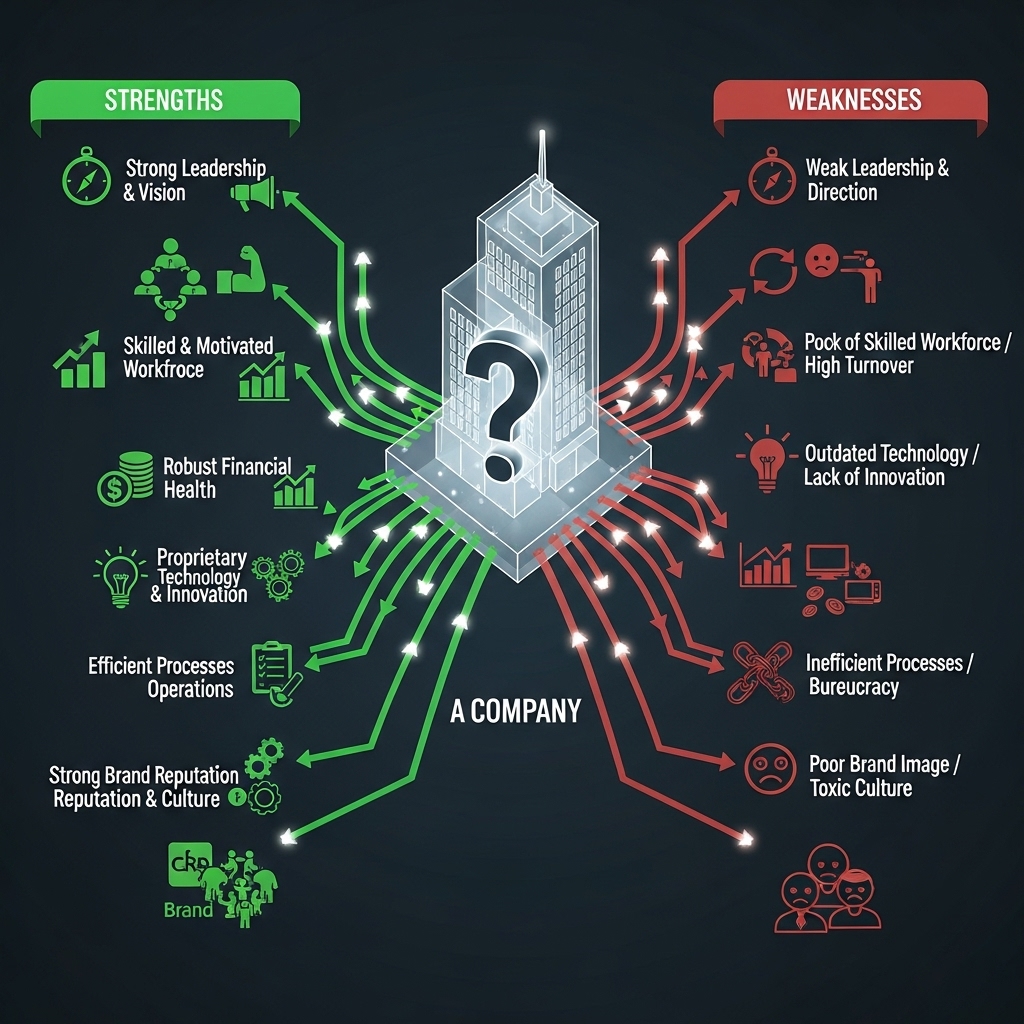
A company's internal factors play a crucial role in determining its strengths and weaknesses. These factors are essential components of a SWOT analysis, which is a framework used to identify and evaluate the strengths, weaknesses, opportunities, and threats of an organization. Internal factors are characteristics that are within the control of the company and can be influenced by its management and employees. In this article, we will explore the internal factors that impact a company's strengths and weaknesses, providing examples and insights to help businesses understand and improve their internal environment.
Human Resources as Internal Factors
Human resources are one of the most critical internal factors that can significantly impact a company's strengths and weaknesses. A company's employees, their skills, and their motivation can be a significant strength or weakness. For example, a company with a highly skilled and motivated workforce can be more productive and innovative, leading to increased efficiency and competitiveness. On the other hand, a company with low employee morale, high turnover rates, or inadequate training can struggle to achieve its goals. Companies like Google and Amazon are known for their strong company culture and employee benefits, which attract and retain top talent, making their human resources a significant strength.
Financial Resources and Management
A company's financial resources and management are also essential internal factors that can impact its strengths and weaknesses. A company with a strong financial position, including adequate cash reserves, low debt, and a stable revenue stream, can invest in new projects, expand its operations, and weather economic downturns. In contrast, a company with limited financial resources, high debt, or poor financial management can struggle to survive, let alone grow. Effective financial management, including budgeting, forecasting, and cost control, is critical to a company's success. For instance, companies like Apple and Microsoft have strong financial management, which enables them to invest in research and development, acquire other companies, and expand their product offerings.
Operational Efficiency and Infrastructure
A company's operational efficiency and infrastructure are internal factors that can significantly impact its strengths and weaknesses. Operational efficiency refers to the ability of a company to produce goods or services at a low cost and high quality. A company with efficient operations can reduce waste, improve productivity, and increase customer satisfaction. Infrastructure, including technology, equipment, and facilities, is also critical to a company's operations. Companies with modern, well-maintained infrastructure can improve their efficiency, reduce costs, and enhance their competitiveness. For example, companies like Walmart and UPS have invested heavily in logistics and supply chain management, which enables them to deliver products quickly and efficiently to their customers.
Research and Development and Innovation
Research and development (R&D) and innovation are internal factors that can drive a company's growth and competitiveness. Companies that invest in R&D can develop new products, services, and processes, which can help them to differentiate themselves from their competitors and stay ahead of the curve. Innovation can also help companies to improve their operational efficiency, reduce costs, and enhance their customer experience. Companies like Tesla and Amazon are known for their innovative culture and investments in R&D, which have enabled them to disrupt traditional industries and create new markets.
Company Culture and Leadership
A company's culture and leadership are internal factors that can significantly impact its strengths and weaknesses. A positive company culture can foster employee engagement, motivation, and retention, while a negative culture can lead to low morale, high turnover, and decreased productivity. Effective leadership is also critical to a company's success, as it can inspire and motivate employees, make strategic decisions, and drive innovation. Companies like Facebook and Netflix have strong, visionary leaders who have created a culture of innovation and experimentation, which has enabled them to grow and thrive in rapidly changing markets.
Conclusion
In conclusion, internal factors play a crucial role in determining a company's strengths and weaknesses. Human resources, financial resources and management, operational efficiency and infrastructure, research and development and innovation, and company culture and leadership are all essential internal factors that can impact a company's success. By understanding and addressing these internal factors, companies can identify areas for improvement, develop strategies to build on their strengths, and mitigate their weaknesses. A thorough analysis of internal factors is critical to a company's SWOT analysis, and can help businesses to make informed decisions, drive growth, and achieve their goals. By investing in their internal environment, companies can create a strong foundation for success and stay competitive in today's fast-paced business landscape.