
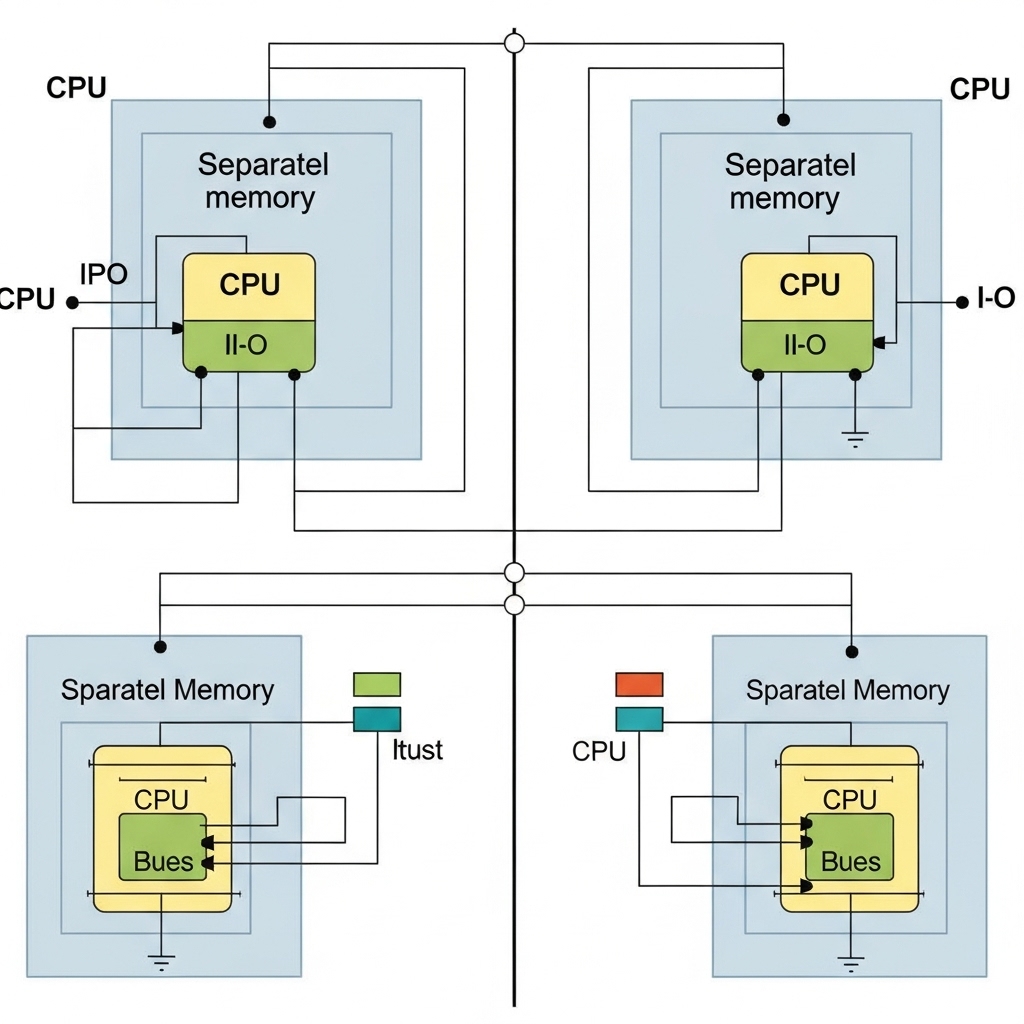
Introduction to Computer Architectures
The Von Neumann and Harvard architectures are two fundamental designs that have shaped the development of modern computers. These architectures define how a computer's processor, memory, and input/output devices interact with each other. Understanding the differences between these two architectures is crucial for designing and optimizing computer systems. In this article, we will delve into the details of Von Neumann and Harvard architectures, exploring their history, components, and applications.
Von Neumann Architecture
The Von Neumann architecture, named after the mathematician John von Neumann, is a design model for computer architectures that uses a single bus to transfer data between the central processing unit (CPU), memory, and input/output devices. This architecture is also known as the "stored-program concept" because it stores both program instructions and data in the same memory space. The key components of the Von Neumann architecture include the CPU, memory, and input/output devices, all connected by a shared bus. The CPU fetches instructions from memory, decodes them, and executes them, using the same bus to access data and store results.
A simple example of a Von Neumann architecture is a basic computer system with a single CPU, a hard drive for storage, and a keyboard and mouse for input. The CPU executes instructions stored on the hard drive, using the keyboard and mouse to receive input and display output on a monitor.
Harvard Architecture
The Harvard architecture, on the other hand, uses separate buses for instruction and data transfer. This design is named after the Harvard Mark I computer, which was developed in the 1940s. In a Harvard architecture, the CPU fetches instructions from a separate instruction memory, while data is stored in a separate data memory. This separation of instruction and data memories allows for faster execution of instructions, as the CPU can access instructions and data simultaneously.
An example of a Harvard architecture is a digital signal processor (DSP), which is designed for high-speed signal processing applications. A DSP typically has separate instruction and data memories, allowing it to execute instructions and access data in parallel, resulting in faster processing times.
Key Differences Between Von Neumann and Harvard Architectures
The main differences between Von Neumann and Harvard architectures lie in their memory organization and bus structure. Von Neumann architectures use a single bus for both instruction and data transfer, while Harvard architectures use separate buses for instructions and data. This separation of buses in Harvard architectures allows for faster execution of instructions, as the CPU can access instructions and data simultaneously. Additionally, Harvard architectures typically have separate instruction and data memories, which can be optimized for their specific functions.
In contrast, Von Neumann architectures use a shared bus, which can lead to bus contention and slower execution times. However, Von Neumann architectures are generally simpler to design and implement, as they require fewer components and less complex bus management.
Advantages and Disadvantages of Each Architecture
Von Neumann architectures have several advantages, including simplicity, flexibility, and cost-effectiveness. They are widely used in general-purpose computers, as they can handle a wide range of applications and are relatively easy to design and implement. However, Von Neumann architectures can suffer from bus contention and slower execution times, particularly in applications that require high-speed data transfer.
Harvard architectures, on the other hand, offer faster execution times and improved performance, particularly in applications that require simultaneous instruction and data access. They are widely used in specialized applications, such as digital signal processing and embedded systems. However, Harvard architectures can be more complex and expensive to design and implement, as they require separate instruction and data memories and more complex bus management.
Real-World Applications of Von Neumann and Harvard Architectures
Von Neumann architectures are widely used in general-purpose computers, including desktops, laptops, and mobile devices. They are also used in many embedded systems, such as traffic light controllers and consumer appliances. In contrast, Harvard architectures are used in specialized applications, such as digital signal processing, image processing, and scientific simulations. They are also used in many embedded systems, such as robotics and automotive control systems.
For example, a smartphone uses a Von Neumann architecture to execute general-purpose applications, such as web browsing and email. However, the smartphone's digital signal processor (DSP) uses a Harvard architecture to process audio and image data in real-time, allowing for fast and efficient processing of multimedia applications.
Conclusion
In conclusion, the Von Neumann and Harvard architectures are two fundamental designs that have shaped the development of modern computers. While Von Neumann architectures are widely used in general-purpose computers, Harvard architectures are used in specialized applications that require high-speed data transfer and simultaneous instruction and data access. Understanding the differences between these two architectures is crucial for designing and optimizing computer systems, as it allows developers to choose the best architecture for their specific application. By selecting the right architecture, developers can create faster, more efficient, and more effective computer systems that meet the needs of their users.