
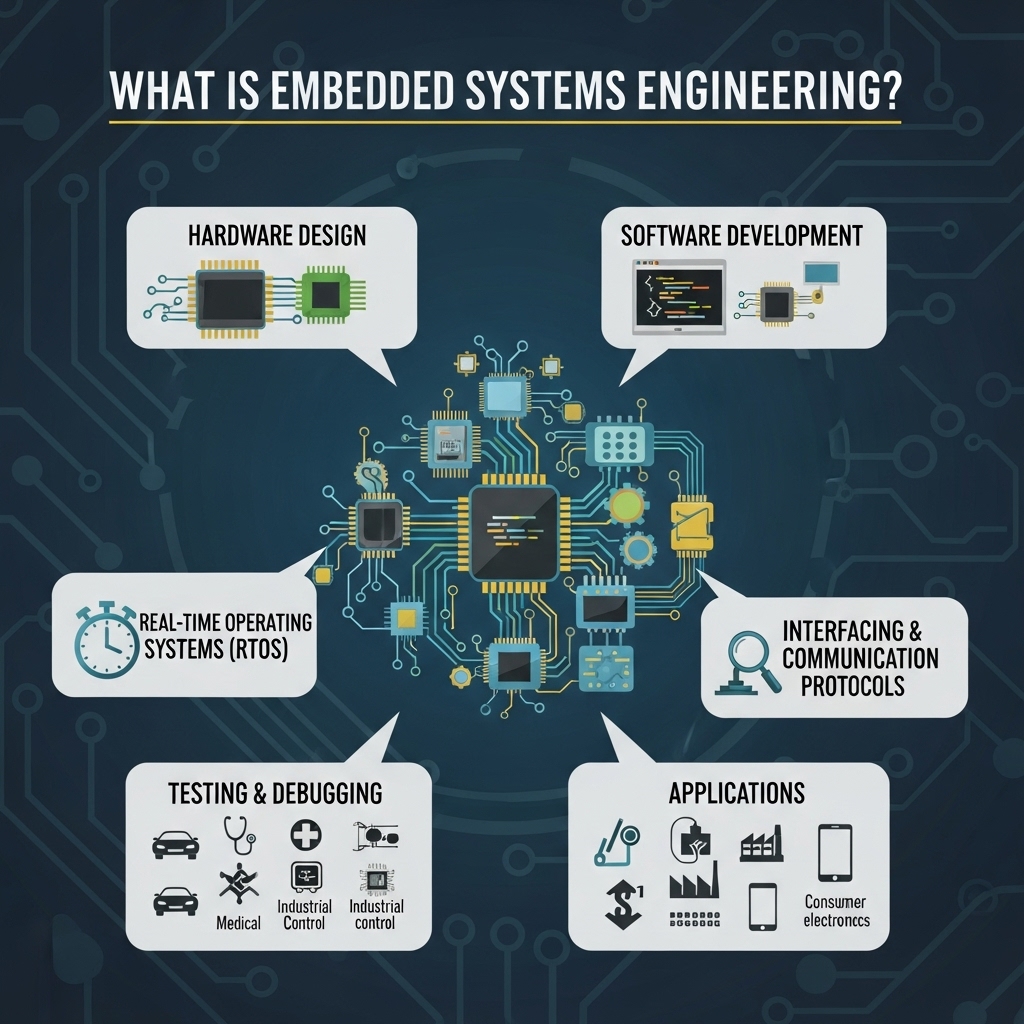
Introduction to Embedded Systems Engineering
Embedded systems engineering is a field of engineering that focuses on the design, development, and implementation of embedded systems, which are specialized computing systems that are embedded within devices or products to perform specific functions. These systems are designed to operate with minimal human intervention and are often used in a wide range of applications, including consumer electronics, industrial control systems, medical devices, and automotive systems. In this article, we will explore the world of embedded systems engineering, including its definition, types, and applications, as well as the skills and tools required to become an embedded systems engineer.
What are Embedded Systems?
Embedded systems are specialized computing systems that are designed to perform specific functions within a larger device or product. They typically consist of a combination of hardware and software components, including microcontrollers, sensors, actuators, and communication interfaces. Embedded systems are used in a wide range of applications, including consumer electronics, such as smart home devices and wearables, industrial control systems, medical devices, and automotive systems. For example, a smart thermostat is an embedded system that uses sensors to monitor temperature and humidity levels, and adjusts the heating and cooling system accordingly. Another example is a traffic light control system, which uses sensors and cameras to detect traffic flow and adjust the timing of the lights to optimize traffic flow.
Types of Embedded Systems
There are several types of embedded systems, including real-time systems, networked systems, and mobile systems. Real-time systems are designed to respond to inputs in real-time, and are often used in applications such as industrial control systems and medical devices. Networked systems are connected to a network, and are used in applications such as smart home devices and IoT devices. Mobile systems are designed to be portable, and are used in applications such as wearables and mobile phones. For example, a pacemaker is a real-time embedded system that is designed to regulate a patient's heartbeat, while a smart speaker is a networked embedded system that can play music and answer voice commands.
Applications of Embedded Systems
Embedded systems are used in a wide range of applications, including consumer electronics, industrial control systems, medical devices, and automotive systems. In consumer electronics, embedded systems are used in devices such as smart home devices, wearables, and mobile phones. In industrial control systems, embedded systems are used to monitor and control industrial processes, such as manufacturing and robotics. In medical devices, embedded systems are used to monitor patient vital signs, and to control medical equipment such as insulin pumps and ventilators. In automotive systems, embedded systems are used to control engine performance, transmission, and safety features such as airbags and anti-lock braking systems. For example, a modern car may have over 100 embedded systems, including systems for engine control, transmission control, and safety features.
Skills and Tools for Embedded Systems Engineering
To become an embedded systems engineer, one needs to have a strong foundation in computer science, electrical engineering, and software engineering. Embedded systems engineers need to have skills in programming languages such as C, C++, and Python, as well as experience with microcontrollers, sensors, and communication interfaces. They also need to have knowledge of operating systems, device drivers, and firmware development. In addition, embedded systems engineers need to have experience with development tools such as compilers, debuggers, and simulators. For example, an embedded systems engineer may use a compiler such as GCC to compile code for a microcontroller, and a debugger such as GDB to debug the code.
Challenges and Future Directions
Embedded systems engineering is a rapidly evolving field, with new challenges and opportunities emerging all the time. One of the major challenges facing embedded systems engineers is the increasing complexity of embedded systems, which requires more sophisticated design and development tools. Another challenge is the need for greater security and reliability in embedded systems, particularly in applications such as medical devices and automotive systems. In terms of future directions, there are many exciting developments on the horizon, including the Internet of Things (IoT), artificial intelligence (AI), and machine learning (ML). For example, the IoT is enabling the development of smart cities, smart homes, and smart industries, while AI and ML are enabling the development of more sophisticated and autonomous embedded systems.
Conclusion
In conclusion, embedded systems engineering is a fascinating and rapidly evolving field that is transforming the way we live and work. From consumer electronics to industrial control systems, medical devices, and automotive systems, embedded systems are everywhere, and are playing an increasingly important role in our daily lives. To become an embedded systems engineer, one needs to have a strong foundation in computer science, electrical engineering, and software engineering, as well as experience with microcontrollers, sensors, and communication interfaces. As the field continues to evolve, we can expect to see many exciting developments and innovations, including the increased use of AI, ML, and IoT technologies. Whether you are a student, a professional, or simply someone who is interested in technology, embedded systems engineering is an exciting and rewarding field that is worth exploring.