
Introduction to Resistors
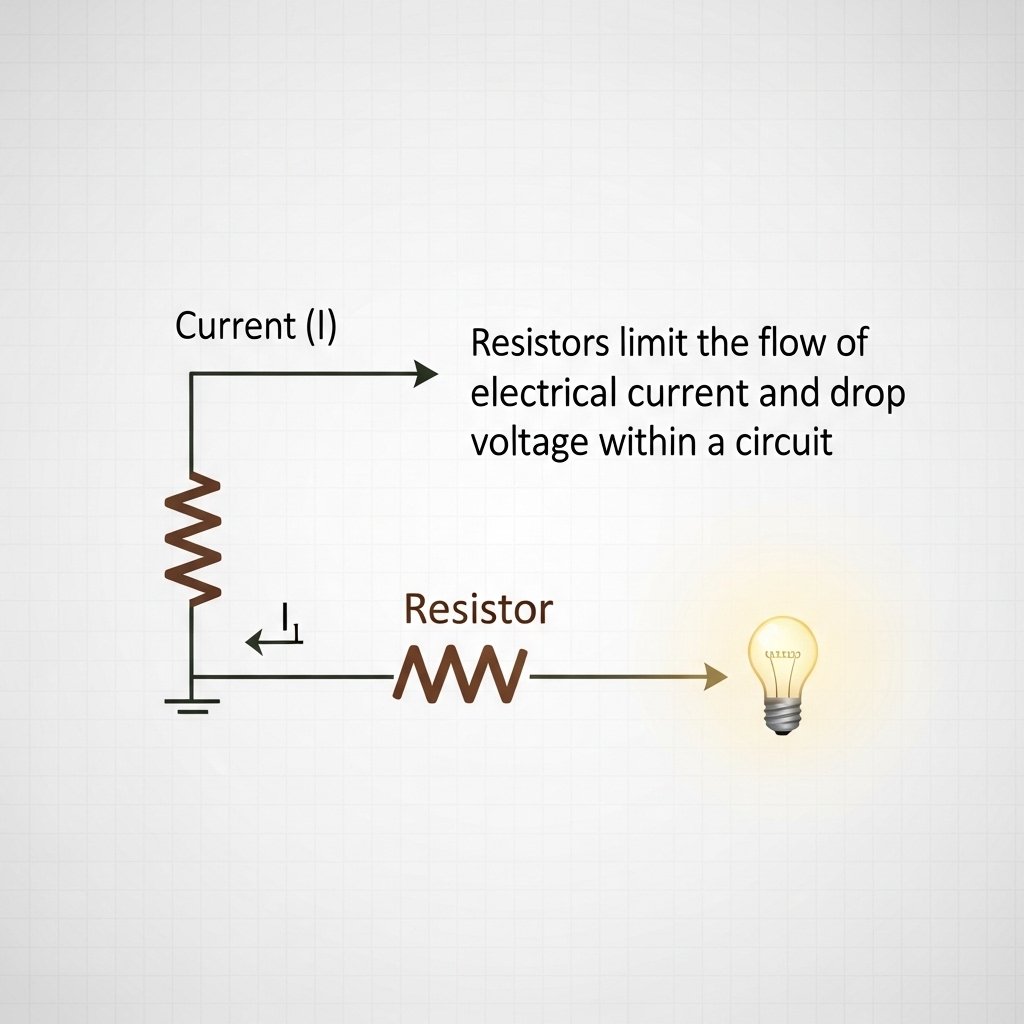
A resistor is a fundamental component in electronic circuits, and its function is crucial for the proper operation of various devices. In this article, we will delve into the world of resistors, exploring their role, types, and applications in electronic circuits. A resistor is a two-terminal electronic component that opposes the flow of electric current, and its primary function is to reduce the voltage and current in a circuit. This opposition to the flow of current is measured in ohms, and it is an essential property of resistors.
How Resistors Work
When a resistor is connected to a circuit, it converts some of the electrical energy into heat energy, which is dissipated into the surroundings. The amount of energy dissipated depends on the value of the resistor and the amount of current flowing through it. The resistance of a resistor is determined by its material, length, and cross-sectional area. For example, a longer resistor with a smaller cross-sectional area will have a higher resistance than a shorter resistor with a larger cross-sectional area. The most common materials used to make resistors are carbon, metal film, and wirewound.
Types of Resistors
There are several types of resistors, each with its unique characteristics and applications. Fixed resistors have a fixed resistance value and are the most common type of resistor. Variable resistors, on the other hand, have a resistance value that can be adjusted using a dial or a slider. Potentiometers are a type of variable resistor that can be used to divide a voltage into a particular ratio. Other types of resistors include thermistors, which change their resistance in response to temperature changes, and photoresistors, which change their resistance in response to light.
Resistor Color Codes
Resistors are often marked with a color code that indicates their resistance value and tolerance. The color code consists of four or five bands of different colors, each representing a digit or a multiplier. The first two bands represent the significant figures of the resistance value, while the third band represents the multiplier. The fourth band represents the tolerance, and the fifth band represents the reliability. For example, a resistor with a color code of brown, black, red, gold, and red would have a resistance value of 1000 ohms with a tolerance of 5% and a reliability of 2%.
Applications of Resistors
Resistors have a wide range of applications in electronic circuits, including voltage division, current limiting, and signal attenuation. In a voltage divider circuit, resistors are used to divide a voltage into a particular ratio. For example, a voltage divider circuit with two resistors of equal value can be used to divide a 12-volt supply into two 6-volt supplies. Resistors can also be used to limit the current flowing through a circuit, preventing damage to other components. In audio equipment, resistors are used to attenuate signals, reducing the volume of the sound.
Resistor Networks
Resistors can be connected in series or parallel to form resistor networks. When resistors are connected in series, the total resistance is the sum of the individual resistances. When resistors are connected in parallel, the total resistance is less than the individual resistances. Resistor networks can be used to create complex circuits, such as voltage dividers, current limiters, and filters. For example, a resistor network can be used to create a low-pass filter, which allows low-frequency signals to pass through while attenuating high-frequency signals.
Conclusion
In conclusion, resistors play a vital role in electronic circuits, and their function is to reduce the voltage and current in a circuit. Understanding the different types of resistors, their characteristics, and applications is essential for designing and building electronic circuits. By using resistors in various configurations, such as voltage dividers, current limiters, and signal attenuators, we can create complex circuits that perform a wide range of functions. Whether you are a beginner or an experienced electronics enthusiast, understanding resistors is crucial for building and repairing electronic devices.